


Enterprise Holdings Helps Clarify Misunderstood 'Loss of Use' Fee
Roger Van Horn, vice president for corporate loss control at Enterprise Holdings, addressed a column by consumer advocate Chris Elliott on loss of use. Van Horn emphasizes that a rental agency is compensated for loss of use, not loss of revenue, while a vehicle is out of service.
PRESS RELEASE
ST. LOUIS – Sept. 14, 2011 – Last year, consumer advocate and journalist Chris Elliott interviewed Roger Van Horn, vice president for corporate loss control at Enterprise Holdings, about vehicle damage claims in the car rental industry. The resulting column — published Oct. 21, 2010 — addressed questions about the claims process and helped explain the policies of Enterprise Holdings, which owns and operates the flagship Enterprise Rent-A-Car brand as well as the National Car Rental and Alamo Rent A Car brand.
On Sept. 13, Van Horn addressed additional questions from Chris Elliott concerning vehicle damage in an effort to make the claims process as transparent as possible for car rental customers. The column titled, “'Misinterpretations’ Over Loss of Use Fees Are Creating Confusion” helped clarify one of the most misunderstood damage-related fees: “loss of use.”
“It’s fundamentally important to understand that ‘loss of use’ is a legal term that applies to many types of businesses and industries,” Van Horn noted. For example, on the www.Law.com website, “loss of use” is defined as “the inability to use an automobile, premises or some equipment due to damage to the vehicle, premises or articles caused by the negligence or other wrongdoing of another.”
In fact, the consumer-friendly legal site provides two examples: “compensation for each day a car is out of commission during repairs or for the period of non-occupancy while a burned building is restored.”
“That means ‘loss of use’ charges really have little to do with whether another customer could have or would have rented that particular vehicle or building,” Van Horn said. “To put it another way, if an office building catches fire, the property owner is entitled to ‘loss of use,’ even if the employees are working from home rather than renting other office space.”
In the car rental industry, a “loss of use” charge is precisely as indicated — a charge based on the time needed to repair the vehicle. In other words, the property owner is being compensated for loss of use, not loss of revenue, while the vehicle is out of service.
Furthermore, Van Horn stressed that to calculate the number of days for “loss of use,” Enterprise Holdings uses a similar methodology used by the insurance industry, yet on a much more conservative basis. The company divides the total labor hours by four labor hours per day, but doesn’t add weekends, holidays, part delays or any other repair times not included in the estimate. Also, the company does not charge the highest retail rate; rather, the calculation is based on the renter’s agreed-upon rate.
“We have always maintained that a well-informed consumer is our best customer,” Van Horn stated. “However, even well-meaning car rental customers sometimes mistakenly believe if they didn’t personally cause or witness any damage — for example, a ‘hit- and-run’ incident in a parking lot — that they are not responsible. The truth is customers are financially responsible for any damage or theft that occurs during a rental transaction, regardless of fault or negligence, just as if they owned the $20,000 rental vehicle themselves.”
Van Horn reiterated a point featured in last year’s column. “Although we handle approximately a million car rental transactions every week, very few rental transactions actually result in damage. And less than 1 percent of claims result in customers disputing their responsibility,” he said. “The vast majority of disputed claims are resolved to the customer’s satisfaction. Our employees, both in the branches and in the Damage Recovery Unit (DRU) office, are focused on getting the facts right and maintaining a customer’s long-term loyalty.”
More Rental Operations

Palm Beach Airport Code Change Creates Car Rental Distribution Gap
A test of rental searches under the old PBI and new DJT airport codes returned largely different sets of brands and vehicles, highlighting a potential distribution problem for rental operators.
Read More →
U-Save Continues Dominican Republic Expansion with Launch in Punta Cana
The new franchise location builds on U-Save’s existing Santo Domingo operation and will begin taking reservations for October 2026.
Read More →
When AI Books the Rental Car, Who Controls the Sale?
As AI moves from comparing rental rates to completing transactions, operators need to understand how travelers find, interpret, rank, and ultimately see their offers. (Part 2 of 2.)
Read More →
European Booked Car Rental Rates Fell 5%, Results Varied by Country
Ireland, Cyprus, and the United Kingdom saw steep declines, while booked rates rose in Poland and Hungary.
Read More →
Is It Time to Rethink Rental Categories?
As traditional economy and compact cars disappear from the market, longtime rental operator Mike DeLorenzo asks whether the industry’s familiar vehicle categories still make sense — and what operators need to rethink along with them.
Read More →
Who Owns the Rate? AI Is Creating a New Distribution Problem for Car Rental
Generative Engine Optimization asks whether AI can find a rental company, but operators also need to know whether the agent inspected enough of the market, compared equivalent offers, and presented a rate the traveler can actually book. (Part 1 of 2)
Read More →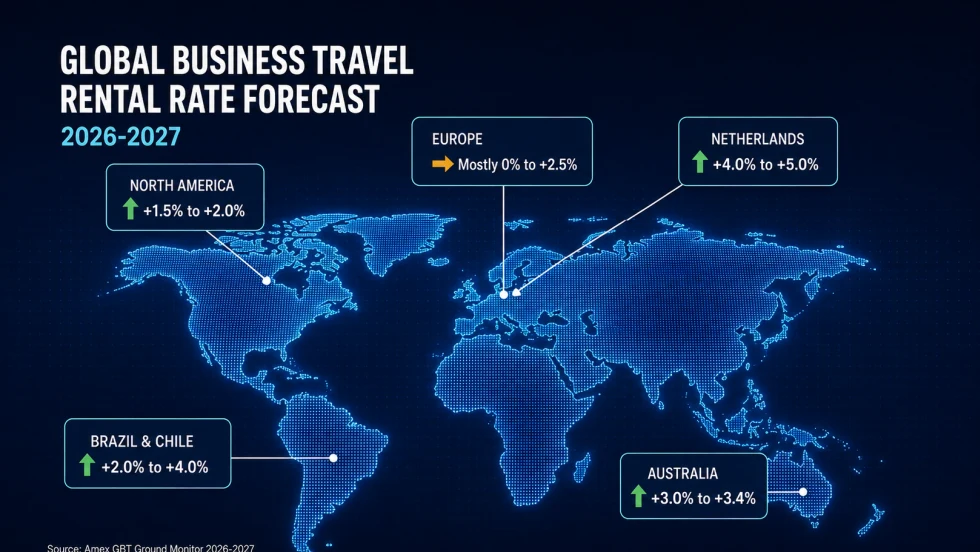
U.S. Business Travel Car Rental Rates Forecast to Rise Up to 2%
Improved fleet supply should limit pricing gains in 2026-27, while insurance, repair costs, and softer residual values continue to pressure rental operations, according to Amex GBT.
Read More →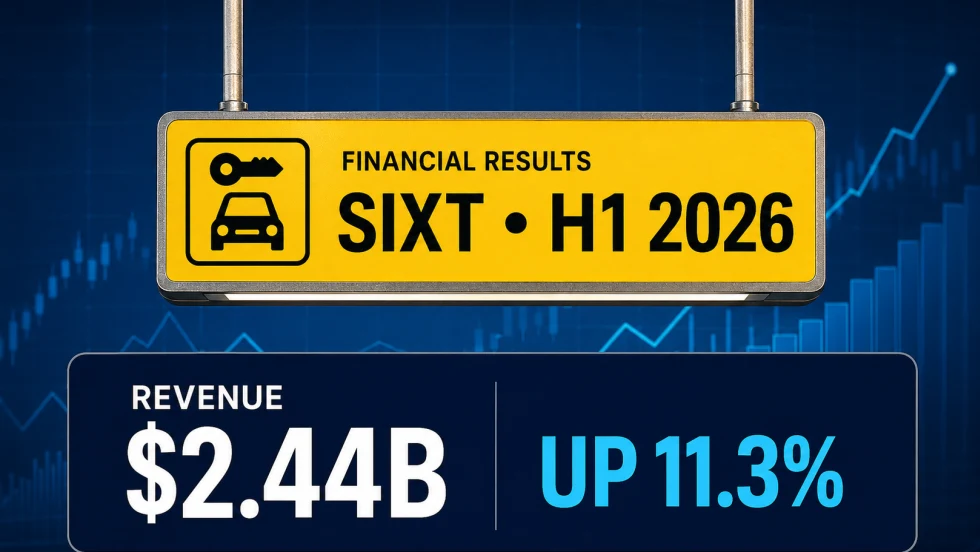
Sixt Revenue Tops $2.4 Billion in First Half of 2026
Sixt’s first-half revenue surpassed $2.4 billion for the first time as demand outpaced fleet growth, lifting utilization and earnings despite weaker consumer sentiment in North America.
Read More →
In Memoriam: Bobby Klyce, Avis Licensee Legend
The longtime Birmingham Avis operator and 2018 Auto Rental News Impact Award recipient was remembered as an advocate for independent licensees and the broader car rental industry.
Read More →
How to Build Custom Fleet Tools With AI and Vibe Coding [Webinar]
A new Automotive Fleet webinar explores how fleet managers are using AI and vibe coding to automate routine work and create simple operational tools without traditional programming skills.
Read More →