



Related: Hertz Obtains $1.65B in Debtor-In-Possession Financing
Hertz Delisted from NYSE: What Does it Mean?
Hertz will continue to trade on the over-the-counter (OTC) market, where the majority of stocks sold are penny stocks.
October 30, 2020
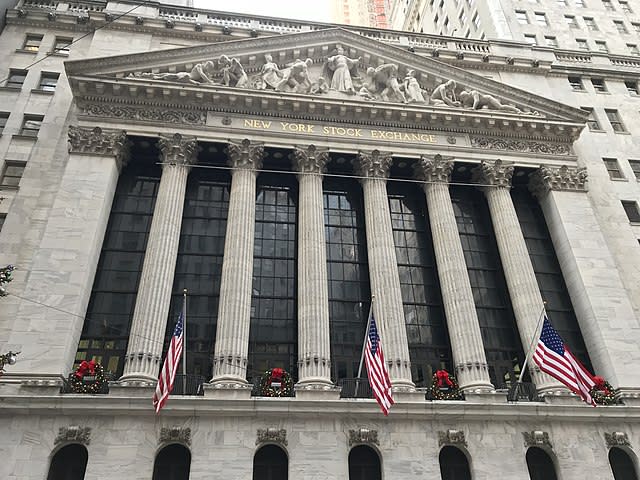
The NYSE determined that Hertz was no longer suitable for listing following the Company's May 22, 2020 Chapter 11 filing and its review of the Company's appeal of the delisting.
Photo via Wikimedia Commons/donatingpictures
2 min to read
The New York Stock Exchange (NYSE) has announced that as of today it has suspended trading of Hertz Global Holdings, which is the first step in delisting Hertz from its platform. At the same time, Hertz today announced that its common stock will start trading exclusively on the over-the-counter (OTC) market under the ticker symbol HTZGQ.
“The NYSE determined that Hertz was no longer suitable for listing following the Company's May 22, 2020 Chapter 11 filing and its review of the Company's appeal of the delisting,” Hertz said in a statement.
The moves come after a volatile few months of trading since the bankruptcy filing, marked by speculation that fueled rapid stock price spikes and crashes with the likely scenario looming that Hertz’s common stock shares will become practically worthless and stop paying dividends.
As recently as Wednesday, the stock jumped as much as 13% despite a broader market decline. This was most likely fueled by the eminent approval by the U.S. Bankruptcy Court of Hertz's proposed $1.65 billion in debtor-in-possession (DIP) financing, which the court granted.
Hertz appealed NYSE’s delisting decision, which it lost. Now that Hertz is no longer on the NYSE but is still trading, what does it mean?
According to John Healy, equity analyst for Northcoast Research, it’s usually the rule for a bankrupt company to no longer qualify for listing on major exchanges such as the NYSE or Nasdaq. “This is not unexpected if you're going through the bankruptcy process,” he said. “The surprising thing (for Hertz) is it took this long.”
The equity in the ownership of Hertz still exists for those who own the stock, Healy said. “It's just that they can't transact any longer on the New York Stock Exchange.”
Those bankrupt companies often continue to trade on the OTC Bulletin Board (OTCBB), also known as Pink Sheets. OTC refers to the process of how securities are traded. As opposed to a centralized exchange, the OTCBB is a type of broker-dealer network.
The majority of stocks sold in this manner are “penny stocks,” trading for less than $5 per share.
“While nothing dramatically changes for financial institutions that are transacting, individual traders will be moved to the bulletin boards, which is more of a person-to-person type of trading,” he said. However, “(delisting) makes it harder to contract in the space and raising money becomes more complicated.”
As well, “It's a perception thing,” Healy said. “Cosmetically it makes things look a bit worse for Hertz.”
More Rental Operations

What Does It Take to Succeed in B2B Rentals?
The fundamentals may be familiar to daily car rental operators, but project-based truck rentals put different demands on the fleet and the business.
Read More →
NPR Builds on International Partnerships to Grow Rental Bookings
With Ana Laborde supporting broker development, NPR Auto Group is tailoring distribution strategies, rate packages, and partnerships to grow international reservations across its three brands.
Read More →
Advantage, Sixt Place Among Top Five in Annual Satisfaction Study
While Enterprise and National retain the top spots in JD Power’s 2026 rankings, the latest customer satisfaction results suggest renters can find competitive service beyond the biggest car rental names.
Read More →
The $100,000 Insurance Trap in Exotic Car Rentals
Exotic rental agencies often rely on customers’ personal auto policies to protect six-figure vehicles. But policy language can dramatically change the coverage for vehicles over $100,000 MSRP.
Read More →
The Booking Is Confirmed, But Is Your Customer Ready to Drive?
For international renters, a confirmed reservation doesn’t always mean they’re eligible to drive. Earlier checks can help operators catch documentation and payment issues before the customer reaches the counter.
Read More →
ICRS 2027 Opens Call for Papers
The International Car Rental Show seeks session proposals on the business, operational, and technology issues facing car rental operators. Submissions are due Jan. 15.
Read More →
Turo to Launch Vehicle Delivery Service
Turo Delivered will let travelers search for vehicles that hosts can deliver directly to hotels, homes, airports, train stations, and other locations.
Read More →
Palm Beach Airport Code Change Creates Car Rental Distribution Gap
A test of rental searches under the old PBI and new DJT airport codes returned largely different sets of brands and vehicles, highlighting a potential distribution problem for rental operators.
Read More →
U-Save Continues Dominican Republic Expansion with Launch in Punta Cana
The new franchise location builds on U-Save’s existing Santo Domingo operation and will begin taking reservations for October 2026.
Read More →
When AI Books the Rental Car, Who Controls the Sale?
As AI moves from comparing rental rates to completing transactions, operators need to understand how travelers find, interpret, rank, and ultimately see their offers. (Part 2 of 2.)
Read More →