





More News:LOR Finds New Normal In Q1
LOR Continues Modest Declines In Q2
Body shops can get jobs done on rental cars brought in more quickly.
August 13, 2025
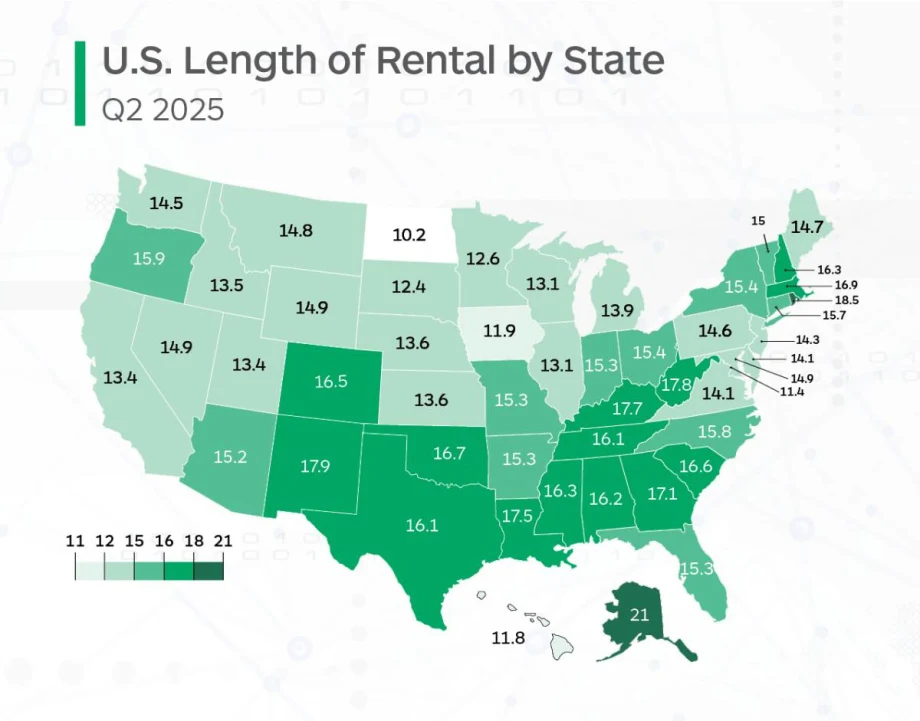
Alaska recorded the highest overall LOR at 21 days, a 0.3-day increase from Q2 2024. Rhode Island was next highest at 18.5 days, also a 0.3-day increase. North Dakota had the lowest overall LOR at 10.2 days, while District of Columbia (D.C.) was next-lowest at 11.4 days; both states saw a 0.9-day decline.
Graphic: Enterprise
3 min to read
Overall Length of Rental (LOR) for collision-related rentals in Q2 2025 was 15.1 days, a 0.9-day decline from Q2 2024, matching the decline seen in Q1 2025, according to a quarterly report from Enterprise Rent-A-Car.
Enterprise previously discussed the outsized impact on LOR in 2022 and 2023, given the post-COVID effects of vehicle production and supply chain issues. When comparing Q2 2025 to Q2 of 2020, overall LOR is 2.9 days higher; in Q2 2020, LOR was 13.2 days; in Q2 2019, LOR was 12 days.
The “length of rental” typically refers to the number of days a vehicle is rented for.
A standard rental day is usually 24 hours from the time of pick-up. Car rental companies calculate rental costs based on this LOR along with other factors like location, time of year, and vehicle type.
John Yoswick, editor of the weekly CRASH Network newsletter, offered some insights from data he’s received:
“A continued decline in LOR is not surprising, if only because body shops are able to get jobs brought in more quickly. The average backlog of work in shops nationwide – how far out they are scheduling new repair jobs – was just 1.7 weeks in April 2025, according to the Who Pays for What? survey of 550 shops conducted that month by Collision Advice and CRASH Network.” Yoswick continued, “It was the first time since Q2 2021 that the average backlog was below two weeks, after peaking at nearly six weeks in 2023. More than 20% of shops in April 2025 had no backlog at all – a figure that had never been higher (outside of the pandemic year of 2020) since the surveys began tracking backlogs more than eight years ago.”
Ryan Mandell, director of claims performance for Mitchell International, shared some statistics: “There has been, thus far in 2025, a substantial decrease in OEM parts utilization (58.5%, down from 61.1%) combined with an increased parts repair percentage (16.4%, up from 15.1%), suggesting a strong industry pivot toward repair over replacement – likely in response to parts cost pressures and availability challenges. In addition, consumers continue to face higher out-of-pocket expenses, with average deductibles rising to $863 (up $38).”
Greg Horn, PartsTrader’s Chief Industry Relations Officer, also offered some insights:
“PartsTrader measures median delivery days by part type to monitor any potential delays that can affect Length of Rental. The PartsTrader Q2 quarter-over-quarter comparison for delivery days showed a reduction of nearly one day, similar to the reduction of 0.9 days in Enterprise’s drivable length of rental.”
Alaska recorded the highest overall LOR at 21 days, a 0.3-day increase from Q2 2024. Rhode Island was next highest at 18.5 days, also a 0.3-day increase. North Dakota had the lowest overall LOR at 10.2 days, while District of Columbia (D.C.) was next-lowest at 11.4 days; both states saw a 0.9-day decline.
Nebraska had the highest increase, with a result of 13.6 days representing a 0.7-day increase. Kentucky matched Alaska and Rhode Island, as these three states had 0.3-day increases. All other states had declines, with 23 states plus D.C. recording decreases greater than one full day.
While LOR continues to decrease from post-pandemic highs, ongoing market and economic conditions could impact future results.
Other key metrics:
Drivable: In Q2 2025, drivable LOR was 13.9 days, a 0.7- day decline from Q2 2024.
Non-Drivable: Non-drivable LOR was 20.7 days in Q2 2025, a 1.7-day decrease from Q2 2024.
Total Loss: LOR for rentals associated with total loss claims was 13.4 days, a 1.4-day decline from Q2 2024.
More Rental Operations

What Does It Take to Succeed in B2B Rentals?
The fundamentals may be familiar to daily car rental operators, but project-based truck rentals put different demands on the fleet and the business.
Read More →
NPR Builds on International Partnerships to Grow Rental Bookings
With Ana Laborde supporting broker development, NPR Auto Group is tailoring distribution strategies, rate packages, and partnerships to grow international reservations across its three brands.
Read More →
Advantage, Sixt Place Among Top Five in Annual Satisfaction Study
While Enterprise and National retain the top spots in JD Power’s 2026 rankings, the latest customer satisfaction results suggest renters can find competitive service beyond the biggest car rental names.
Read More →
The $100,000 Insurance Trap in Exotic Car Rentals
Exotic rental agencies often rely on customers’ personal auto policies to protect six-figure vehicles. But policy language can dramatically change the coverage for vehicles over $100,000 MSRP.
Read More →
The Booking Is Confirmed, But Is Your Customer Ready to Drive?
For international renters, a confirmed reservation doesn’t always mean they’re eligible to drive. Earlier checks can help operators catch documentation and payment issues before the customer reaches the counter.
Read More →
ICRS 2027 Opens Call for Papers
The International Car Rental Show seeks session proposals on the business, operational, and technology issues facing car rental operators. Submissions are due Jan. 15.
Read More →
Turo to Launch Vehicle Delivery Service
Turo Delivered will let travelers search for vehicles that hosts can deliver directly to hotels, homes, airports, train stations, and other locations.
Read More →
Palm Beach Airport Code Change Creates Car Rental Distribution Gap
A test of rental searches under the old PBI and new DJT airport codes returned largely different sets of brands and vehicles, highlighting a potential distribution problem for rental operators.
Read More →
U-Save Continues Dominican Republic Expansion with Launch in Punta Cana
The new franchise location builds on U-Save’s existing Santo Domingo operation and will begin taking reservations for October 2026.
Read More →
When AI Books the Rental Car, Who Controls the Sale?
As AI moves from comparing rental rates to completing transactions, operators need to understand how travelers find, interpret, rank, and ultimately see their offers. (Part 2 of 2.)
Read More →