




Study Shows Passenger Satisfaction with Large Airports Declines
Detroit Metropolitan Wayne County, Indianapolis International and Kansas City International Airports each rank highest in overall passenger satisfaction in their respective segments.
Although technology has revolutionized air travel during the past decade, passenger satisfaction with airports continues to lag behind that of other aspects of the travel industry, largely because passenger expectations of basic needs — such as prompt baggage delivery, airport comfort and ease of navigating the airport — are not being met consistently, according to the J.D. Power and Associates 2010 North America Airport Satisfaction Study.
The study measures overall airport satisfaction in three segments: large (30 million or more passengers per year), medium (10 to 30 million passengers per year) and small (fewer than 10 million passengers per year). Six factors are examined to determine overall customer satisfaction: airport accessibility; baggage claim; check-in/baggage check process; terminal facilities; security check; and food and retail services.
Overall passenger satisfaction with the airport experience averages 690 on a 1,000-point scale in 2010, which is an improvement from 675 in 2008. However, satisfaction with airports in 2010 is considerably lower than satisfaction with hotels (756, on average) and rental cars (733, on average).
Technology has helped drive efficiencies for airports and increase convenience for travelers-for example, through wireless Internet access, parking lot management systems and online check-in. However, the study finds that the areas with greatest impact on overall passenger satisfaction are speed of baggage delivery; ease of check-in and baggage check; comfort in airport terminals; and the amount of time required for security check. For many passengers, basic needs such as seating comfort and ease of moving through the airport are not consistently being met.
"As much as Internet access may be a fun diversion or enable productivity for passengers, getting passengers in and out of the airport easily and efficiently is of utmost importance," said Stuart Greif, vice president and general manager of the global hospitality and travel practice at J.D. Power and Associates. "Airports can best facilitate passenger progress and improve satisfaction by focusing on key elements such as the clarity of airport signage, facilitating quick and accurate delivery of baggage and partnering with the TSA to reduce security check wait times."
The study finds that providing high levels of airport passenger satisfaction has a strong positive impact on retail spending. Among passengers who are "disappointed" with their airport experience (providing ratings of one to five on a 10-point scale), airport retail spending averages $14.12. However, passengers who are "delighted" with their airport experience (providing ratings of 10 on a 10-point scale), spend an average of $20.55 on airport retail purchases, 45 percent more than do "disappointed" passengers. Only a small percentage of passengers, 9 percent, are "delighted" with their airport experience.
At the segment level, passenger satisfaction with large airports has decreased in recent years. During the same time frame, satisfaction with medium airports has remained flat while satisfaction with small airports has increased.
Large Airports
Detroit Metropolitan Wayne County (DTW) ranks highest in overall customer satisfaction among large airports and performs particularly well in the terminal facilities and baggage claim factors. Denver International (DEN) and Minneapolis/St. Paul International (MSP), in a tie, closely follow DTW in the segment rankings. DEN performs particularly well in the airport accessibility factor.
Medium Airports
Kansas City International (MCI) ranks highest among medium airports, and performs particularly well in three of the six factors: airport accessibility, check-in/baggage check and security check. Following MCI in the segment rankings are Portland International (PDX) and Tampa International (TPA). PDX performs particularly well in the food and retail services factor while TPA performs particularly well in the terminal facilities and baggage claim factors.
Small Airports
Among small airports, Indianapolis International Airport (IND) ranks highest and performs particularly well in the check-in/baggage check, security check and terminal facilities factors. Following IND in the segment rankings are Fort Myers/Southwest Florida International (RSW) and Tucson International (TUS).
The 2010 North America Airport Satisfaction Study is based on responses from more than 12,100 passengers who took a round-trip flight between January and December 2009. Passengers evaluated their departing and arriving airports, and the study includes a total of more than 24,200 evaluations. The study was fielded between January and December 2009.
More Rental Operations
Palm Beach Airport Code Change Creates Car Rental Distribution Gap
A test of rental searches under the old PBI and new DJT airport codes returned largely different sets of brands and vehicles, highlighting a potential distribution problem for rental operators.
Read More →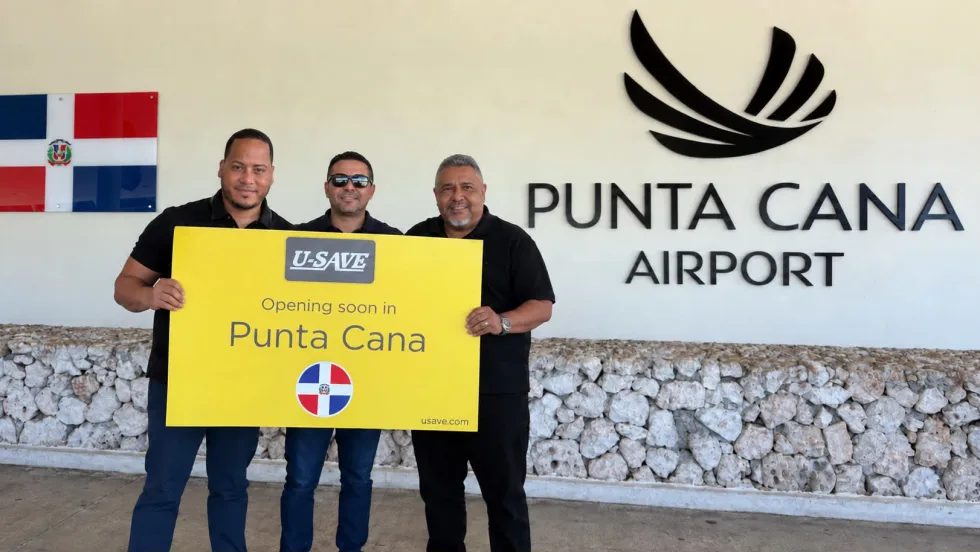
U-Save Continues Dominican Republic Expansion with Launch in Punta Cana
The new franchise location builds on U-Save’s existing Santo Domingo operation and will begin taking reservations for October 2026.
Read More →
When AI Books the Rental Car, Who Controls the Sale?
As AI moves from comparing rental rates to completing transactions, operators need to understand how travelers find, interpret, rank, and ultimately see their offers. (Part 2 of 2.)
Read More →
European Booked Car Rental Rates Fell 5%, Results Varied by Country
Ireland, Cyprus, and the United Kingdom saw steep declines, while booked rates rose in Poland and Hungary.
Read More →
Is It Time to Rethink Rental Categories?
As traditional economy and compact cars disappear from the market, longtime rental operator Mike DeLorenzo asks whether the industry’s familiar vehicle categories still make sense — and what operators need to rethink along with them.
Read More →
Who Owns the Rate? AI Is Creating a New Distribution Problem for Car Rental
Generative Engine Optimization asks whether AI can find a rental company, but operators also need to know whether the agent inspected enough of the market, compared equivalent offers, and presented a rate the traveler can actually book. (Part 1 of 2)
Read More →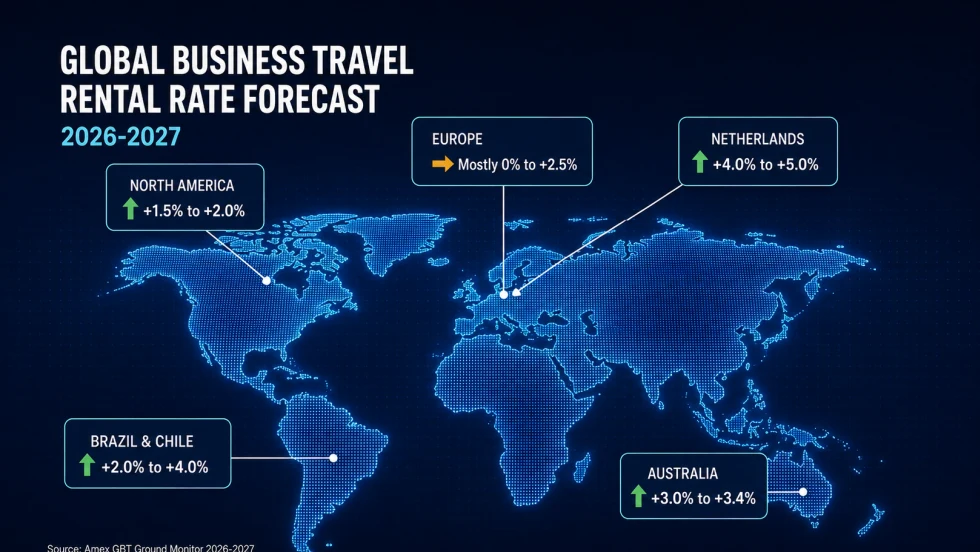
U.S. Business Travel Car Rental Rates Forecast to Rise Up to 2%
Improved fleet supply should limit pricing gains in 2026-27, while insurance, repair costs, and softer residual values continue to pressure rental operations, according to Amex GBT.
Read More →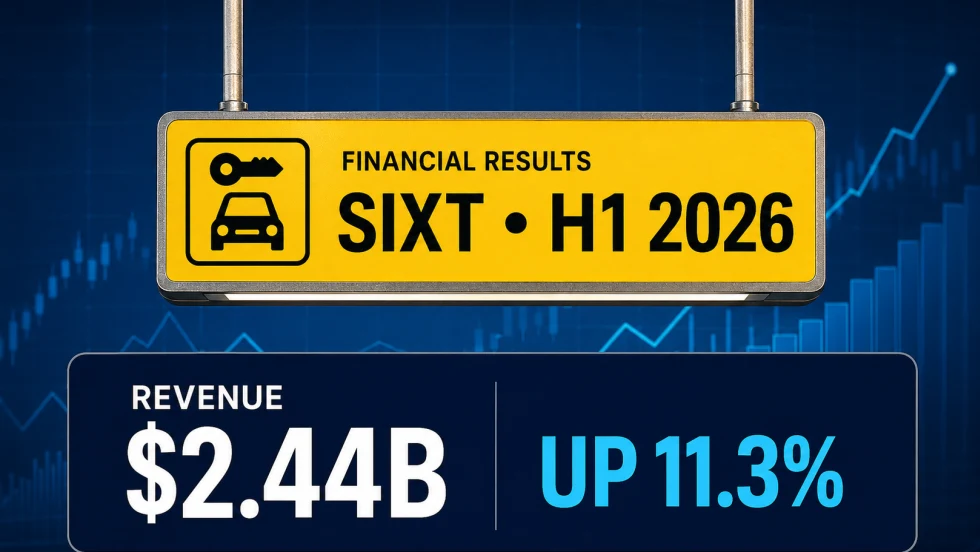
Sixt Revenue Tops $2.4 Billion in First Half of 2026
Sixt’s first-half revenue surpassed $2.4 billion for the first time as demand outpaced fleet growth, lifting utilization and earnings despite weaker consumer sentiment in North America.
Read More →
In Memoriam: Bobby Klyce, Avis Licensee Legend
The longtime Birmingham Avis operator and 2018 Auto Rental News Impact Award recipient was remembered as an advocate for independent licensees and the broader car rental industry.
Read More →
How to Build Custom Fleet Tools With AI and Vibe Coding [Webinar]
A new Automotive Fleet webinar explores how fleet managers are using AI and vibe coding to automate routine work and create simple operational tools without traditional programming skills.
Read More →