




2008 Travel Tax Study
The National Business Travel Association presents “Lodging, Rental Car and Meal Taxes on Travelers in the Top 50 U.S. Cities.” Where does your city rank?

The business travel industry and the business community at large are increasingly concerned about the negative impact of taxes targeting travel-related services such as lodging, car rentals and restaurant bills. States, cities and counties across the United States facing budgetary constraints often turn to the customers of these services as sources of revenue to bolster general funds or pay for local projects unrelated to the services.
The argument is generally that these services are mostly used by out-of-town visitors, therefore it’s better to export the tax burden. The reality is quite different, says the National Business Travel Association.
First, local companies and citizens are hit directly by these taxes. Most companies spend the majority of their car rental and hotel budgets in the areas where they have offices or other facilities. Further, more than half of car rentals are from car rental companies’ local offices, rather than airport locations, suggesting that the majority of car rental customers are, in fact, local.
Second, the tax impact on out-of-town visitors often factors into travel decision-making. Cities, states or counties with the highest discriminatory travel taxes are likely losing business and may not even know about it. For example, more and more organizations that host meetings and major conventions are considering the tax burden for their attendees as a factor in the site selection process.
Calculating Travel Tax Data
To help the business travel community better understand the relative tax burden imposed on travelers in cities across the country, the NBTA Foundation—the education and research foundation of the National Business Travel Association (NBTA)—engaged American Economics Group Inc. (AEG), to collect and report detailed travel tax data on the 50 U.S. cities with the highest numbers of air passengers.
AEG calculated the amount of taxes paid by travelers who stay at a hotel, rent a car and eat restaurant meals for one day and one night. The study uniformly applies average prices (hotel room rate: $103.70, car rental: $76.60, daily meal: $82.03) for these items across all cities to create “apples-to-apples” comparisons and then calculates tax figures by applying local and state taxes to those average pre-tax costs.
Tax calculations begin with general sales taxes at the state, county, city and special tax district level. Next, discriminatory travel taxes and fees are added in. These taxes often include a bewildering combination of charges such as excise, occupancy, transportation, tourism, special, facility and capital improvement taxes, plus a long list of other taxes and fees, frequently imposed by overlapping jurisdictions.
The study offers several different sets of travel tax data. Charts 1 and 2 list car rental taxes in central city locations and then at airports.
Charts 3 and 4 list the combined taxes on lodging, rental cars and meals—including general sales taxes—in central city and airport locations, ranked from lowest to highest.
Charts 4 and 5 delve deeper into the tax data to show the burden imposed by discriminatory travel taxes above and beyond general sales taxes.
(Note: ARN has condensed Charts 3, 4 and 5 to show the top and bottom 10.)
More Rental Operations

Palm Beach Airport Code Change Creates Car Rental Distribution Gap
A test of rental searches under the old PBI and new DJT airport codes returned largely different sets of brands and vehicles, highlighting a potential distribution problem for rental operators.
Read More →
U-Save Continues Dominican Republic Expansion with Launch in Punta Cana
The new franchise location builds on U-Save’s existing Santo Domingo operation and will begin taking reservations for October 2026.
Read More →
When AI Books the Rental Car, Who Controls the Sale?
As AI moves from comparing rental rates to completing transactions, operators need to understand how travelers find, interpret, rank, and ultimately see their offers. (Part 2 of 2.)
Read More →
European Booked Car Rental Rates Fell 5%, Results Varied by Country
Ireland, Cyprus, and the United Kingdom saw steep declines, while booked rates rose in Poland and Hungary.
Read More →
Is It Time to Rethink Rental Categories?
As traditional economy and compact cars disappear from the market, longtime rental operator Mike DeLorenzo asks whether the industry’s familiar vehicle categories still make sense — and what operators need to rethink along with them.
Read More →
Who Owns the Rate? AI Is Creating a New Distribution Problem for Car Rental
Generative Engine Optimization asks whether AI can find a rental company, but operators also need to know whether the agent inspected enough of the market, compared equivalent offers, and presented a rate the traveler can actually book. (Part 1 of 2)
Read More →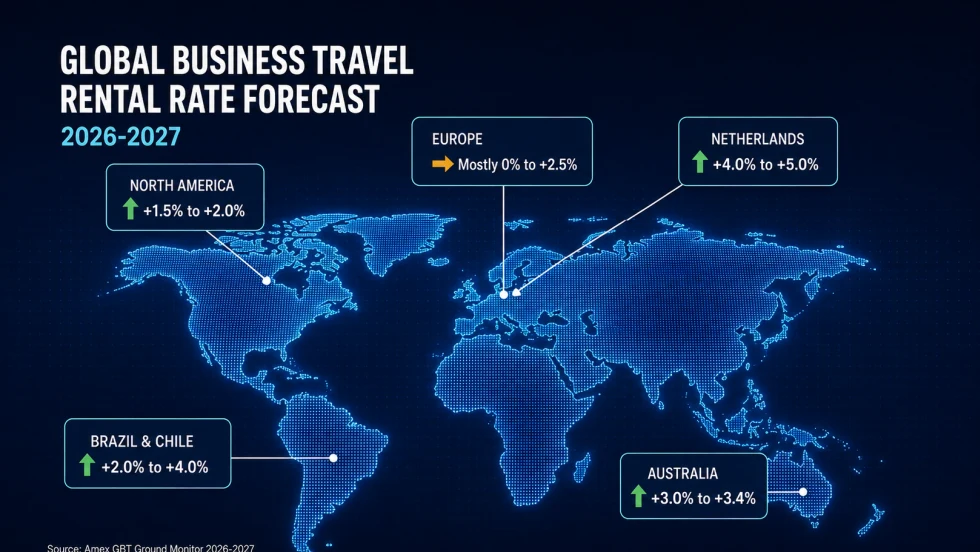
U.S. Business Travel Car Rental Rates Forecast to Rise Up to 2%
Improved fleet supply should limit pricing gains in 2026-27, while insurance, repair costs, and softer residual values continue to pressure rental operations, according to Amex GBT.
Read More →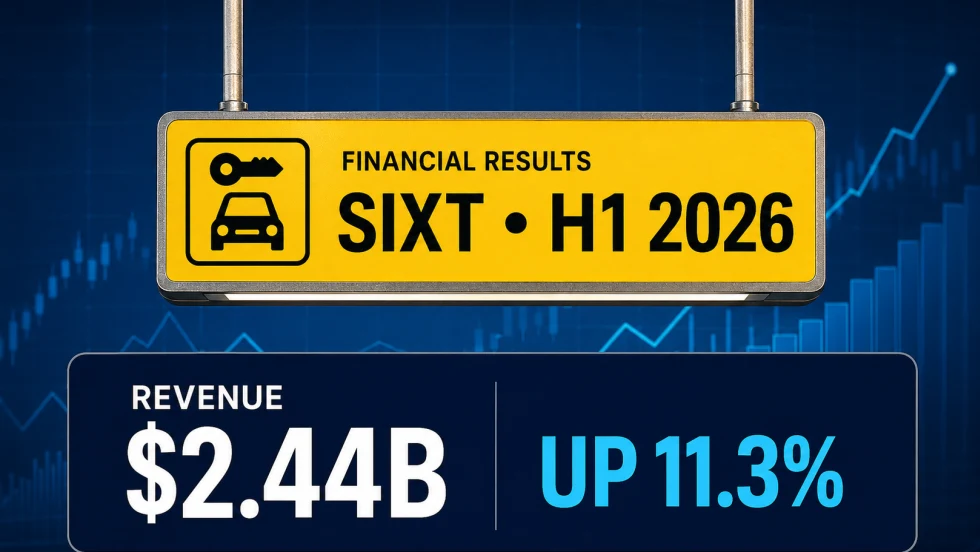
Sixt Revenue Tops $2.4 Billion in First Half of 2026
Sixt’s first-half revenue surpassed $2.4 billion for the first time as demand outpaced fleet growth, lifting utilization and earnings despite weaker consumer sentiment in North America.
Read More →
In Memoriam: Bobby Klyce, Avis Licensee Legend
The longtime Birmingham Avis operator and 2018 Auto Rental News Impact Award recipient was remembered as an advocate for independent licensees and the broader car rental industry.
Read More →
How to Build Custom Fleet Tools With AI and Vibe Coding [Webinar]
A new Automotive Fleet webinar explores how fleet managers are using AI and vibe coding to automate routine work and create simple operational tools without traditional programming skills.
Read More →