



Abrams Consulting Celebrates 30 Years in the Car Rental Industry
Neil Abrams takes stock of the industry he’s helped shape for more than 30 years.


Neil Abrams delivers the keynote address at the 2004 Car Rental Show.

Neil Abrams delivers the keynote address at the 2004 Car Rental Show.
As Abrams Consulting Group turns 30, we congratulate Neil Abrams for his service to the auto rental industry. As the media’s go-to guy on the industry and one of its most recognized names, Abrams is never short of wisdom, stories and opinions. Auto Rental News sat down with Abrams to take stock of the auto rental landscape then and now.
What are the major differences in this industry today from when you started?
When I joined there were three companies, Hertz, Avis and National, and “everybody else.” There were many more independents and licensees, and licensees controlled some of the major markets. The industry transitioned from a licensee-based model to a corporate-owned model, though lately there has been a transition back to franchising in smaller markets. We’ve seen a move from ownership of rental companies for investment tax credits, to ownership by the auto manufacturers, to today’s structure of primarily publicly traded companies. We’ll likely soon have three companies controlling eight brands. We are a mature industry today.
How has the car rental process changed?
Concepts such as yield management and revenue management didn’t really exist back then; the technologies weren’t there. Today you have instant, dynamic pricing driven by metrics and technology. Fleet planning has gotten so much more scientific. When I started everyone bought risk, and then the factories started to create repurchase programs when they bought the rental companies. Now we’re migrating back to risk — buying and selling right. Today, foreign OEMs have substantial rental fleet distribution.
You’ve been dealing with the media’s coverage of the car rental industry for a long time. Talk about the coverage of the industry and how you deal with the media.
The bias and prejudice that exist in the general media about this industry are still problematic. The attitude feels like, “tell us how you’re going to screw the customer now.” But we’re part of the problem. I don’t think we’ve gotten our message out as well as we could have over the years.
When I talk to reporters, I try to explain the operational dynamics of the industry: How can rental companies justify a refueling charge or a fee to process an unpaid parking violation? Why do we have to recover damage? I explain the exposure of rental companies and their liabilities. I try to show that a $250 dent multiplied by millions of transactions each year is a huge amount of money. I’ve also seen the media migrate to a global economic focus. Many more calls today are regarding the financial underpinnings of the industry and many of the reporters are foreign.
Depending on the media coverage, it seems that either the rental consumer or the car rental companies are under siege. How do you see it?
I think all parties are under siege. Rental operators are besieged by governments that want to use them to fund projects and generate money for agencies in dire financial straits. The consumer feels they are getting beaten up because they are held accountable today for things they weren’t before. I think the customer got spoiled and jaded because for so long the industry was lax about things like damage recovery and returning a car with a full tank of gas. The industry wrote off a lot of money. And the consumer doesn’t understand excise taxes. They just see another 3% on their bill and wonder how it’s possible to rent a car for $50 that ends up costing them $90.
Looking back, were there any trends or changes in the car rental business model that didn’t pan out as you had envisioned?
I thought there would have been great synergies in the tie-ups between car rental companies and other complementary businesses over the years, such as when Allegis Air owned Hertz and Cendant owned Avis, PHH and the Wyndham hotel chain. It was about the connectivity of like services to the same customer and the ability to market across brands. When AutoNation owned ANC (Alamo National Corp.), I thought it was a brilliant concept to control the asset from cradle to grave. But in each of these cases, it just didn’t deliver for the investors. They weren’t able to leverage all the benefits for the stakeholders.
The major car rental companies must develop new business models to grow revenues in mature markets. Where do you see the potential growth?
Car sharing is growing, and we’re trying to figure out if peer-to-peer is a real business concept. But I think we’ll continue to see more synergistic deals such as Hertz’s acquisition of Donlen and the integration of transportation companies and travel services. You’ll see less labor and brick and mortar and more technology. Rental companies will move further into niche rental segments such as luxury and “green” rentals.
What are your thoughts on a potential Hertz and Dollar Thrifty merger?
The deal will happen and it should happen. It’s very compelling for both companies. Dollar Thrifty’s business model is restricted to value-conscious airport customers. The growth of the industry has been off airport, and Hertz is off airport — a new market for Dollar Thrifty customers. Hertz gets instant market share of the value segment and can protect its premium brand by not having to play on price. And then with the globalization of the car rental industry in places like China, India and Brazil, Dollar Thrifty would have the global reach of the Hertz reservation system.
Are there any other moving parts of this industry that would change the auto rental landscape in the near future?
We may see more acquisitions of independent operators by large companies, but there aren’t that many left. Acquisitions will probably be more global in scale, with companies like Sixt, Europcar, [and its European subsidiaries] National and Alamo, and Enterprise involved in deals. Sixt looks like it’s ready to grow in the U.S., while Fox is a wildcard — they’re smart, financially strong and a great model for viral marketing. Could the OEMs get back in the rental business through their dealerships? They’re potential sleeping giants if they can work their dealer rental programs a little better.
What will be the biggest ‘headwind’ for auto rental in 2013?
Everyone understands that holding costs of $200 just can’t last. But I do think we still have 18 good months of strong residuals until more supply starts to shift the landscape. I think the financial crisis in Europe could be an even bigger headwind, as is the uncertainty of the economy in general. There are so many touch points there: new and used car sales, tourism and the European counterparts of American companies.
See other articles here from our July/August 2012 issue.
More Rental Operations
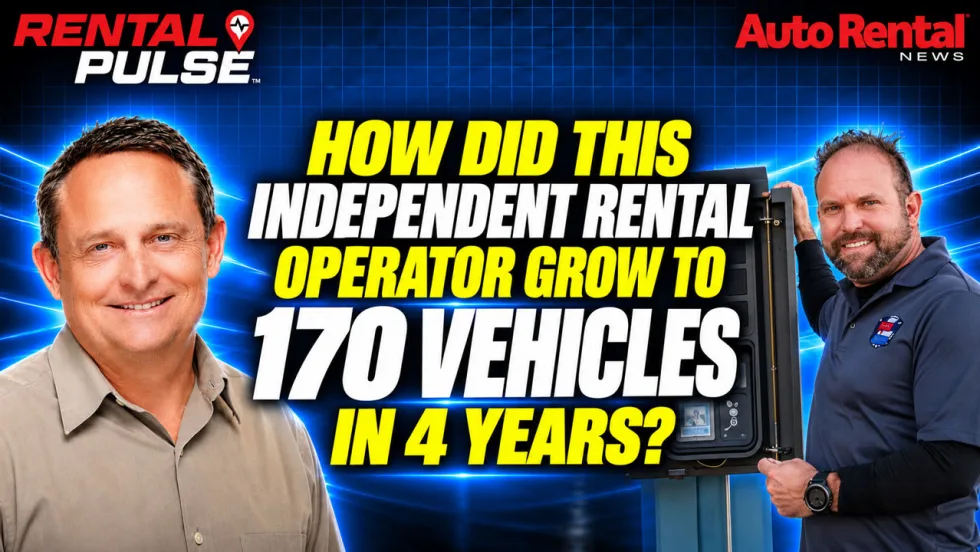
How Did This Independent Rental Operator Grow to 170 Vehicles in 4 Years?
With 170 vehicles across three Kentucky locations, Joel Price relies on an overseas team to handle reservations, payments, and after-hours customer service. It's one part of an unconventional approach to growing an independent rental operation.
Read More →
What Does It Take to Succeed in B2B Rentals?
The fundamentals may be familiar to daily car rental operators, but project-based truck rentals put different demands on the fleet and the business.
Read More →
NPR Builds on International Partnerships to Grow Rental Bookings
With Ana Laborde supporting broker development, NPR Auto Group is tailoring distribution strategies, rate packages, and partnerships to grow international reservations across its three brands.
Read More →
Advantage, Sixt Place Among Top Five in Annual Satisfaction Study
While Enterprise and National retain the top spots in JD Power’s 2026 rankings, the latest customer satisfaction results suggest renters can find competitive service beyond the biggest car rental names.
Read More →
The $100,000 Insurance Trap in Exotic Car Rentals
Exotic rental agencies often rely on customers’ personal auto policies to protect six-figure vehicles. But policy language can dramatically change the coverage for vehicles over $100,000 MSRP.
Read More →
The Booking Is Confirmed, But Is Your Customer Ready to Drive?
For international renters, a confirmed reservation doesn’t always mean they’re eligible to drive. Earlier checks can help operators catch documentation and payment issues before the customer reaches the counter.
Read More →
ICRS 2027 Opens Call for Papers
The International Car Rental Show seeks session proposals on the business, operational, and technology issues facing car rental operators. Submissions are due Jan. 15.
Read More →
Turo to Launch Vehicle Delivery Service
Turo Delivered will let travelers search for vehicles that hosts can deliver directly to hotels, homes, airports, train stations, and other locations.
Read More →
Palm Beach Airport Code Change Creates Car Rental Distribution Gap
A test of rental searches under the old PBI and new DJT airport codes returned largely different sets of brands and vehicles, highlighting a potential distribution problem for rental operators.
Read More →
U-Save Continues Dominican Republic Expansion with Launch in Punta Cana
The new franchise location builds on U-Save’s existing Santo Domingo operation and will begin taking reservations for October 2026.
Read More →