


Turo and Tesla Take the Next Step Toward Autonomous Car Rentals
The partnership brings Tesla's Full Self-Driving (Supervised) technology into the rental experience, offering a glimpse of how increasingly automated vehicles could change car rental.

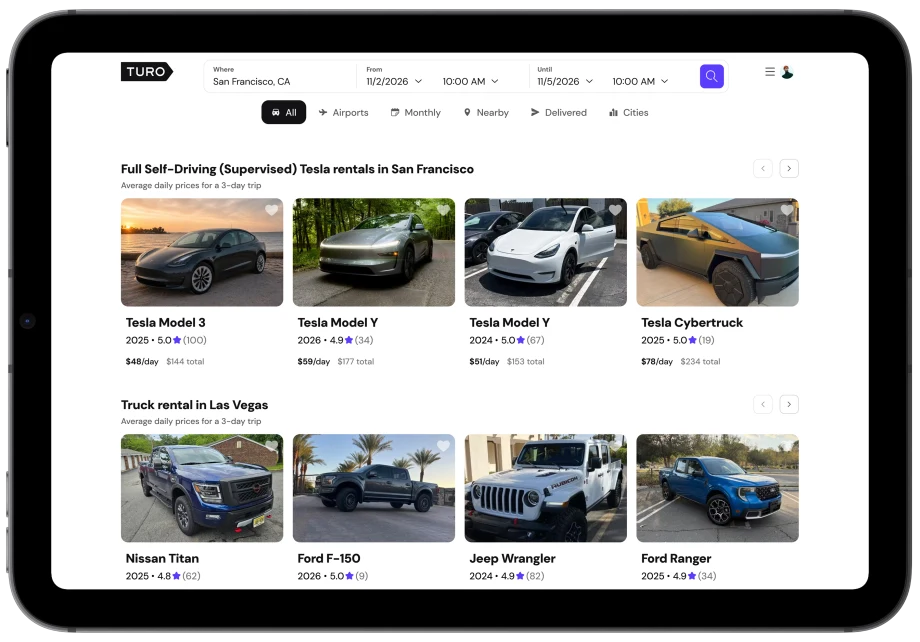
With Turo's FSD integration, renters are now able to choose a vehicle by its technology.
Turo
- Turo partners with Tesla to incorporate Full Self-Driving (Supervised) technology into its car rentals.
- The collaboration aims to offer renters a preview of how automation might transform the car rental industry.
- The initiative is indicative of an evolving landscape where automated features are becoming central to vehicle rentals.
*Summarized by AI
Turo and Tesla are bringing supervised self-driving technology to car rental, marking another step in the transportation industry's gradual move toward autonomous vehicles.
Beginning October 28, Turo customers in the U.S. will be able to identify and rent Tesla vehicles equipped with Full Self-Driving (Supervised), or FSD, through the carsharing marketplace.
The vehicles aren't autonomous. Drivers must remain attentive and ready to intervene. But the partnership gives more consumers an opportunity to experience advanced driving automation without owning a Tesla.
For the rental industry, the rollout also raises a familiar challenge: helping customers use unfamiliar vehicle technology safely.
Earlier Steps Toward Autonomous Rentals
Turo and Tesla aren't the first companies to explore how advanced driving technology could change car rental.
In Las Vegas, Halo.Car began delivering remotely operated rental vehicles without onboard safety drivers in 2023. Vay introduced a similar commercial service in January 2024.
In both cases, remote human operators drove vehicles to customers, who then took control and drove them conventionally. The vehicles could also be retrieved remotely after the rental.
Neither service was fully autonomous. But both demonstrated how driving technology could change the rental experience before driverless vehicles became commercially viable.
The Turo-Tesla partnership takes a different approach. Rather than using remote operation to deliver the vehicle, it makes advanced driving assistance available to renters during their trips.
How Turo's FSD Rentals Will Work
In an interview with Auto Rental News, Tim Rossanis, senior vice president at Turo, said thousands of FSD-enabled Teslas are currently available on Turo.
Not all those vehicles necessarily have an active FSD subscription. Turo will verify which vehicles have the feature enabled through a direct connection with Tesla's systems.
The rollout will be nationwide, with expansion to Canada and Australia planned later.
Rossanis said customers were already contacting Tesla hosts to ask whether their vehicles had FSD. Some wanted to rent a Tesla specifically to try the technology.
“If you came to Turo, you'd have to go through the booking flow and message the host and confirm the booking and then message the host and say, does this vehicle have FSD?” Rossanis said.
The partnership eliminates that uncertainty by allowing customers to identify FSD-equipped vehicles before booking.
“[It] became abundantly clear that this is something the industry was missing,” Rossanis said. “The ability to actually very clearly verify the status of the driver-assisted technology that an OEM offers.”
Hosts without active FSD subscriptions can enable the feature to participate. Hosts control their own rental rates. Turo does not impose an additional platform-level charge for FSD rentals.
The Renter Education Challenge
The rental industry has already experienced the difficulties of introducing unfamiliar vehicle technology.
As rental companies expanded their EV fleets, customer education became a stumbling block. Renters unfamiliar with EVs needed to understand charging procedures, range limitations, and how EVs operate differently.
FSD presents a different challenge, with potentially greater safety implications. Tesla's system can steer, accelerate, brake, and navigate driving situations, but the driver must remain attentive and ready to take control.
Rossanis suggested that FSD is relatively intuitive once activated because the vehicle performs the driving tasks. He also recalled that having someone explain the system was helpful when he first used it.
Turo renters will have access to Tesla instructional materials, including a tutorial video. Hosts can also answer questions and help customers become familiar with the technology.
However, unlike a traditional rental counter, where an employee can explain vehicle features during the handoff, Turo rentals often involve contactless pickup. That means much of the instruction must happen remotely, even when the host has firsthand experience with FSD.
With FSD, understanding how to activate the system is only part of the equation. Renters must also recognize its limitations and know when to intervene.
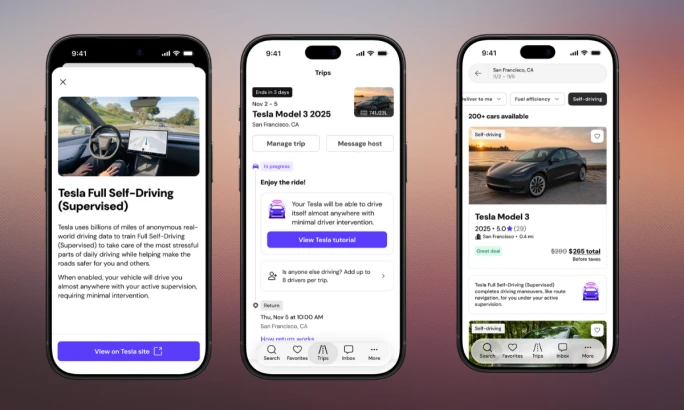
The Turo app allows renters to search for Tesla vehicles equipped with Full Self-Driving (Supervised), verify the feature's availability before booking, and access Tesla instructional materials during their rental.
Tesla
Insurance and Responsibility
Rossanis said Turo is not introducing a separate insurance or protection arrangement for FSD-equipped vehicles.
The platform's existing protection structure applies, and the renter remains responsible for operating the vehicle safely, including when FSD is engaged.
That distinction separates supervised driving assistance from fully autonomous operation, which would introduce substantially different questions about responsibility and liability.
Renters Can Now Choose a Car for Its Tech
FSD gives Turo hosts another way to distinguish their vehicles beyond make, model, or price. The partnership also demonstrates how software-enabled features could become part of the rental selection process.
Traditionally, renters have chosen vehicles primarily by category or model. As automakers introduce more advanced software features, customers may increasingly want to know what a particular vehicle can do.
Rossanis pointed to Turo's broad inventory as an advantage.
“We've got 1,500 makes or models available on the platform globally,” he said, explaining that customers can select specific vehicles rather than simply a vehicle class.
Traditional rental companies could pursue similar integrations with automakers, although their fleet structures and booking models differ from Turo’s.
For Turo, the immediate opportunity is to make FSD a recognizable feature that customers can seek out. The longer-term question is whether other software-defined capabilities will influence rental decisions in the same way.
Quick Answers
The partnership focuses on integrating Tesla's Full Self-Driving (Supervised) technology into the car rental experience offered by Turo.
*Summarized by AI
More Rental Operations
How Rental Operators Can Navigate Personalized Pricing Rules
As regulators scrutinize the use of customer data in pricing, rental operators need to know whether they can explain why one renter pays more than another.
Read More →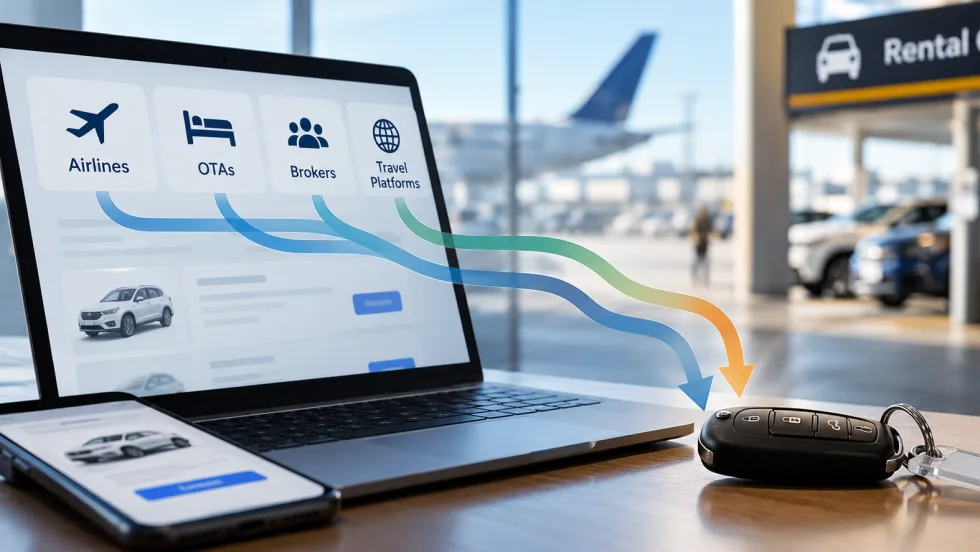
Direct, Broker or Hybrid? How Travel Retailers Source Rental Cars
As travel retailers weigh direct supplier relationships against third-party distribution, rental operators need to understand how those decisions affect their business.
Read More →
How Did This Independent Rental Operator Grow to 170 Vehicles in 4 Years?
With 170 vehicles across three Kentucky locations, Joel Price relies on an overseas team to handle reservations, payments, and after-hours customer service. It's one part of an unconventional approach to growing an independent rental operation.
Read More →
What Does It Take to Succeed in B2B Rentals?
The fundamentals may be familiar to daily car rental operators, but project-based truck rentals put different demands on the fleet and the business.
Read More →
NPR Builds on International Partnerships to Grow Rental Bookings
With Ana Laborde supporting broker development, NPR Auto Group is tailoring distribution strategies, rate packages, and partnerships to grow international reservations across its three brands.
Read More →
Advantage, Sixt Place Among Top Five in Annual Satisfaction Study
While Enterprise and National retain the top spots in JD Power’s 2026 rankings, the latest customer satisfaction results suggest renters can find competitive service beyond the biggest car rental names.
Read More →
The $100,000 Insurance Trap in Exotic Car Rentals
Exotic rental agencies often rely on customers’ personal auto policies to protect six-figure vehicles. But policy language can dramatically change the coverage for vehicles over $100,000 MSRP.
Read More →
The Booking Is Confirmed, But Is Your Customer Ready to Drive?
For international renters, a confirmed reservation doesn’t always mean they’re eligible to drive. Earlier checks can help operators catch documentation and payment issues before the customer reaches the counter.
Read More →
ICRS 2027 Opens Call for Papers
The International Car Rental Show seeks session proposals on the business, operational, and technology issues facing car rental operators. Submissions are due Jan. 15.
Read More →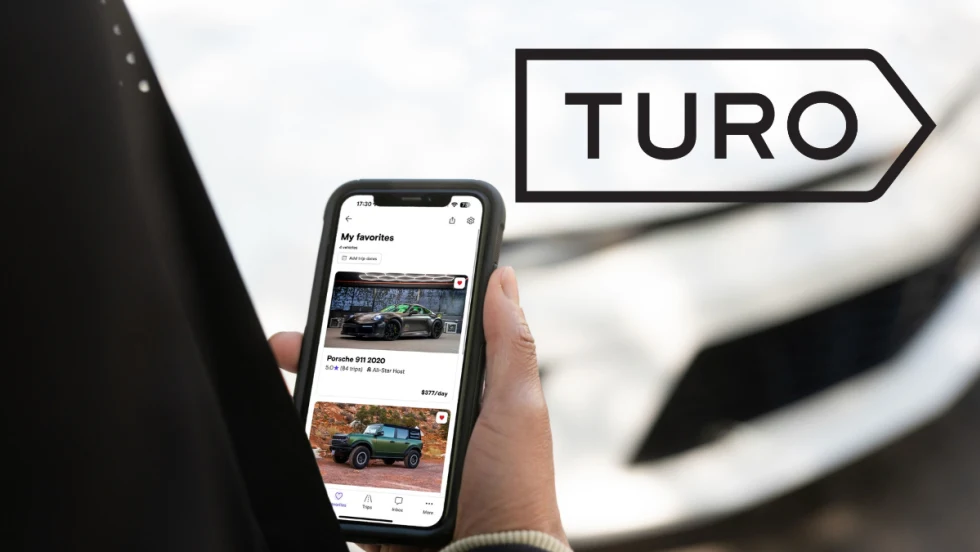
Turo to Launch Vehicle Delivery Service
Turo Delivered will let travelers search for vehicles that hosts can deliver directly to hotels, homes, airports, train stations, and other locations.
Read More →