




Car Rental in Kenya: Safari Tours, Oil Investors, Nonprofits
Nairobi-based Active Car Hire is gaining traction with long-term rentals to business clients while facing a large market of unlicensed competitors.

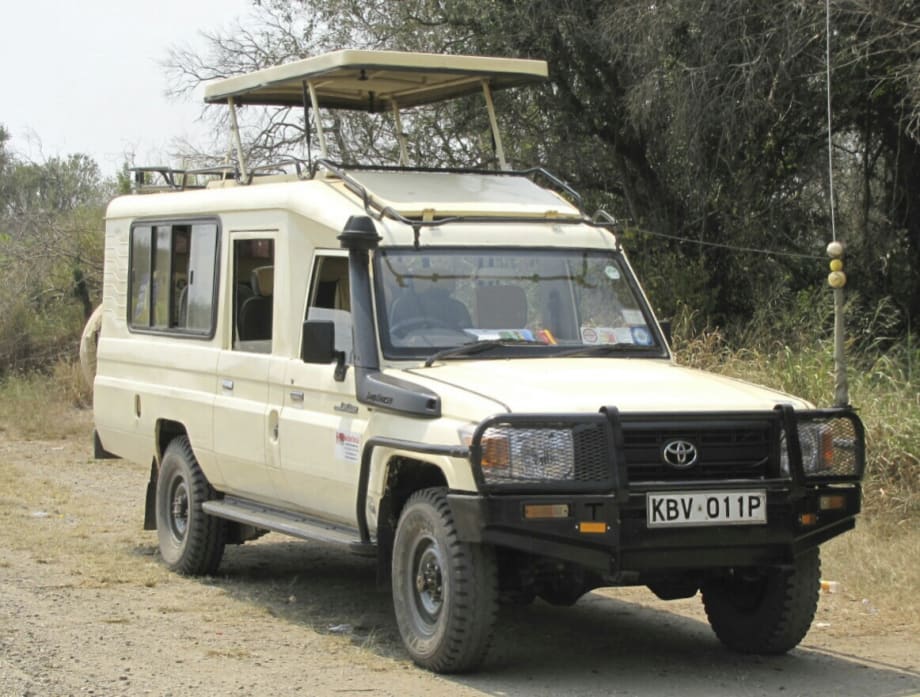
Active Car Hire has a thriving safari tour business, renting Toyota Land Cruisers purpose-built for safaris. Each safari tour includes a driver guide.
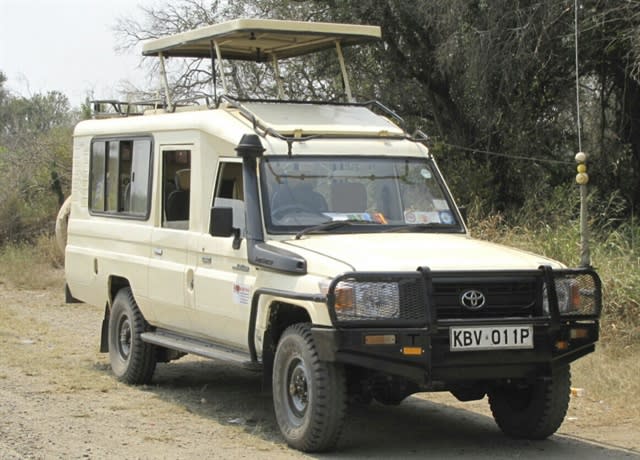
Active Car Hire has a thriving safari tour business, renting Toyota Land Cruisers purpose-built for safaris. Each safari tour includes a driver guide.
Active Car Hire in Nairobi, Kenya, started in 2006 with a single car that was bought through a loan and rented out as a car with driver for airport transfers. The fleet has grown to three locations and 80 units today. “Now we are a full-grown car rental, leasing, and logistics company,” says Active Car Hire’s Mary Njema.
Active Car Hire rents from three locations around Nairobi — in the city center, at the international airport, and along Kiambu Road opposite Kenya Institute of Science & Technology. The company rents a wide range of models, mostly from Toyota, from sedans, minivans, and SUVs to safari-ready vehicles and camper vans.
While the rental markets in other African countries are mostly chauffeur based, Kenya has a greater mix of self-drive. Active Car Hire has recently started specializing in rentals of six months and longer, for which it buys new vehicles from Toyota Kenya. Long-term rentals can be hired with a driver or as self-drive.
The company, owned by Njewa Safari Tours and Travel Ltd., caters mostly to business clientele, from business people, foreign investors and oil exploration companies to private nonprofits (NGOs), particularly for events and conferences.
On the leisure side, the safari tour business is solid, Njema says, which prompted the business to fleet up with safari-ready Toyota Land Cruisers and vans to be used with driver guides. For tours, the high season is from the beginning of the year to the end of March, then from mid-June to the end of December. The problem is the low season. “The income is minimal, but the drivers still have to receive their salaries,” Njema says.
Active Car Hire markets locally as well as internationally through word of mouth, referrals from past clients, the internet, and social media. The company is active in outside sales to nonprofits, engineering firms, missionaries, and consultants. “We pursue new business by visiting their offices and by sending introduction letters to potential customers,” Njema says.
Individual renters can book through the company’s online reservation form. Njema says about half of reservations are made locally, and the other half are made online.
The company keeps new vehicles for five to six years. It fleets up with some used units; those are kept in fleet for three years. De-fleeted rental vehicles are sold through a local used car lot.
Business Challenges
Unscheduled maintenance is an issue for Kenyan car rental companies, owing to the area’s unfixed potholes. Spare parts are expensive. As well, Nairobi’s severe lack of parking is a problem, Njema says.
Logo courtesy of Active Car Hire.
To increase public safety, the Kenyan government has mandated speed governors on all vehicles, and a speed limit certificate must be visible on the vehicle.
Nairobi still faces a large unorganized rental market. “Some have no offices and operate from a briefcase,” Njema says. “They don’t care about the risks involved; they are only interested in the small extra income.”
However, being above board has advantages — “90% of our clients nowadays only operate with registered and licensed companies,” she says. “Some even request your tax registration number and financial statements.”
Overall, “Car rental is growing very fast in Africa,” Njema says, adding that demand continues to increase as the number of business travelers and foreign investors in Kenya increases, particularly in oil and nonprofits. Foreign developers and business clientele rent for short and long terms, and long-term rentals have been an important new business source, she says.
An advancing Kenyan middle class may not be all good for car rental. “Car rental used to do well because very few people could afford a car,” Njema says. “Now, many local people can afford to buy their own vehicles. Thus the car rental business from the locals is coming down, but not too bad.”
More Rental Operations

What Does It Take to Succeed in B2B Rentals?
The fundamentals may be familiar to daily car rental operators, but project-based truck rentals put different demands on the fleet and the business.
Read More →
NPR Builds on International Partnerships to Grow Rental Bookings
With Ana Laborde supporting broker development, NPR Auto Group is tailoring distribution strategies, rate packages, and partnerships to grow international reservations across its three brands.
Read More →
Advantage, Sixt Place Among Top Five in Annual Satisfaction Study
While Enterprise and National retain the top spots in JD Power’s 2026 rankings, the latest customer satisfaction results suggest renters can find competitive service beyond the biggest car rental names.
Read More →
The $100,000 Insurance Trap in Exotic Car Rentals
Exotic rental agencies often rely on customers’ personal auto policies to protect six-figure vehicles. But policy language can dramatically change the coverage for vehicles over $100,000 MSRP.
Read More →
The Booking Is Confirmed, But Is Your Customer Ready to Drive?
For international renters, a confirmed reservation doesn’t always mean they’re eligible to drive. Earlier checks can help operators catch documentation and payment issues before the customer reaches the counter.
Read More →
ICRS 2027 Opens Call for Papers
The International Car Rental Show seeks session proposals on the business, operational, and technology issues facing car rental operators. Submissions are due Jan. 15.
Read More →
Turo to Launch Vehicle Delivery Service
Turo Delivered will let travelers search for vehicles that hosts can deliver directly to hotels, homes, airports, train stations, and other locations.
Read More →
Palm Beach Airport Code Change Creates Car Rental Distribution Gap
A test of rental searches under the old PBI and new DJT airport codes returned largely different sets of brands and vehicles, highlighting a potential distribution problem for rental operators.
Read More →
U-Save Continues Dominican Republic Expansion with Launch in Punta Cana
The new franchise location builds on U-Save’s existing Santo Domingo operation and will begin taking reservations for October 2026.
Read More →
When AI Books the Rental Car, Who Controls the Sale?
As AI moves from comparing rental rates to completing transactions, operators need to understand how travelers find, interpret, rank, and ultimately see their offers. (Part 2 of 2.)
Read More →