



Car Sharing: To Tax or Not to Tax?
With extensive research showing that car sharing services are good for the environment and limit traffic congestion, should car share customers be subject to the same taxes as traditional car rental?

Excise taxes. Auto rental companies loathe the additional fee their customers are forced to incur; nevertheless everyone’s on the same playing field, dealing with the same taxes…right?
As the issue heats up again, the answer may not be so clear.
Car sharing companies across North America are continuing to argue that their service is inherently different from traditional car rental in such that it’s good for the environment and allows people to live in the city without a car.
Too, they attest that taxing their customers is only taxing local residents, rather than out-of-town renters, the revenue mechanism that has been the impetus for these types of taxes in the first place.
Flexcar to Pay Tax–For Now
Following a similar situation last year in Chicago, recently the Washington State Department of Revenue announced that Seattle-based car share company Flexcar would be required to pay a 9.7 percent car rental tax.
The Department of Revenue said Flexcar’s car sharing service is like a traditional rental car and will be taxed as such.
Shortly after the initial announcement was made, Washington Gov. Chris Gregoire stated in a letter to the department that “our tax code should act as an incentive, not a hindrance, to innovation.” She said she wants to “ensure access for consumers” and declared Flexcar offered “creative” solutions to transportation challenges.
Because of that, the state agreed to defer the tax for the month of October. Yet, as of Nov. 1 Flexcar members are required to pay the tax.
In a written statement to the media, Flexcar said it is hopeful everyone will agree that car sharing is a service that should be encouraged and whose members should not be burdened by additional taxes.
The statement continued, “National studies have shown that car sharing members sell or avoid buying cars, reduce vehicle miles traveled and increase transit ridership. In doing so, the impact is felt community-wide in terms of reduced carbon emissions and reduced congestion.”
When arguing that their services are indeed “greening society,” many car sharing companies point to such independent research as Reducing Greenhouse Emissions and Fuel Consumption, Sustainable Approaches for Surface Transportation (March 2007) by Susan Shaheen and Timothy Lipman; and Carsharing in North America, Market Growth, Current Developments, and Future Potential (July 2005) by Susan Shaheen, Adam Cohen, and Darius Roberts.
Talks with all the stakeholders–including traditional car rental companies–are continuing in Washington, but according to Mike Gowrylow, spokesperson for the Washington Department of Revenue, at this point an administrative solution in not in sight.
“It’s looking increasingly like it will have to be resolved by the Legislature,” Gowrylow says. “But, the challenge will be enacting legislation that exempts car sharing organizations without opening up the door to traditional car rental companies doing the same thing.” [PAGEBREAK] Could RACs Be Exempt, Too?
Currently in the metro Chicago area, car sharing organizations are exempt from local rental taxes. However, car sharing organizations there are not exempt from the Illinois state rental tax.
Elsewhere, Vancouver, British Columbia’s Co-operative Auto Network and other car share programs across the province have been informally exempt from a passenger vehicle rental tax but a recent audit has suggested that may change, according to the Vancouver Sun.
However, the Ministry of Small Business and Revenue says it has not yet assessed the audit’s findings and that no decision has been made to collect a rental tax from car share operators.
On the other hand, major car rental companies are arguing that all car rental agencies are in the business of “car sharing” to some extent. As traditional car rental continues to evolve and hourly rental becomes commonplace among traditional rentals, the differences between the two industries will likely blur.
For instance, Hertz recently launched Hertz Hourly Rentals in Boston as well as three Manhattan locations. Likewise, Enterprise Rent-A-Car offers hourly rentals in eight cities–Washington, Seattle, Chicago, Boston, San Francisco, Philadelphia and Portland. Thrifty Car Rental jumped on board with hourly rentals now available at two Manhattan locations.
Enterprise started renting by the hour in Chicago in late 2005; now, about 200 Chicago-area locations offer the service.
Accordingly, traditional RACs argue that their hourly rentals should then also be taxed differently. Yet, how would this be monitored and determined? Which rentals would be deemed tax exempt and which would not?
Laura Bryant, a spokesperson for Enterprise, believes excise taxes are bad across the board–no matter who you are.
“The reality is that excise tax on renting cars, no matter the length of the rental, is a fundamentally poor policy,” she says. Enterprise has customers in the Chicago area who do not own cars and rent as needed, just as a car share customer might do, says Bryant.
A case can be made, Bryant says, for non-profit car sharing companies to not pay taxes. Yet, Enterprise and Flexcar are both for-profit companies so why, she asks, should only one of them be tax exempt?
Taxing traditional car rental customers, some argue, is taxing the city’s own constituency. Since 2004, more than half of revenues from traditional car rentals have come from the neighborhood market.
Car share companies that promote their operation in multiple cities muddy the waters further, says Kevin McLaughlin, president of AutoShare, a Toronto-based car share company. The gray area starts when corporate clients are flying to another city to use the car sharing services there. Should the out-of-town, car-sharing businessman incur the rental tax then? [PAGEBREAK] Drawing the Line
McLaughlin believes that the differences between the two industries may be decreasing, yet a gap still exists.
“It’s just drawing that line with the law is not easy to do,” McLaughlin says. “On any particular rental, it may be difficult to determine how that rental should be taxed.”
According to McLaughlin, one AutoShare vehicle replaces eight to 10 private cars and may reduce driving per person by up to 35 percent. He says that neighborhood-based car sharing has some environmental and social benefit, thus it may be in the city’s best interest not to tax those services.
There hasn’t been evidence to show that traditional car rental is aiding in the public good in terms of the environment, according to Susan Shaheen, a member of the Innovative Mobility Research Group at The University of California Berkeley.
“People seem to be saying that car rental and car sharing are exactly the same,” says Shaheen who wrote her doctoral dissertation on “smart” car sharing. “I don’t have data to support that they are the same thing; their affect on people’s day-to-day behavior is different.”
More Rental Operations
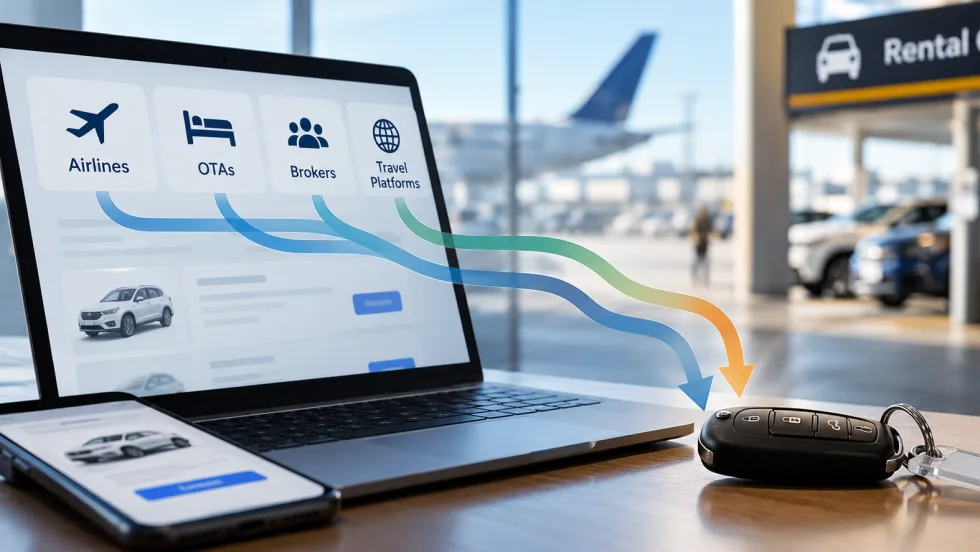
Direct, Broker or Hybrid? How Travel Retailers Source Rental Cars
As travel retailers weigh direct supplier relationships against third-party distribution, rental operators need to understand how those decisions affect their business.
Read More →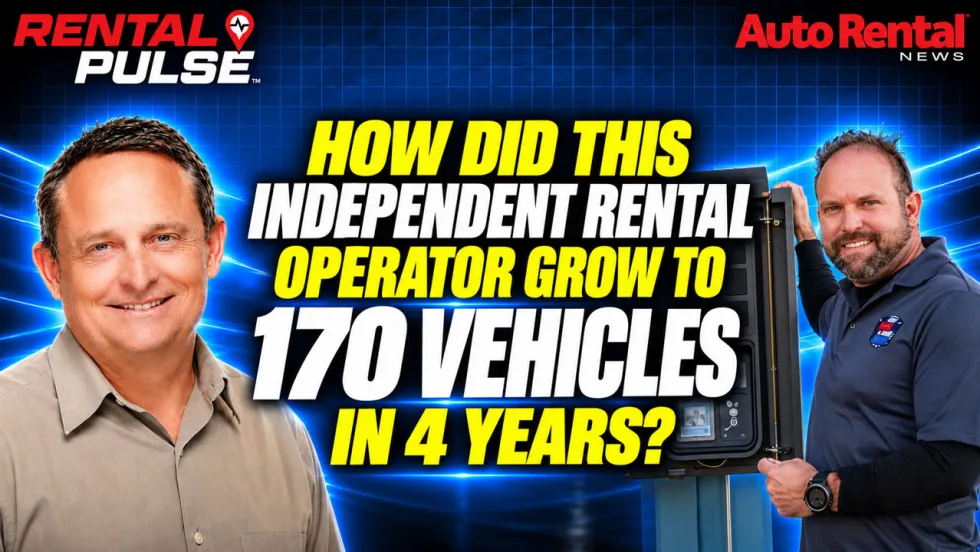
How Did This Independent Rental Operator Grow to 170 Vehicles in 4 Years?
With 170 vehicles across three Kentucky locations, Joel Price relies on an overseas team to handle reservations, payments, and after-hours customer service. It's one part of an unconventional approach to growing an independent rental operation.
Read More →
What Does It Take to Succeed in B2B Rentals?
The fundamentals may be familiar to daily car rental operators, but project-based truck rentals put different demands on the fleet and the business.
Read More →
NPR Builds on International Partnerships to Grow Rental Bookings
With Ana Laborde supporting broker development, NPR Auto Group is tailoring distribution strategies, rate packages, and partnerships to grow international reservations across its three brands.
Read More →
Advantage, Sixt Place Among Top Five in Annual Satisfaction Study
While Enterprise and National retain the top spots in JD Power’s 2026 rankings, the latest customer satisfaction results suggest renters can find competitive service beyond the biggest car rental names.
Read More →
The $100,000 Insurance Trap in Exotic Car Rentals
Exotic rental agencies often rely on customers’ personal auto policies to protect six-figure vehicles. But policy language can dramatically change the coverage for vehicles over $100,000 MSRP.
Read More →
The Booking Is Confirmed, But Is Your Customer Ready to Drive?
For international renters, a confirmed reservation doesn’t always mean they’re eligible to drive. Earlier checks can help operators catch documentation and payment issues before the customer reaches the counter.
Read More →
ICRS 2027 Opens Call for Papers
The International Car Rental Show seeks session proposals on the business, operational, and technology issues facing car rental operators. Submissions are due Jan. 15.
Read More →
Turo to Launch Vehicle Delivery Service
Turo Delivered will let travelers search for vehicles that hosts can deliver directly to hotels, homes, airports, train stations, and other locations.
Read More →
Palm Beach Airport Code Change Creates Car Rental Distribution Gap
A test of rental searches under the old PBI and new DJT airport codes returned largely different sets of brands and vehicles, highlighting a potential distribution problem for rental operators.
Read More →