



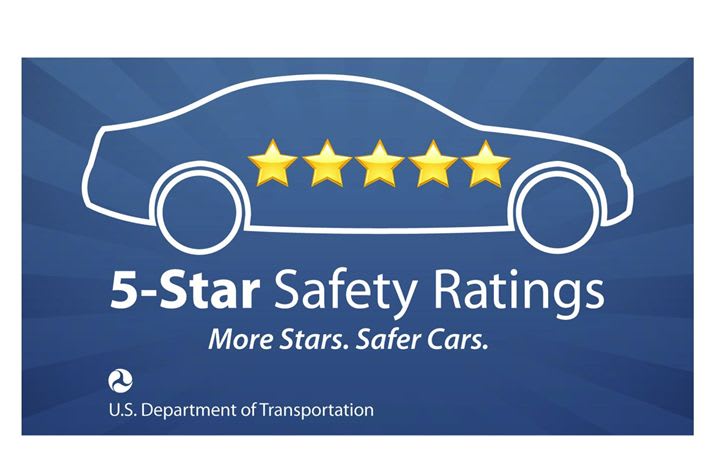
Clarifying NHTSA's Updated 5-Star Safety Rating Program
NHTSA’s updated safety rating program could result in lower ratings for 2011-MY vehicles, even though vehicles are no less safe than those of the previous model-year.

Click here for a PDF of the full article, including tables.
The updated five-star government safety rating program from the National Highway Traffic Safety Administration (NHTSA) includes enhanced crash tests and provides customers with an Overall Vehicle Score for the first time. According to NHTSA, this makes it easier to compare the relative safety performance of vehicles in crash survivability as well as crash avoidance. The new program is set to take effect for select 2011-MY vehicles.
Fifty-five 2011-MY passenger vehicles will be evaluated to receive the new safety ratings, according to NHTSA. The vehicles include 24 passenger cars, 20 sport/utility vehicles, two vans, and nine pickups. These ratings will be available on NHTSA's Safercar.gov Web site.
What Fleet Managers Should Know
More stringent criteria for rating vehicles means vehicles rated under the previous program cannot be compared to vehicles rated under the new rating program. It will be more difficult to receive a four- or five-star rating, and a vehicle given a five-star safety rating under the old system may, if reevaluated under the new system, receive less stars. It is important to note the same vehicle is no less safe just because it appears to receive less stars under the new rating system than the previous model-year.
Consequently, a 2011-MY vehicle that receives a five-star rating under the new program provides more overall protection than a vehicle receiving a five-star rating under the old program.
Fleet managers should be aware of potential confusion as a result of the change. Some manufacturers are working to communicate this information to consumers. Audi of America, for example, is keeping its field and dealership teams informed of the updated criteria. The luxury vehicle manufacturer breaks down the changes and lists and answers potential questions. The communication emphasizes that vehicles currently holding high ratings can be downgraded under the new rating system, which doesn't mean they are less safe. In addition, it states it is not possible to compare an old rating with the new rating.
Changes to Safety Ratings
Changes to the safety ratings are:
Front crash. NHTSA will maintain the 35-mph full frontal barrier test protocol, but will replace the mid-size male dummy in the right front passenger seat with a smaller female dummy.
Side impact. NHTSA will maintain the current moving deformable barrier test at 38.5 mph, but will update the test to include new side-impact test dummies and new injury criteria used to assign a vehicle's side impact barrier rating. There will be a side barrier rating and pole side-impact rating, and these will be combined for an overall side impact rating.
Rollover. The agency will continue to rate vehicles for rollover propensity, but will wait to update its rollover risk model to allow for more real-world crash data of vehicles equipped with electronic stability control (ESC).
The updated testing program will also provide consumers with new information about advanced crash avoidance technologies: ESC, forward collision warning (FCW) systems, and lane departure warning (LDW) systems. NHTSA will not rate the performance of these crash avoidance technologies, but will only note whether the vehicles come equipped with these technologies and whether they meet standards.
NHTSA will also establish a new Overall Vehicle Score, combining star ratings from the front, side, and rollover programs. The ratings are also compared to a baseline risk of injury, which tells consumers if the vehicle is above or below the average amount of injury risk.
NHTSA Ensures Clear Communications
NHTSA is working to ensure the dissemination of accurate and standardized information regarding the new five-star safety ratings, releasing a usage guideline for manufacturers and all consumer-based communications.
The guidelines define correct use of terms, as well as suggest phrases to be used for individual or combined safety ratings. The guidelines also discourage use of misleading terminology such as "perfect," "safest," "flawless," or "best-in-class" to describe the star ratings received by the vehicle.
For frontal- and side-crash safety ratings, the guidelines state that individual ratings (e.g., driver seating position and passenger seating position) should be kept separate and not added to form a new, higher star rating or a "double" star rating. Instead, NHTSA will provide an overall frontal-crash safety rating and overall side-crash safety rating, which also includes the baseline risk, for communications.
In addition, guidelines encourage disclosure of associated crash rating information if related information is noted. For example, if the side barrier star rating for the front seating position is publicized, results for the rear seating position should also be shown, and vice versa.
The guidelines further state that comparison of frontal crash ratings or overall vehicle scores should only occur if vehicles are in the same vehicle class and within 250 lbs. of each other. However, these comparisons can be made across weight categories as long as vehicles do not exceed the 250-lb. comparison limit.
Originally posted on Automotive Fleet
More Rental Operations

Palm Beach Airport Code Change Creates Car Rental Distribution Gap
A test of rental searches under the old PBI and new DJT airport codes returned largely different sets of brands and vehicles, highlighting a potential distribution problem for rental operators.
Read More →
U-Save Continues Dominican Republic Expansion with Launch in Punta Cana
The new franchise location builds on U-Save’s existing Santo Domingo operation and will begin taking reservations for October 2026.
Read More →
When AI Books the Rental Car, Who Controls the Sale?
As AI moves from comparing rental rates to completing transactions, operators need to understand how travelers find, interpret, rank, and ultimately see their offers. (Part 2 of 2.)
Read More →
European Booked Car Rental Rates Fell 5%, Results Varied by Country
Ireland, Cyprus, and the United Kingdom saw steep declines, while booked rates rose in Poland and Hungary.
Read More →
Is It Time to Rethink Rental Categories?
As traditional economy and compact cars disappear from the market, longtime rental operator Mike DeLorenzo asks whether the industry’s familiar vehicle categories still make sense — and what operators need to rethink along with them.
Read More →
Who Owns the Rate? AI Is Creating a New Distribution Problem for Car Rental
Generative Engine Optimization asks whether AI can find a rental company, but operators also need to know whether the agent inspected enough of the market, compared equivalent offers, and presented a rate the traveler can actually book. (Part 1 of 2)
Read More →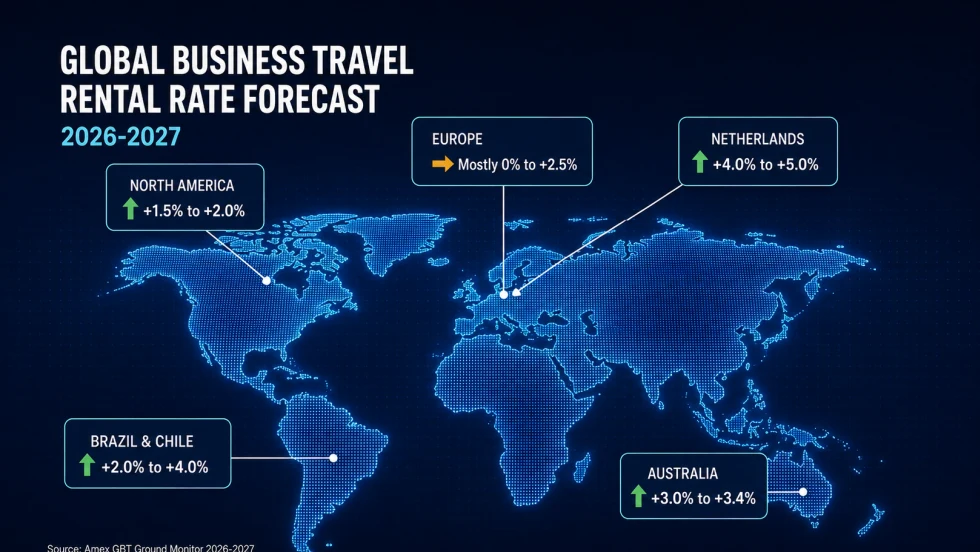
U.S. Business Travel Car Rental Rates Forecast to Rise Up to 2%
Improved fleet supply should limit pricing gains in 2026-27, while insurance, repair costs, and softer residual values continue to pressure rental operations, according to Amex GBT.
Read More →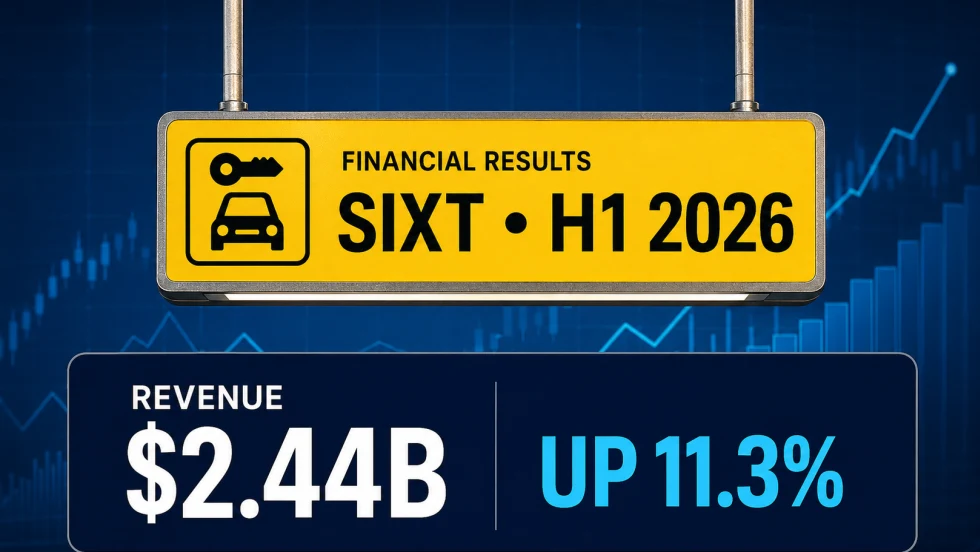
Sixt Revenue Tops $2.4 Billion in First Half of 2026
Sixt’s first-half revenue surpassed $2.4 billion for the first time as demand outpaced fleet growth, lifting utilization and earnings despite weaker consumer sentiment in North America.
Read More →
In Memoriam: Bobby Klyce, Avis Licensee Legend
The longtime Birmingham Avis operator and 2018 Auto Rental News Impact Award recipient was remembered as an advocate for independent licensees and the broader car rental industry.
Read More →
How to Build Custom Fleet Tools With AI and Vibe Coding [Webinar]
A new Automotive Fleet webinar explores how fleet managers are using AI and vibe coding to automate routine work and create simple operational tools without traditional programming skills.
Read More →