




This article originally appeared in our inaugural Auto Rental News International digital edition, covering the European rental market. To access our current International edition covering Latin America, click here.
European Car Rental Market: Pitfalls and Potential
As Europe finally exits a tough economy, market fragmentation, pricing pressures and difficult business conditions pose challenges to growth.
December 21, 2015

9 min to read

If the current state of the European car rental market is to be judged based on the quarterly presentations of the public car rental companies, the industry is faring better as the region ramps up its economic recovery.
Excluding currency effects — and that’s important because currency fluctuations aren’t kind to the euro right now — the public companies operating in Europe (Avis Budget Group, Hertz, Europcar and Sixt) reported growth in revenues within the region in 2014 and in the first quarter of this year, as well as volume increases.
But while the overall economy is growing and the major brands see opportunity in consolidating a fragmented market, car rental companies in Europe must overcome inherent systemic challenges.
Ripe for Consolidation
By Avis Budget Group’s estimate, 35% of the European market is still independent and is far less consolidated than North America. “There’s probably far greater acquisition opportunities in Europe than there are remaining in North America,” said Ron Nelson, Avis Budget Group’s chairman and CEO, on the company’s fourth quarter 2014 conference call.
In April 2015, Avis acquired Maggiore Group, one of the largest independent car renters in Italy. In the last three years, Avis has pushed underpenetrated Budget into Europe, driving the brand’s double-digit growth in the region in 2014.
In 2014, Hertz opened 80 new locations in Europe, and since its acquisition of Dollar Thrifty in late 2012, it has added 320 dual-branded Dollar Thrifty locations in the region.
While well-established European brands Europcar and Sixt concentrate on opening new branches internationally, both saw revenue and volume grow in their existing European locations in 2014.
Meanwhile, since beginning its franchise initiative outside of North America in 2012, privately-held Enterprise Holdings has set up franchises in 19 countries in Europe to complement its base of corporate stores. In December 2014, Enterprise Holdings terminated its agreement with Europcar to operate National and Alamo, allowing Enterprise to grow those brands under its corporate umbrella in the region.
Imad Khalidi, CEO of Auto Europe, a U.S.-based travel services provider to Europe, believes further consolidation in Europe is inevitable. “What happens in the U.S. today will happen tomorrow in Europe,” he says.
The Broker Connection
As Europe is made up of some 50 countries and 50 unique cultures, market fragmentation is understandable. The creation of the European Union in the mid-90s eased border crossings and created a common currency for 19 countries in the eurozone, though other travel barriers remain.
This fragmentation has stratified car rental services, particularly in the leisure market where independent brands gain most of their business, says Roland Keogh, chief sales officer at Thermeon Worldwide, a vehicle rental systems provider.
Similar to the U.S., large travel comparison sites such as Expedia and Kayak, as well as booking engines such as CarTrawler, aggregate the major car rental suppliers and larger independent brands.
But the model diversifies from there — from car rental companies that broker other smaller companies’ vehicles and manager/broker sites such as VIPcars.com, to a plethora of market-specific sites that broker traffic for companies with small fleets and more basic levels of automation. “There are so many channels now trying to capture that leisure envelope,” Keogh says.
Yet the brokers’ relationship with the rental companies, especially on the small end, often lacks the structure and scrutiny of a franchise or affiliate system, says Keogh. The handoff of the reservation to the independent rental company may lead to a mismatched price quote, misunderstood terms and conditions or even an unfulfilled reservation. “You have lots of potential break points,” Keogh says.
While leisure travelers might put up with spotty customer service in a brokered transaction, price is a prime motivator — so they keep coming back. As a consequence, “The larger brokers see that price is under threat and it drives the price down again,” Keogh says.
“I can’t remember a time in the last 20 years in Europe when a rental company didn’t say that price wasn’t on downward pressure,” adds Keogh.
Profit Pressures
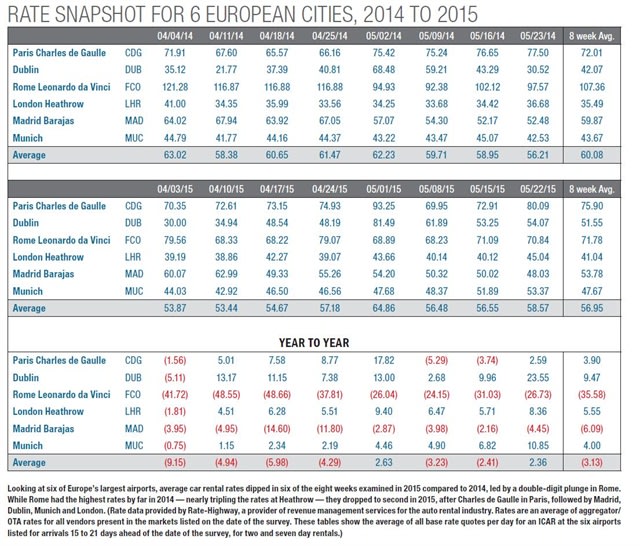
Khalidi of Auto Europe reports spring 2015 average prices for a leisure car rental across all European countries and vehicle categories to be only $200 a week, with prices as low as $27 a week in Spain. For U.S. travelers in Italy, a small rental car commands $300 a week, though in Ireland that weekly rate is only $100.
Owing to high fuel prices and small streets, about 50% of the European car rental fleet is in the economy and “mini” segments, says Khalidi, another factor contributing to lower prices.
The expansion of European no-frills airlines such as EasyJet and Ryanair has created more travel opportunities for long weekend getaways, yet it has also fostered the no-frills rental market. “Deep discount” car rental brands have grown commensurately — Goldcar has a fleet size in Spain that rivals Hertz, Avis and Europcar — and is looking to grow internationally.
“People are booking shorter rentals than they used to,” says Robert Bestor, owner of Gemut.com, a travel portal serving Americans traveling to Europe. “When we started 25 years ago, our business was renting a car for two to three weeks. Now some people go for a weekend. The ‘grand tour’ is really gone now. Today we’re focused on regions and individual countries.”
Owing to the dollar’s near parity with the euro, inbound tourism from the U.S. is booming, and Auto Europe reports advanced bookings are up double digits. In a bad U.S. economy, Americans spend nine days in Europe, Khalidi says. In today’s better economy, they’re traveling for 10 days and moving up a car class.
“Our business for Americans going to Europe is caviar, and our business inter-Europe is popcorn,” Khalidi says.
Keogh believes the dollar-euro parity may put more pressure on prices rather than firm them up. “The larger franchisors will try to hold onto a level of premium inbound,” he says. “But the mass-market, lower-tier suppliers will always try to compete on price.”
While Europe enjoys a substantially higher level of prepaid bookings than the U.S. — prepaid bookings on branded websites in Europe run 50% to 60% — prepaid rates are also driven by brokers.
Brokers are used for 20% to 70% of European bookings depending on the country, and those bookings are generally prepaid. In Ireland, about 70% of brokered transactions are prepaid, according to Bernard Loughran of Sixt Ireland. “Prepay is so competitive that prices are stripped to a minimum and renters then pay ‘extras’ on arrival,” says Loughran.
With rental rates so low, Khalidi estimates that car rental companies in Europe make 70% of their profit from ancillary fees. “You could spend $100 [extra] easy on a $10 rental,” he says.
Doing Business
Europeans must deal with high taxes — the standard retail tax in the eurozone has gone from 19% to 21% four years ago to 23% to 25% today — and a myriad of local policies that hamper operations and sometimes lead to customer service snafus.
Renters in Italy must buy the collision damage waiver (CDW). It comes with a high deductible, and rental companies sell insurance-type products to cover that gap. In Ireland, rental companies are allowed to levy a surcharge for renters older than 75.
France required all cars, including rentals, to carry breathalyzer kits in 2012. The law was suspended shortly thereafter. When Germany made winter tires mandatory, at first rental companies passed the cost onto the consumer; they don’t anymore.
Traffic cameras have become ubiquitous in Europe. “We used to get one call a year about traffic tickets; now we get a couple every week,” Bestor says. “The rental companies are inundated.”
Burdened with turning over the renter’s information to the ticketing authority, the rental company charges an administrative fee to the renter, sometimes six months later. Then up to six months after that, the renter receives a separate bill mailed from the overseas ticketing authority for the violation.
Another problem is “environmental zones” such as those in London and Florence, Italy. “Florence is notorious,” Bestor says. “If you don’t have the right sticker, you’ll get a ticket from a camera, each time you drive in and out of the zone.”
Operational Challenges
A fragmented market presents operational challenges as well. Auto sales are segmented by country, so rental companies have less leverage with manufacturers in terms of fleet buying power, and dealers in Europe are more sensitive to keeping vehicles for retail sales.
“You’ll have situations where one manufacturer will be putting out a certain model, and in another country 100 kilometers down the road, you can’t get [that model] for any amount of money,” Keogh says.
The European Union is working on allowing goods such as car rentals to be bought in one country and used in other markets more freely, though the initiative is still in its infancy, Keogh says.
Holding costs are higher in Europe, so rental vehicles tend to be older than in the U.S. That creates added maintenance pressures, exacerbated by inconsistent service standards country to country and less corporate control of fleets.
East Meets West
Travel in and out of countries that more recently joined the EU — such as Croatia, Slovakia and Poland — is much easier now and tourism is growing there, Khalidi says, singling out Croatia as a market with double digit growth.
But while Eastern Europe represents the last land rush on the continent, challenging business conditions have hindered growth. Retrieving stolen vehicles across borders can be difficult. Impounds at border crossings, lax vehicle registration laws and stolen car pipelines to Albania and North Africa are other business hazards.
Most companies forbid driving into Bosnia, though Serbia and Romania are permitted, sometimes if a special liability waiver is purchased, Bestor says.
The Russian market is complicated by bureaucratic procedures regarding accidents, long repair periods due to a lack of replacement parts, high fraud and costly insurance, says Alexei Zaharov of the Russian analytical agency Finam. (Click here for a separate article on car rental in Russia in this edition.)
Conditions in Russia are improving, slowly. Rental companies were fraught with car thefts until a 2009 law permitted companies to check customers against the database of Russia’s Ministry of the Interior. Thefts and serious accidents involving rental cars dropped by 50% as a result.
In Bulgaria, the car rental industry hardly existed 20 years ago, says Ivomir Stanchev of Top Rent-A-Car. While the majors have entered and now dominate the market — along with a handful of large independents such as Top Rent-A-Car — Bulgarian car rental has scores of local family businesses with fleets of five to 15 cars. (Click here for a profile on Top Rent-A-Car in this edition.)
“The problem is that such companies can’t keep their cars in good condition and a lot of customers are disappointed with the service they provide,” Stanchev says. “This makes it harder for us to persuade customers that we are a company they can rely on.”
The Russia-Ukraine conflict is also resulting in a significant drop in bookings from those two countries. As Russia is Bulgaria’s main source of tourism, this will have a serious impact on Bulgaria and surrounding markets in 2015, Stanchev says.
Not Going Away
From a profit and customer service standpoint, the car rental industry in Europe would benefit from further consolidation and resulting standardization. The pace of consolidation seems to have accelerated in recent years, though reaching the level of consolidation found in the U.S. is many years away.
Carsharing has gained a foothold in Europe’s crowded urban centers while potential for growth exists in underpenetrated Eastern European markets as business conditions ameliorate.
Though European travelers take advantage of excellent public transportation, Khalidi says car rental in Europe is a relative bargain, while offering distinct advantages. “Four people in a [rental] car is far cheaper than four plane tickets,” he says. “When you’re flying, you’re stuck in a seat. You don’t see the country.”
“No other form of transportation will overtake car rental,” Khalidi says. “It will live a long time.”
Subscribe to Our Newsletter
More Rental Operations
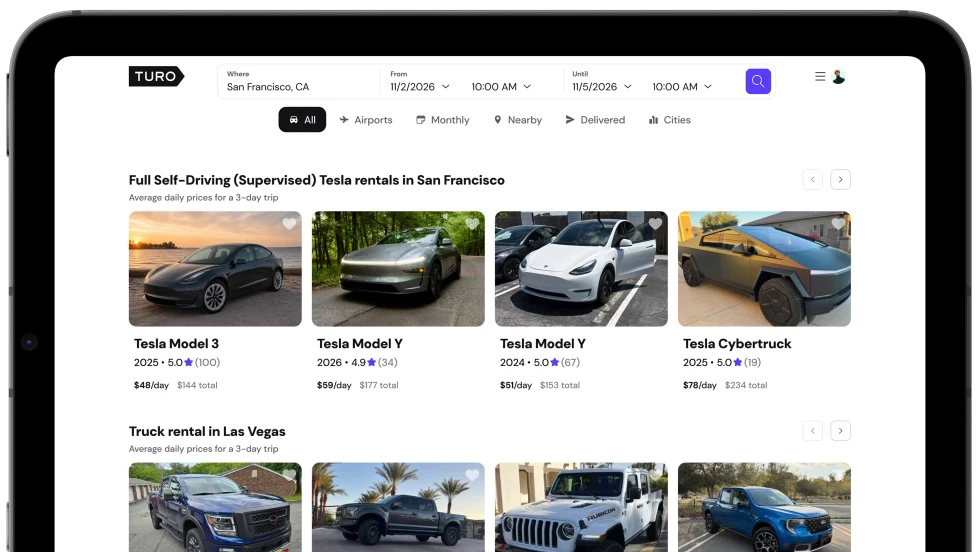
Turo and Tesla Take the Next Step Toward Autonomous Car Rentals
The partnership brings Tesla's Full Self-Driving (Supervised) technology into the rental experience, offering a glimpse of how increasingly automated vehicles could change car rental.
Read More →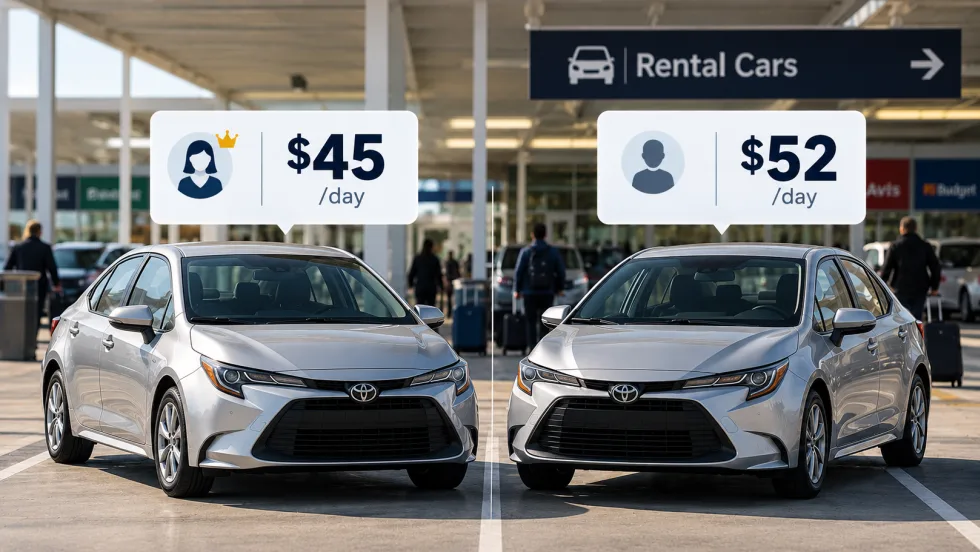
How Rental Operators Can Navigate Personalized Pricing Rules
As regulators scrutinize the use of customer data in pricing, rental operators need to know whether they can explain why one renter pays more than another.
Read More →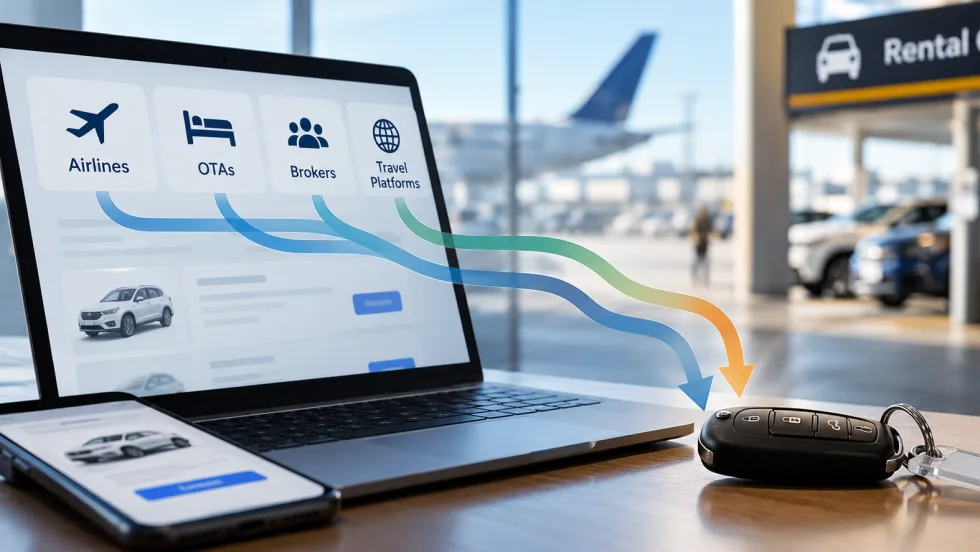
Direct, Broker or Hybrid? How Travel Retailers Source Rental Cars
As travel retailers weigh direct supplier relationships against third-party distribution, rental operators need to understand how those decisions affect their business.
Read More →
How Did This Independent Rental Operator Grow to 170 Vehicles in 4 Years?
With 170 vehicles across three Kentucky locations, Joel Price relies on an overseas team to handle reservations, payments, and after-hours customer service. It's one part of an unconventional approach to growing an independent rental operation.
Read More →
What Does It Take to Succeed in B2B Rentals?
The fundamentals may be familiar to daily car rental operators, but project-based truck rentals put different demands on the fleet and the business.
Read More →
NPR Builds on International Partnerships to Grow Rental Bookings
With Ana Laborde supporting broker development, NPR Auto Group is tailoring distribution strategies, rate packages, and partnerships to grow international reservations across its three brands.
Read More →
Advantage, Sixt Place Among Top Five in Annual Satisfaction Study
While Enterprise and National retain the top spots in JD Power’s 2026 rankings, the latest customer satisfaction results suggest renters can find competitive service beyond the biggest car rental names.
Read More →
The $100,000 Insurance Trap in Exotic Car Rentals
Exotic rental agencies often rely on customers’ personal auto policies to protect six-figure vehicles. But policy language can dramatically change the coverage for vehicles over $100,000 MSRP.
Read More →
The Booking Is Confirmed, But Is Your Customer Ready to Drive?
For international renters, a confirmed reservation doesn’t always mean they’re eligible to drive. Earlier checks can help operators catch documentation and payment issues before the customer reaches the counter.
Read More →
ICRS 2027 Opens Call for Papers
The International Car Rental Show seeks session proposals on the business, operational, and technology issues facing car rental operators. Submissions are due Jan. 15.
Read More →