




Related: Discount Car and Truck Rentals Hit by Ransomeware Attack
How to Prevent Cyber Attacks on Your Car Rental Business
Learn steps to be proactive in protecting yourself against becoming a cybercrime victim, with little to no cost to you.
by John Iannarelli, FBI Special Agent (Ret.)
August 5, 2021
Your vehicle’s internal computer system, as well as consumers' smart devices, should be updated before use and before pairing to prevent compromise and reduce the risk of threats.
Photo: Darwin Laganzon from Pixabay
4 min to read
The mission of the car rental business is to provide dependable vehicles for consumer transportation. Although the industry is not cyber or computer centric, each transaction within the car rental business model involves the exchange of money and sensitive personal consumer information, such as names, dates of births, and driver license numbers. Because money and information are what attracts the cyber thief, those in the car rental business need to be proactive to protect against becoming a cybercrime victim.
Cybercrime has increased in all sectors, to include the car rental businesses, with approximately $3.5 billion in domestic losses annually. Regrettably, cybercriminals are challenging to identify and even more difficult to apprehend, frequently operating on the Internet’s dark web and in faraway foreign lands where U.S. law enforcement has no jurisdiction. Therefore, it is important for those in the car rental industry to take the necessary steps to protect themselves and their customers. Fortunately, this can be achieved at little or no cost to either the business or the consumer.
Preventative Steps
Vehicles today have incorporated elements of cyber connectivity, which leave them susceptible to being hacked. If a vehicle can be hacked, it can not only be controlled while being operated, potentially creating liability should an incident occur, but more likely the vehicle can also be stolen. By hacking into the pre-existing computer software security flaws, it is relatively easy for a cybercriminal to obtain remote access to the vehicle ignition start. The easiest and most economical way to prevent this from occurring is by making sure rental vehicle onboard computer systems are up to date. Vehicle manufactures regularly provide computer updates at no cost whenever a vulnerability is discovered. Timely software updates of vehicle computer systems will prevent a system compromise and vehicle theft.
Likewise, smartphones and other devices that integrate with vehicle computer systems also pose a potential risk. Just like the vehicle’s internal computer system, a smart device that has not been updated with the latest security software, once paired with the vehicle, creates an avenue through which hackers can further gain vehicle access. Accordingly, car rental businesses should enlist customer assistance by reminding renters to update their personal-device security updates before pairing with rental vehicles. Running regular OS updates not only protects the business, but in the long run, will protect the smart device owner, too.
Recommended Computer Use Policies
Finally, in addition to the actual vehicle, the car rental business computer network is a highly attractive cyber target. Cybercriminals understand that every rental transaction will involve not only money, but the sensitive personal information of the renter. Once compromised, this information can be utilized by the cybercriminal or sold to others, causing further victimization of the consumer and creating liability for the car rental business, who by law must make their customer whole once again. Generally, these compromises occur when the rental business network becomes infected with malware, usually downloaded unintentionally by an employee. While antivirus software can eliminate most malware, preventing a malware infection should be the priority. The car rental business should have computer user policies that prohibit employees from engaging in personal activities on the network, such as checking their email or social media. Likewise, evening during the normal course of conducting business, employees should be made aware to avoid clicking any suspicious links that can lead to malware infecting the network. Restricting Internet activities and being proactive in avoiding potential dangers will greatly reduce the risk to the business of cyber threats.
Cybercriminals will target both rental vehicles and the car rental business, which can inflict financial and reputational damage. Fortunately, cyber-attacks can be minimized through simple and cost-effective precautions. These actions will greatly enhance protecting both the car rental business and their customers from cybercrime.
About the author: John Iannarelli, aka FBI John, served for more than 20 years as an FBI Special Agent and was also the Bureau’s national spokesperson. His investigative work included the Oklahoma City Bombing, the 9/11 attack, the Congresswoman Gabrielle Giffords shooting, the Sony hack, and other assorted crimes. He is the recipient of the FBI Director’s Distinguished Service Award, as well as an Honorary Doctor of Computer Science. He is a national news on-air consultant and the author of five books.
Subscribe to Our Newsletter
More Rental Operations

Advantage, Sixt Place Among Top Five in Annual Satisfaction Study
While Enterprise and National retain the top spots in JD Power’s 2026 rankings, the latest customer satisfaction results suggest renters can find competitive service beyond the biggest car rental names.
Read More →
The $100,000 Insurance Trap in Exotic Car Rentals
Exotic rental agencies often rely on customers’ personal auto policies to protect six-figure vehicles. But policy language can dramatically change the coverage for vehicles over $100,000 MSRP.
Read More →
The Booking Is Confirmed, But Is Your Customer Ready to Drive?
For international renters, a confirmed reservation doesn’t always mean they’re eligible to drive. Earlier checks can help operators catch documentation and payment issues before the customer reaches the counter.
Read More →
ICRS 2027 Opens Call for Papers
The International Car Rental Show seeks session proposals on the business, operational, and technology issues facing car rental operators. Submissions are due Jan. 15.
Read More →
Turo to Launch Vehicle Delivery Service
Turo Delivered will let travelers search for vehicles that hosts can deliver directly to hotels, homes, airports, train stations, and other locations.
Read More →
Palm Beach Airport Code Change Creates Car Rental Distribution Gap
A test of rental searches under the old PBI and new DJT airport codes returned largely different sets of brands and vehicles, highlighting a potential distribution problem for rental operators.
Read More →
U-Save Continues Dominican Republic Expansion with Launch in Punta Cana
The new franchise location builds on U-Save’s existing Santo Domingo operation and will begin taking reservations for October 2026.
Read More →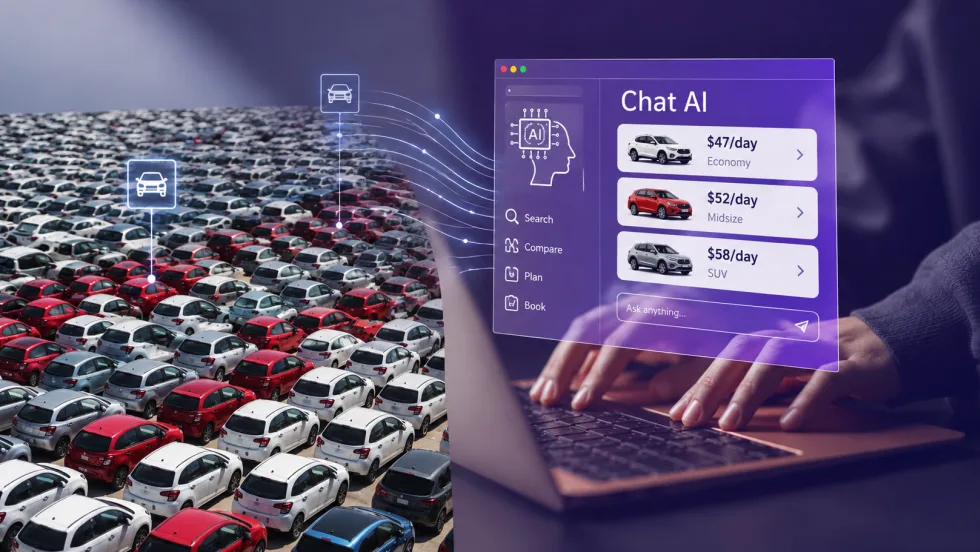
When AI Books the Rental Car, Who Controls the Sale?
As AI moves from comparing rental rates to completing transactions, operators need to understand how travelers find, interpret, rank, and ultimately see their offers. (Part 2 of 2.)
Read More →
European Booked Car Rental Rates Fell 5%, Results Varied by Country
Ireland, Cyprus, and the United Kingdom saw steep declines, while booked rates rose in Poland and Hungary.
Read More →
Is It Time to Rethink Rental Categories?
As traditional economy and compact cars disappear from the market, longtime rental operator Mike DeLorenzo asks whether the industry’s familiar vehicle categories still make sense — and what operators need to rethink along with them.
Read More →