




Improving Revenue Management in An Economic Downturn
To compete in this challenging fiscal climate, your company must adopt rate management strategies that reflect a more flexible booking policy, be able to take advantage of walk-up business and establish a unique market position.
Regardless of your brand position, your revenue management strategies must take into account the conditions in today’s marketplace. Employing forward-looking rate strategies will position your organization for success in spite of today’s challenging fiscal climate. Consider focusing on the following activities to maximize your results.
Align Booking Trends and Policies
When evaluating your revenue strategies and policies, examine booking trends to identify growth opportunities. What booking channels or demand segments are performing well? What does this imply about current pricing and revenue targets?
Now more than ever is the time to determine which marketing programs are generating your bookings. Focus on those channels. Assumptions regarding profit margin for different demand types or pricing products need to be revisited. This ensures that the pricing is right and that rentals from the most profitable customer segments are maximized.
The review of your booking segments should challenge prior decisions made under different economic conditions. Reconsider your booking policies. Perhaps a very restrictive policy for bookings was appropriate when higher demand existed, but today these policies may be decreasing your utilization.
Are you requiring a credit card to book on certain channels when your competitors do not? Are your incremental costs (i.e., underage or additional driver fees) higher than your competitors’? Today’s cost-conscious customers research the marketplace and make their booking decisions based on total rental cost. If you are not priced in line with your market, you will lose reservations to your competition.
Plan Fleet Mix in Accordance with Market Demand
By monitoring your bookings by car class, your demand statistics will give you the necessary information to develop an effective fleet strategy. Is demand primarily in the standard car class sizes, or is there a significant demand for specialty or high-end vehicles?
Consider your client segments. If you’re in a value-oriented market, you need to set your fleet mix to a larger-than-usual percentage of economy, compact and midsize vehicles. If you have a high volume of corporate accounts that desire specialty or high-end vehicles, you will need to fleet up to accommodate the demand—or risk losing accounts.
Focus on Your Advance Build
Focusing on overall advance build is key to successful rate management. It starts with an understanding of market pricing trends, your position in the marketplace and required demand to attain your utilization and revenue goals. Consider the following advance build goals and objectives:
What are my utilization goals?
What advance build do I need to attain my desired utilization?
What are my booking goals “first to last,” at zero to seven days out, eight to 14 days and 15 to 30?
You’ll also need to know your expected no-show factor. Incorporate a procedure to confirm reservations before day of arrival. This procedure will ensure that you have done everything possible to lessen your no-show factor and save you on your overall reservation expense. Once you have determined these factors, you can begin to plan accordingly.
[PAGEBREAK]
You will also need to adjust your booking needs in accordance with your scheduled fleet size adjustments. The key is to accomplish enough advance demand to ensure a proper daily utilization, while leaving enough availability to take advantage of last minute walk-up business, which usually brings a higher daily rental rate. Failure to do so will most likely result in accepting lower-margin rentals to get your fleet on the road.
Proactively Manage Your Advance Booking Forecast
Most strategic pricing decisions are made using historical demand and existing booking trends to develop a forecast strategy. However, current booking behavior has been volatile, making prior years’ performance irrelevant for today’s conditions. Whereas travel decisions were made further out in the past, in many markets bookings are frequently made closer to the day of pickup.
It’s essential to stay on top of shifting trends that are reflected in your strategy. Ensuring it is up to date and responsive to the latest trends will permit better pricing decisions for today’s market. Accurate and reliable demand forecasts will also play a critical role in identifying cost decisions for total profitability.
Manage Channels Effectively
Once you have determined which channels are providing your best results, zero in!
In principle, pricing strategies are fairly straightforward. In practice, they require you always to be on top of your competition. Gone are the days of simply posting a discount rate and receiving your allotment of bookings. Today, you must know the tendencies of each demand segment and how to satisfy them to meet booking demands.
Determine what sets your organization apart from your competitors. Once you have identified your strategic edge, determine the potential to apply these techniques to other channels to attain better universal results.
Your strategy may not be appropriate for other channels. Some channels may require total pricing marketing while others gain better booking results with base pricing techniques. Consider all options and apply them accordingly, then monitor channel results closely to maximize all opportunities.
Keep Strategic Planning Flexible
Remember the old adage, “Most battles are won before they are fought”? If you implement the strategies we have reviewed, you’ll position yourself to achieve your desired profit results.
A plan, however, is just that—a plan. Visit your plan often in the pursuit of your goals. Market conditions and demand will change. Your plan is a living and breathing document and will require flexibility. Realize this, and change your plan accordingly.
Steven Neudorff has more than 12 years of car and truck rental franchise operations experience. Neudorff recently joined Rate Highway as vice president of consulting & sales.
[PAGEBREAK]
Airport Rate Wars
How effective rate management strategies turned into a win-win for a David and his Goliath competitors.
When Advantage Rent A Car vacated its location serving the Colorado Springs airport, local U-Save licensee Sean Cox beat out some major competition to secure the property.
Now serving the airport, Cox needed to employ rate management strategies to compete with the Big Boys and achieve rates that work for his business and the rest of the market.
Cox explains the evolution of his rate management philosophy and technique. We’ll call the competition Major Brand A and Major Brand B.
A Race for the Bottom
“We learned a big lesson at the airport with Major Brand A,” says Cox, who employs Rate-Highway’s automated rate positioning technology. “When we first opened, Brand A hadn’t paid attention to us until we were on the reservation channels [Orbitz, Expedia]. At that point we decided to be the low price leader, and it didn’t take long for Brand A to figure it out.Immediately after we changed our rate, they would beat it. We effectively started a race for the bottom. We decided to allow them to be the cheapest. It made sense that if Brand A always wanted to be the lowest price, we should let them.”
We’re Happy at Two
“Initially we decided we’d be a dollar a day more than Brand A. A week later Brand A started shopping based on the total amount of the rental [including fees] instead of just the daily rate. Our cost structure is less because we don’t pay the airport access fee. So Brand A still needed to be $3 a day lower to beat our off-airport rate. And they adjusted even lower to reflect that. I then decided to change our rate strategy to incorporate total pricing as well.“However, if we’re going to be second cheapest at $17 a day, wouldn’t we rather be second at $40 a day? We wouldn’t be getting more customers at $18 a day than at $40, because the Web site traffic would still be about the same. If we’re always going to be listed in second place, I want the highest rate we can get.”
Raising the Bar—for Everyone
“I decided to stop shopping Brand A altogether and focus on the next lowest total price. We decided to come in at $4 to $5 below the next competitor [Major Brand B]. When Brand B came in at $35 a day, we’d show up at $31 a day, while Brand A was $15 a day.“Brand A then realized they didn’t have to beat our rate anymore. They realized that they could raise their rates and still be the lowest. We have seen over the short term a gradual rise in average rental rates. We’ve moved the floor of rental rates up by not tying ourselves to the lowest price in the market.”
Try this at Home
“If you’re going to try this strategy in your market, the responsible thing to do would be to sample prices at 30 days out and further so as not to impact today’s business.See what happens if you move your rates up – will your competition do the same? You might retain the same number of reservations for more money 30 days from now. If you start to see a drop in reservations, you can immediately pull up.
If you’re successful and your competition does move with your future reservations build, you can move closer in with your pricing strategy.”
A Successful Strategy
“Brand A made it clear it would dictate its position in the market as the low price leader.When I enacted the strategy of moving up in rate and seeing if Brand A would follow, they did exactly that. I feel we’ve impacted this market in a positive way by simply monitoring the market closely and being aware of their strategy.
“We’ve changed our booking trends and policies from being reactionary to being forward looking and proactive about our competition. You need to be completely educated on your competition. For the little guys it’s too easy to overlook. Now we’re not chasing to the bottom anymore, and we’re all getting decent rates.”
More Rental Operations

Palm Beach Airport Code Change Creates Car Rental Distribution Gap
A test of rental searches under the old PBI and new DJT airport codes returned largely different sets of brands and vehicles, highlighting a potential distribution problem for rental operators.
Read More →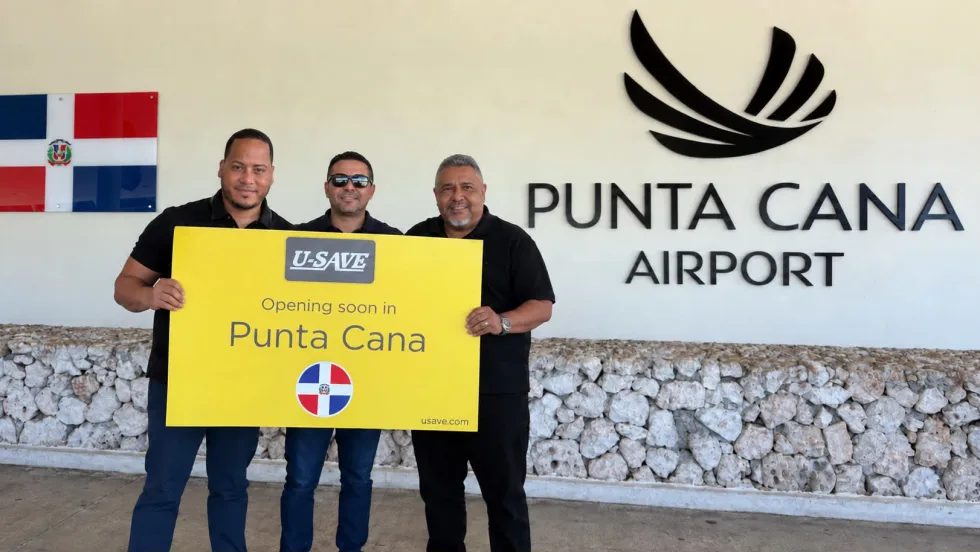
U-Save Continues Dominican Republic Expansion with Launch in Punta Cana
The new franchise location builds on U-Save’s existing Santo Domingo operation and will begin taking reservations for October 2026.
Read More →
When AI Books the Rental Car, Who Controls the Sale?
As AI moves from comparing rental rates to completing transactions, operators need to understand how travelers find, interpret, rank, and ultimately see their offers. (Part 2 of 2.)
Read More →
European Booked Car Rental Rates Fell 5%, Results Varied by Country
Ireland, Cyprus, and the United Kingdom saw steep declines, while booked rates rose in Poland and Hungary.
Read More →
Is It Time to Rethink Rental Categories?
As traditional economy and compact cars disappear from the market, longtime rental operator Mike DeLorenzo asks whether the industry’s familiar vehicle categories still make sense — and what operators need to rethink along with them.
Read More →
Who Owns the Rate? AI Is Creating a New Distribution Problem for Car Rental
Generative Engine Optimization asks whether AI can find a rental company, but operators also need to know whether the agent inspected enough of the market, compared equivalent offers, and presented a rate the traveler can actually book. (Part 1 of 2)
Read More →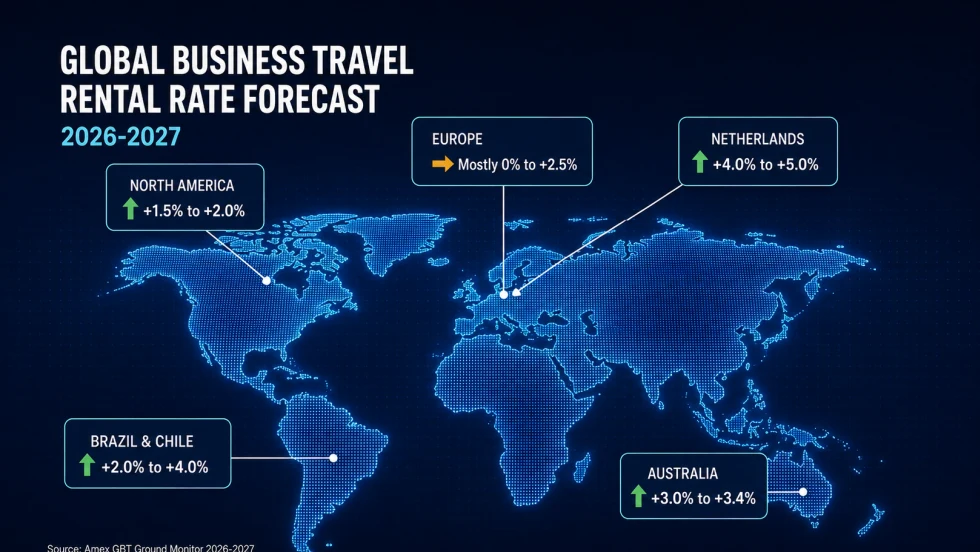
U.S. Business Travel Car Rental Rates Forecast to Rise Up to 2%
Improved fleet supply should limit pricing gains in 2026-27, while insurance, repair costs, and softer residual values continue to pressure rental operations, according to Amex GBT.
Read More →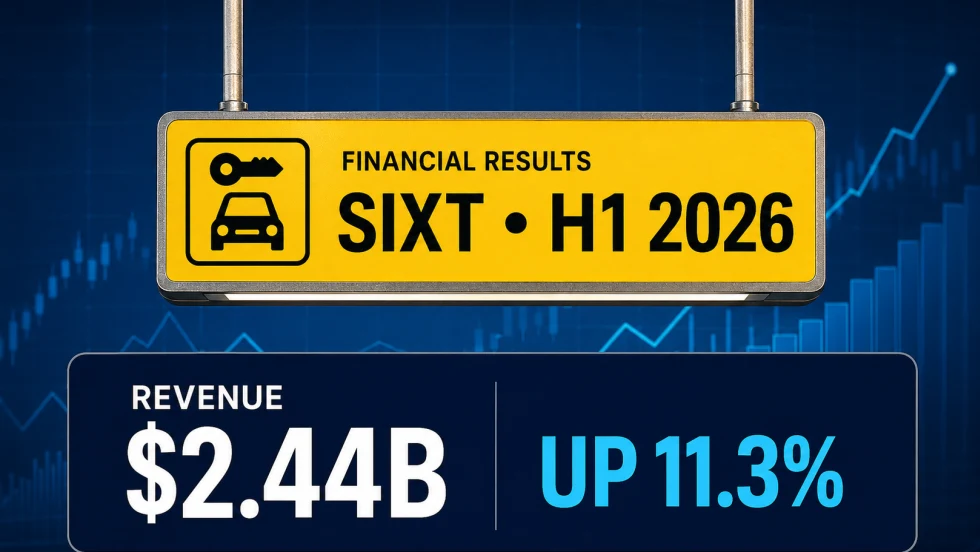
Sixt Revenue Tops $2.4 Billion in First Half of 2026
Sixt’s first-half revenue surpassed $2.4 billion for the first time as demand outpaced fleet growth, lifting utilization and earnings despite weaker consumer sentiment in North America.
Read More →
In Memoriam: Bobby Klyce, Avis Licensee Legend
The longtime Birmingham Avis operator and 2018 Auto Rental News Impact Award recipient was remembered as an advocate for independent licensees and the broader car rental industry.
Read More →
How to Build Custom Fleet Tools With AI and Vibe Coding [Webinar]
A new Automotive Fleet webinar explores how fleet managers are using AI and vibe coding to automate routine work and create simple operational tools without traditional programming skills.
Read More →