



In Your Own Words: Operators Manage Security Issues
From lot thefts and employee scams to fuel fraud, car rental operators share their security issues and how they solved them.
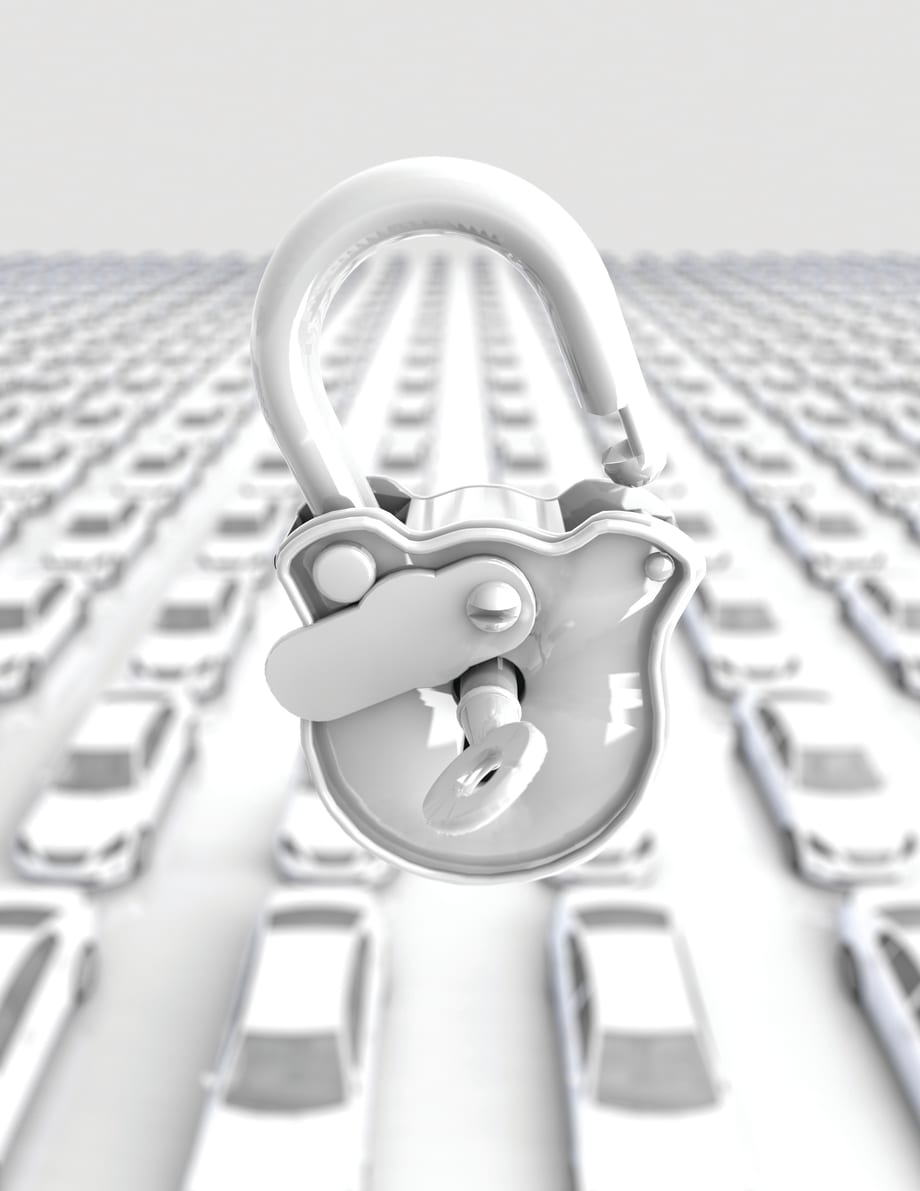
It’s a Catch-22 — while car rental companies have more technology at their fingertips than ever before to mitigate fraud and theft, the criminals are becoming increasingly sophisticated in response.
Whether it’s a technological solution or a do-it-yourself operational control, five operators share a wide range of security problems they’ve faced and the steps they’ve taken to solve them.
We’ve kept the names of the operators and companies anonymous to allow them to speak freely.
Caught on Camera
A franchisee in Michigan has experienced several security issues throughout the years, including theft of vehicles and even his building’s air conditioner. But these problems have spurred him to come up with ways to prevent future losses.
To help reduce vehicle theft, this operator added GPS tracking units to every rental car in his lot. “When the GPS units went down to $100 to $200 apiece, I decided it was cheaper for me to do that than anything else,” he says. “I had some vehicle losses, and after doing the math, it doesn’t even come close to how little it costs to install GPS.”
Not only does the GPS allow him to track his vehicles, it also gives him the ability to turn off the car when the vehicle is parked. When the renter inevitably calls complaining that the car died, the operator will negotiate with the renter to pay the fee — without telling the renter how the car shut down.
To keep a better eye on his property, this operator installed a security system. With 10 cameras surrounding the building, the premises are monitored on video by the security company every night from 6 p.m. until 8 a.m.
The system cost about $6,000 to install and the monthly monitoring fee is $49. Trespassers are met with a recorded voice on a loud speaker, warning that the police have been called.
In one instance the security tapes helped the police nab two men who broke into the operator’s building and stole two cash drawers. “The suspects wore T-shirts from their company, and the video resolution was good enough to identity the writing on their T-shirts,” he says.
Catching a Parts Sales Scam
A van rental operator in California has seen theft by customers and employees. He discovered that one of his mechanics was purchasing parts on the company’s behalf and then selling the parts to other local mechanics.
“We found out about three weeks into it because suddenly these parts arrived and we didn’t have a purchase order for them,” he says, explaining that an invoice normally has a matching purchase order number. The mechanic ended up stealing about $3,000 to $4,000 in parts.
As one routine check against vehicle theft, this operator asks customers for a current residential address as a condition to rent. But this isn’t always foolproof.
One customer had a proof of address and supplied all the needed information, but he still stole a van. “We started contacting him and found out that his phone was disconnected,” he says. “Then the credit card didn’t go through.”
This customer was eventually found by police on the side of the road, sleeping in the missing van. Because the van was reported as stolen, the police arrested the man and returned the van to the rental company.
Once it is evident that a customer has disappeared, this operator will contact an asset recovery specialist (a “repo” company) to try to track down the customer and missing vehicle.
Because of the lag time before he can report a stolen vehicle to police, the repo company helps him track down the vehicle and driver sooner. “A repo company is expensive for its work, but it’s about trying to recover my asset,” he says. “They are good at getting the vehicles back and are more diligent to find out more information, like a private investigator.”
Depending on how much investigation is involved, his repo company has two levels of pricing, from a few hundred dollars for light research and a few phone calls to $500 or more if the repo company has to physically visit different addresses and track down other information, says the operator.
A Simple Plan
A small franchisee in upstate New York faced issues securing his vehicle lot. One morning when arriving at the office, he was shocked to see a Pontiac Grand Prix up on cinder blocks. “Someone had stolen all four tires and rims,” he recalls.
A week or two later, he noticed several antennas were stolen from his rental cars.
At the time, his vehicle lot had no fences or security system in place. Not wanting to pay for security guards, he contacted a friend with knowledge of security systems. The operator installed a security system that is triggered by motion detectors, which activate lights and a camera recording and send an alert to his phone and computer.
The system cost $2,100 installed, and there is no additional monthly fee. The operator says that in combination with the motion-detected light the video quality is good enough to make a positive identification of a potential wrongdoer. On the lot, the light illumination is enough to scare away most would-be criminals, he says.
Since installing the surveillance system and placing stickers on the building’s back entrance to warn of a security system, this rental operator hasn’t experienced further issues with vehicle theft.
[PAGEBREAK]
The Cash Box Con
With the help of security camera footage, a rental car franchise in New Jersey caught an employee stealing money from the office cash box. The employee was opening sealed envelopes, stealing some of the enclosed cash and resealing the packages before mailing them to the corporate office.
After the location manager verified the cash for the day and created a shipping document, the employee would open the envelope, take $10 to $30 and then create a new shipping document. “By doing this, it would appear the cash was ‘missing’ because the manager had signed off on the report before it was mailed,” says the company’s chief financial officer (CFO).
In addition to catching the employee stealing out of the cash box from the office security camera, the building’s security footage helped identify the employee at the UPS pickup location twice within 30 minutes. “The employee was observed confiscating the corporate mailbag, disappearing with it for a few minutes and then returning it to be picked up by UPS.”
By reviewing the security footage and by verifying UPS tracking numbers, the employee was fired for stealing company money.
After this incident, this company requires that all location managers email the UPS tracking number to the CFO and keep a copy until the weekly UPS bill is received. In the event that cash, rental documents or vehicle keys are missing, the location manager has a time-stamped record of when the package was placed into the UPS pickup area.
As well, the original handwritten copy is kept until the shipping bill is audited. “If the shipping document number doesn’t match, we know that there has been unapproved handling of the daily reports,” the CFO says.
Car Sharing and Fuel Fraud
When it comes to security, car sharing companies face different issues compared to traditional car rental companies.
In car sharing, crime and security issues are mitigated by the fact that car share members are screened as a condition of membership and valid credit card information is taken, says the founder and CEO of a car sharing company in Ontario, Canada.
As well, all vehicles in car share programs are equipped with GPS tracking units, which virtually eliminate non-recoverable theft.
Vandalism and theft of items in vehicles still can occur, though only on a small fraction of transactions, he says.
This CEO stresses the importance of members reporting any damage or issues, since the car sharing company doesn’t see the vehicle after every drop-off.
“When a member gets to the vehicle, it is his or her responsibility to do a vehicle inspection beforehand,” he says. “If you don’t call in the damage, you are then liable for the damage. If not, it can become a ‘he said, she said’ situation.”
One security issue that this operator has faced involves fuel fraud, though it happens in his fleet only about twice a quarter, he says.
Because car sharers fuel the vehicles with fuel cards placed in the vehicle, a member could let his buddy fill up on the same transaction when using the fuel card at a gas station.
The fraud usually isn’t discovered until after the fact, after reviewing the “exception reports” generated by the card system. Of course, the member is long gone from the pump. If caught, the member is kicked out of the program.
“We have daily, weekly and monthly limits for the gasoline in each car. I’ve been talking to bigger fuel companies, and they are coming out with better controls to eliminate gas fraud.”
Another security issue in car sharing, which is hard to police, involves non-members behind the wheel. As long as a non-member has access to the member’s card, there really isn’t a way to protect against this, the CEO says.
This becomes a liability issue because the non-member isn’t insured for driving that vehicle. “If there is an accident, it could be a serious problem,” he says.
More Rental Operations
How Did This Independent Rental Operator Grow to 170 Vehicles in 4 Years?
With 170 vehicles across three Kentucky locations, Joel Price relies on an overseas team to handle reservations, payments, and after-hours customer service. It's one part of an unconventional approach to growing an independent rental operation.
Read More →
What Does It Take to Succeed in B2B Rentals?
The fundamentals may be familiar to daily car rental operators, but project-based truck rentals put different demands on the fleet and the business.
Read More →
NPR Builds on International Partnerships to Grow Rental Bookings
With Ana Laborde supporting broker development, NPR Auto Group is tailoring distribution strategies, rate packages, and partnerships to grow international reservations across its three brands.
Read More →
Advantage, Sixt Place Among Top Five in Annual Satisfaction Study
While Enterprise and National retain the top spots in JD Power’s 2026 rankings, the latest customer satisfaction results suggest renters can find competitive service beyond the biggest car rental names.
Read More →
The $100,000 Insurance Trap in Exotic Car Rentals
Exotic rental agencies often rely on customers’ personal auto policies to protect six-figure vehicles. But policy language can dramatically change the coverage for vehicles over $100,000 MSRP.
Read More →
The Booking Is Confirmed, But Is Your Customer Ready to Drive?
For international renters, a confirmed reservation doesn’t always mean they’re eligible to drive. Earlier checks can help operators catch documentation and payment issues before the customer reaches the counter.
Read More →
ICRS 2027 Opens Call for Papers
The International Car Rental Show seeks session proposals on the business, operational, and technology issues facing car rental operators. Submissions are due Jan. 15.
Read More →
Turo to Launch Vehicle Delivery Service
Turo Delivered will let travelers search for vehicles that hosts can deliver directly to hotels, homes, airports, train stations, and other locations.
Read More →
Palm Beach Airport Code Change Creates Car Rental Distribution Gap
A test of rental searches under the old PBI and new DJT airport codes returned largely different sets of brands and vehicles, highlighting a potential distribution problem for rental operators.
Read More →
U-Save Continues Dominican Republic Expansion with Launch in Punta Cana
The new franchise location builds on U-Save’s existing Santo Domingo operation and will begin taking reservations for October 2026.
Read More →