




Moving Hollywood
Avon Rent A Car Truck and Van has carved a niche by meeting the very specific needs of a very demanding industry.

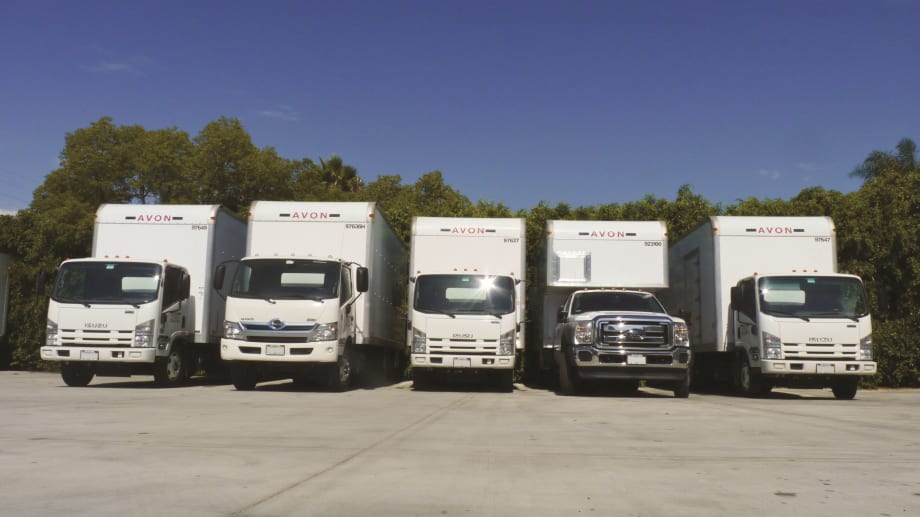
Avon rents passenger vehicles, stake beds, cargo vans, passenger vans, minivans and sedans, but its bread and butter is the cube (box) truck, seen her in various sizes and from different manufacturers.
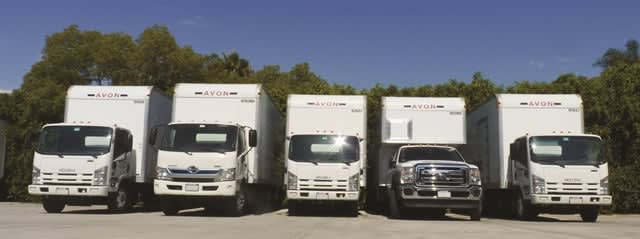
Avon rents passenger vehicles, stake beds, cargo vans, passenger vans, minivans and sedans, but its bread and butter is the cube (box) truck, seen her in various sizes and from different manufacturers.
Nowhere does the phrase “I need it yesterday” apply more aptly than the business of film production. Nelson Silver, co-founder and owner of Los Angeles-based Avon Rent A Car Truck and Van, might add to that “do it right, always.”
Founded in 1978, Avon has carved out a niche as the go-to vehicle rental resource for the Hollywood film and television industries. Bending over backward for the client may be a hackneyed phrase, but it is a matter of business survival for Avon.
“Production has a lot of moving parts,” Silver says. “Any error can cost a production a lot of money. We try to make it as simple as possible.”
Ground Zero
Avon’s headquarters sits on the corner of Santa Monica Blvd. and La Brea Ave., ground zero for Hollywood production. Film studios and camera, prop, supply and post-production houses all sit within a few square miles.
With three offices and a fleet of 1,000 vehicles, Avon claims to be the largest independently-owned car and truck rental agency in the state of California.
While most of Avon’s business is local, its coverage area stretches across the 48 contiguous states — and Hawaii. Rental vehicles have gone via barge to Kauai to film “Tropic Thunder” and to New York City to film a Batman sequel. “We have some productions that get vehicles from us for travel no matter where they are shooting,” says Julie Lawson, Avon’s vice president of studio transportation.
Avon’s mix is 75% trucks and vans and 25% passenger vehicles. The company rents stake beds and cube (box) trucks — the production staple — as well as cargo vans, passenger vans, minivans and sedans.
Avon rents all types of passenger vehicles for use as on-camera picture cars. For those wondering how a film crew treats a rental car, the answer is “Pretty well,” says Lawson. “Sometimes we don’t realize that they’ve blown out a windshield in a gunfight until the show airs. However, the vehicles are almost always returned safe and sound.
Production companies are careful and respectful, and if anything unexpected happens — well insured.”
Marketing is largely through word of mouth. “Transportation crews move around from show to show and bring their relationship with us with them, which spreads business,” Lawson says.
The company also stays connected through industry publications and community events. Eric Humphreys, marketing director, says the recent growth of social media and review sites, such as Yelp, have yielded additional revenue from individual renters, tourists and small businesses.
“All of the things that the movie production industry loves about us, individuals benefit from,” Humphreys says, referring to Avon’s new truck fleet with backup cameras and hydraulic lift gates, 24-hour service and on-site, guarded parking for customers’ vehicles while renting.
Humble Beginnings
Maury Silver and his 18-year-old son Nelson started the company on a dirt lot in Hollywood thinking they’d rent cars — all two of them — until a customer walked in and asked for a cargo van. “We didn’t know who he was, but he said he was with a studio,” Nelson Silver says.
That humble beginning led to a word-of-mouth network that was facilitated by a confluence of factors. “The entertainment industry was evolving and we were right there with them,” Silver says.
In the late ’70s, the studios were renting from the major truck rental brands such as U-Haul and Penske. But the trucks were generic, not outfitted with the equipment required for a film shoot.
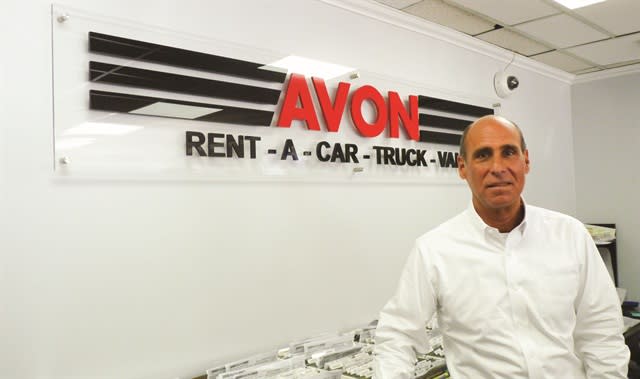
Nelson Silver founded Avon Rent A Car Truck and Van with his father Maury in 1978.
Silver set about customizing trucks to meet those needs — with heavy-duty lift gates, dual rear wheels, “ship-to-shore” power, interior lighting and stake beds with fifth-wheel plates for towing. To outfit a truck to meet the specs of camera crews, Avon created side slats with the hardest wood they could find: apitong, from the Philippines.
Studios were renting from different sources based on the type of vehicle, while Avon provided all vehicle classes and types under one roof. “We became a one-stop shop,” Silver says.
In the ’80s, Hollywood studios were outgrowing their properties, and truck parking was relinquished to build more stages. With less space to house vehicles, the studios began to outsource.
“It’s a little more difficult for a corporate company to build a relationship and craft it to this niche market, one that is based upon good, solid relationships of trust, honorability and friendship,” says Silver, who adds, only half facetiously, “and never messing up.”
“Putting all that aside, it’s a boy’s club and you’re invited in,” says Lawson, whom Silver affectionately calls “the First Lady of Hollywood” due to the unique respect and friendships she’s developed in the production fraternity.
Around the Clock
Owing to the specific needs of the film industry, employee training goes to new levels. From day one, the staff is indoctrinated in the 24-hour nature of the business.
“Now that everyone communicates constantly through texts and cell calls, new clients’ expectations are high,” Lawson says. “Avon has been prepared for this phenomenon. It has always been a daily occurrence that we get a call at two in the morning from someone needing a truck right now. We make that happen. People expect it from us.”
While teaching the operational staff is straightforward, imparting the importance of understanding the customers and what they want takes time. “It’s the intrinsic knowledge that they [employees] don’t have yet,” Lawson says. “Really knowing the customers is cultivated and a privilege. We are very fortunate that most of our many business relationships have become strong friendships.”
As most transactions are business-to-business, there isn’t the need to upsell at the counter. The company offers a loss damage waiver (LDW), but it isn’t a profit center. Most productions provide their own certificate of insurance with sufficient coverage.
According to Silver, Avon’s managementstaff claims an average tenure of 22 years.
Film Flight
In the last few years, Avon has faced the flight of major film production to other states that offer higher tax incentives. When production started moving to Canada, Silver was pressured to open an office there. “I had people who wanted to give me property there for free, because the vehicles up there didn’t have the specs needed to furnish the entertainment industry,” he says.
He resisted, claiming loyalty to his client base in Los Angeles/Hollywood that helped the company grow over 37 years.

Silver affectionately calls Julie Lawson, Avon’s vice president of studio transportation, “the First Lady of Hollywood” due to the unique respect and friendships she’s developed in the production fraternity.
Silver says current Gov. Jerry Brown and Mayor of Los Angeles Eric Garcetti are working on ways to stimulate local production, though former Mayor Antonio Villaraigosa and, ironically, actor-turned-Gov. Arnold Schwarzenegger were not as proactive.
Silver is hoping that recently introduced tax credits for feature film production will keep shoots in the Los Angeles area. “Hollywood is the GDP of this region, so when it’s busy, it benefits everyone,” he says. “Los Angeles is where we want to keep Hollywood.”
Rolling with the Punches
“In this industry you always have to perform,” says Silver, claiming that very few of Avon’s clients have left for another rental company. “I don’t want to say we’ve never messed up in 37 years, but it’s how you step up, take your shots and handle it.”
In addition to runaway production, the company survived several guild strikes — which hurt — without needing to lay off a single employee. On the cost side, the diesel emissions standards introduced in 2010 added an average of $10,000 more to the cost of Avon’s trucks.
Avon still manages to give back, in one instance helping the relief effort for Hurricane Katrina. The company donated trucks and made some 50 trips back and forth to the disaster area.
Silver credits conservative financing and carrying little debt as helping to weather the storms, as well as a strong business model to fall back on. When government incentives in other states and countries dry up, production moves back to California. “They take their trucks with them,” Lawson says, “but they’re not compliant to California’s emissions standards and aren’t outfitted the way production needs them.”
“It’s been Mr. Toad’s Wild Ride,” Silver says. “We know this industry is one of the most discerning in the world, because they have such wonderful artists that put it all together. They know what they want. We’re not here to question that. If they want a lime green Camry, we’ll find them a lime green Camry.”
More Rental Operations

What Does It Take to Succeed in B2B Rentals?
The fundamentals may be familiar to daily car rental operators, but project-based truck rentals put different demands on the fleet and the business.
Read More →
NPR Builds on International Partnerships to Grow Rental Bookings
With Ana Laborde supporting broker development, NPR Auto Group is tailoring distribution strategies, rate packages, and partnerships to grow international reservations across its three brands.
Read More →
Advantage, Sixt Place Among Top Five in Annual Satisfaction Study
While Enterprise and National retain the top spots in JD Power’s 2026 rankings, the latest customer satisfaction results suggest renters can find competitive service beyond the biggest car rental names.
Read More →
The $100,000 Insurance Trap in Exotic Car Rentals
Exotic rental agencies often rely on customers’ personal auto policies to protect six-figure vehicles. But policy language can dramatically change the coverage for vehicles over $100,000 MSRP.
Read More →
The Booking Is Confirmed, But Is Your Customer Ready to Drive?
For international renters, a confirmed reservation doesn’t always mean they’re eligible to drive. Earlier checks can help operators catch documentation and payment issues before the customer reaches the counter.
Read More →
ICRS 2027 Opens Call for Papers
The International Car Rental Show seeks session proposals on the business, operational, and technology issues facing car rental operators. Submissions are due Jan. 15.
Read More →
Turo to Launch Vehicle Delivery Service
Turo Delivered will let travelers search for vehicles that hosts can deliver directly to hotels, homes, airports, train stations, and other locations.
Read More →
Palm Beach Airport Code Change Creates Car Rental Distribution Gap
A test of rental searches under the old PBI and new DJT airport codes returned largely different sets of brands and vehicles, highlighting a potential distribution problem for rental operators.
Read More →
U-Save Continues Dominican Republic Expansion with Launch in Punta Cana
The new franchise location builds on U-Save’s existing Santo Domingo operation and will begin taking reservations for October 2026.
Read More →
When AI Books the Rental Car, Who Controls the Sale?
As AI moves from comparing rental rates to completing transactions, operators need to understand how travelers find, interpret, rank, and ultimately see their offers. (Part 2 of 2.)
Read More →