


One California Export No One Should Buy
Modeled after similar efforts in California, a "living wage" proposition could endanger jobs and hurt the economy of SeaTac, Wash.
There are many things that California is known for… beautiful beaches (and people), scenic highways, wine country and movie stars. But some bad ideas are beginning to be exported from the Golden State, and our industry is a prime target.
Led by the Service Employees International Union (SEIU) — which represents service-oriented employees, the largest being government employees — labor unions have successfully advanced a proposal in Washington’s City of SeaTac that would raise the minimum wage to $15 per hour, among other things.
If approved by voters this November, this new “living wage” ordinance would mostly apply to vendors doing business at the Seattle-Tacoma International Airport. Our industry — along with airlines, hotels, restaurants and other service providers — would be impacted by this 63% increase in the minimum wage.
This proposal is modeled after similar efforts that SEIU has successfully fought in Los Angeles, San Francisco, Oakland and San Jose, but the $15 per hour is the highest. Worse yet, there is also a cost-of-living adjustment mandate, which requires an increase each year based upon inflation.
In addition to the wage increase, this proposal also mandates other government intervention into our businesses:
There is a mandatory paid “sick leave” provision for every employee, which employees would accrue. And if unused, it would be paid out at the end of the year.
The City of SeaTac has access to your employee records to ensure compliance.
Employers must give any additional available hours to current part-time employees in lieu of hiring new part-time employees.
Through ACRA, our industry — along with the other industries that would be impacted — has joined together in a major campaign to defeat this measure. “Common Sense SeaTac” is working to share the message with voters of how this proposal will endanger jobs and hurt the local economy.
[PAGEBREAK]
How will it hurt the local economy? Here are some examples of how SeaTac citizens could be affected:
If small businesses such as restaurants or stores can’t afford to keep up with the new regulations, they will leave SeaTac, causing the city’s business revenues to drop.
SeaTac residents will have a harder time finding local employment if more non-residents come to the city to find jobs.
The City of SeaTac will need to hire more employees to watch businesses and make sure they are enforcing the new labor regulations.
Because the city will have to oversee and enforce the labor rules, taxes may increase and city programs and services could be dropped.
It is a tough fight, but a fight worth doing. If the measure succeeds here, the proponents will soon come to your town and push a “living wage” in your neck of the woods. In fact, we have heard through the grapevine that the City of Tacoma would be next. And then, who knows.
If you are interested in learning more, please go to our campaign’s website: www.commonsenseseatac.com or e-mail us at commonsenseseatac@gmail.com.
In the meantime, be on the lookout for this California export … and tell them you’re not buying!
More Rental Operations

Palm Beach Airport Code Change Creates Car Rental Distribution Gap
A test of rental searches under the old PBI and new DJT airport codes returned largely different sets of brands and vehicles, highlighting a potential distribution problem for rental operators.
Read More →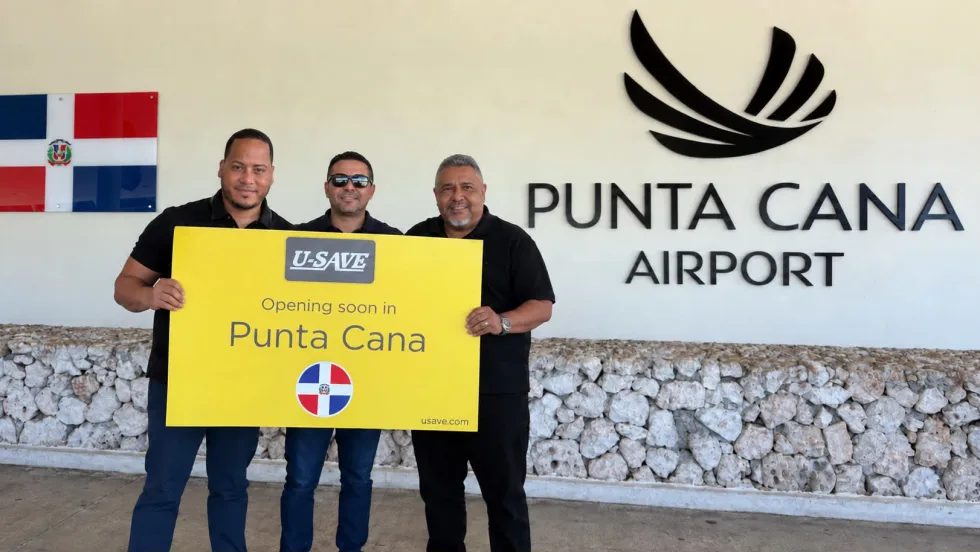
U-Save Continues Dominican Republic Expansion with Launch in Punta Cana
The new franchise location builds on U-Save’s existing Santo Domingo operation and will begin taking reservations for October 2026.
Read More →
When AI Books the Rental Car, Who Controls the Sale?
As AI moves from comparing rental rates to completing transactions, operators need to understand how travelers find, interpret, rank, and ultimately see their offers. (Part 2 of 2.)
Read More →
European Booked Car Rental Rates Fell 5%, Results Varied by Country
Ireland, Cyprus, and the United Kingdom saw steep declines, while booked rates rose in Poland and Hungary.
Read More →
Is It Time to Rethink Rental Categories?
As traditional economy and compact cars disappear from the market, longtime rental operator Mike DeLorenzo asks whether the industry’s familiar vehicle categories still make sense — and what operators need to rethink along with them.
Read More →
Who Owns the Rate? AI Is Creating a New Distribution Problem for Car Rental
Generative Engine Optimization asks whether AI can find a rental company, but operators also need to know whether the agent inspected enough of the market, compared equivalent offers, and presented a rate the traveler can actually book. (Part 1 of 2)
Read More →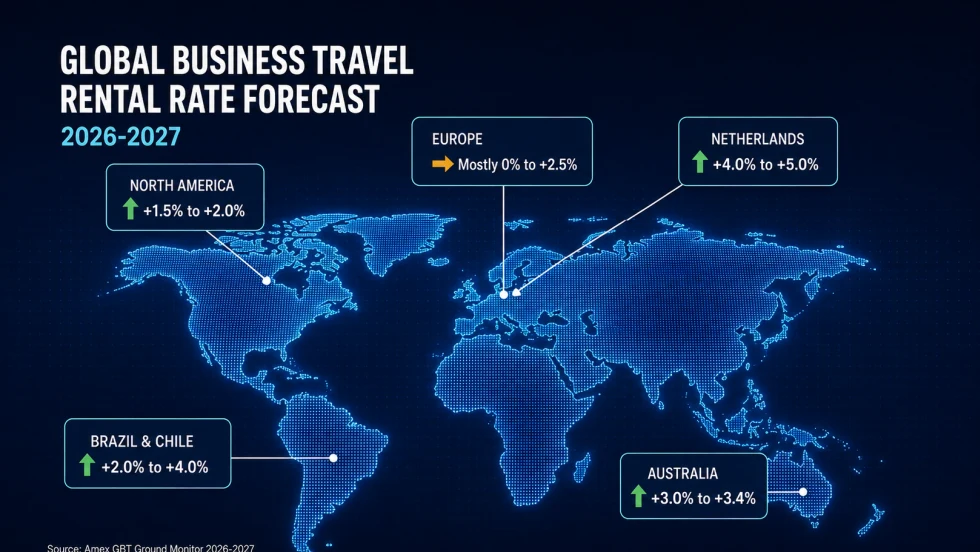
U.S. Business Travel Car Rental Rates Forecast to Rise Up to 2%
Improved fleet supply should limit pricing gains in 2026-27, while insurance, repair costs, and softer residual values continue to pressure rental operations, according to Amex GBT.
Read More →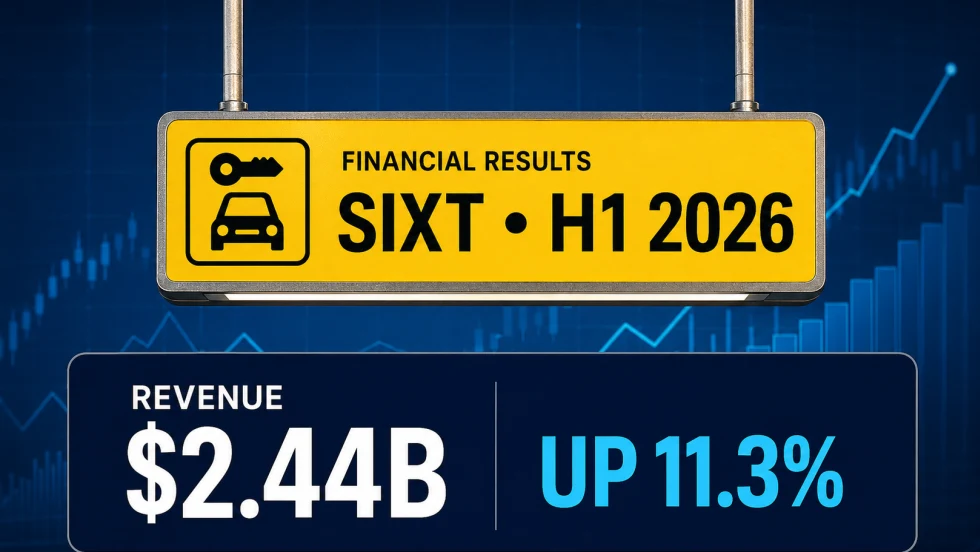
Sixt Revenue Tops $2.4 Billion in First Half of 2026
Sixt’s first-half revenue surpassed $2.4 billion for the first time as demand outpaced fleet growth, lifting utilization and earnings despite weaker consumer sentiment in North America.
Read More →
In Memoriam: Bobby Klyce, Avis Licensee Legend
The longtime Birmingham Avis operator and 2018 Auto Rental News Impact Award recipient was remembered as an advocate for independent licensees and the broader car rental industry.
Read More →
How to Build Custom Fleet Tools With AI and Vibe Coding [Webinar]
A new Automotive Fleet webinar explores how fleet managers are using AI and vibe coding to automate routine work and create simple operational tools without traditional programming skills.
Read More →