Seize the Subrogation Opportunity in the Graves Amendment
Under the Graves Amendment, car rental operators have the right to subrogate on liability payments caused by your renters. Are you exercising this right to lower your loss runs?
by David Purinton
March 15, 2016
Photo via iStockPhoto.com/Ollo
5 min to read
Photo via iStockPhoto.com/Ollo
When the Graves Amendment passed more than 10 years ago, it was a blessing to our industry that brought fairness back into the area of liability expenses.
But in my opinion, we as an industry are still not taking full advantage of the Graves Amendment to lower our liability exposure and its associated insurance premiums and costs.
Ad Loading...
A Federal Law
Sponsored by Rep. Samuel Graves (R-Mo.) in 2005, the amendment called for preemption of any state statute or common law precedent that held rental or leasing agencies vicariously liable for their renters’ negligence, except when the rental or leasing agency was itself negligent or engaged in wrongdoing.
“Vicarious” (from the Latin word “vicarius”) literally means “substitute.” To be vicariously liable is simply to be held responsible for the acts of another person. In our industry, this meant you (or your liability insurance carrier) paid for the negligent actions of your renters. If your renter hit another car and you were held vicariously liable, that meant you had to pay for the damages even though you did nothing wrong.
“Federal preemption” is an important concept because the Graves Amendment is a federal law. Preemption simply means that, as federal law, the Graves Amendment cannot be altered or weakened by any regulation or statute enacted by a state legislature or by any “common law” state court decisions. The Graves Amendment was written to be the final word on this subject.
The Graves Amendment is relatively short. The pertinent sections are (a) and (b), and read as follows:
(a) In General: An owner of a motor vehicle that rents or leases the vehicle to a person (or an affiliate of the owner) shall not be liable under the law of any State or political subdivision thereof, by reason of being the owner of the vehicle (or an affiliate of the owner), for harm to persons or property that results or arises out of the use, operation, or possession of the vehicle during the period of the rental or lease, if (1) the owner (or an affiliate of the owner) is engaged in the trade or business of renting or leasing motor vehicles; and (2) there is no negligence or criminal wrongdoing on the part of the owner (or an affiliate of the owner).
Ad Loading...
(b) Financial Responsibility Laws: Nothing in this section supersedes the law of any State or political subdivision thereof - (1) imposing financial responsibility or insurance standards on the owner of a motor vehicle for the privilege of registering and operating a motor vehicle; or (2) imposing liability on business entities engaged in the trade or business of renting or leasing motor vehicles for failure to meet the financial responsibility or liability insurance requirements under State law.
At first glance, this language may appear complex. When read carefully, however, it is actually very simple. What it means is this: the preemptive effect of the Graves Amendment in every state is that no vicarious liability can be asserted against rental agencies based solely on them being the owner of the car.
You should never have to pay for damage your renters cause to another party. But as an industry, we continue to do so, still to this day. And my message is that we need to stop.
Reinforce with the Rental Agreement
In many of the rental agreements used in this industry, we are still affording primary liability to our renters. As one example, I rented a car in a major airport from a large car rental company just a few weeks ago. The liability section in the rental agreement’s terms was almost 600 words, virtually a full flap on the rental jacket. After stating in a somewhat convoluted manner that the renter was responsible, it contained these words: “if you have no insurance, we will grant you protection…”
Imagine that! I was responsible, but if I didn’t have coverage, they’d cover me anyway! It certainly appears that the language of that rental agreement would prevent the rental company from asserting a claim against me, under the Graves Amendment.
Ad Loading...
The terms of your rental agreement must reinforce the Graves Amendment, not neuter it.
It may be helpful to actually reference the Graves Amendment by its official codified citation (49 U.S.C. § 30106) and include language to the effect of, “Nothing in this rental agreement should be construed to read that we are providing any liability coverage to you whatsoever.” This would be a great start.
Because your contract needs to take into account the various products sold in this industry, there are many ideas for contract verbiage that cannot fit within the constraints of this article. But when crafting such verbiage, we need to remember that the simple language of the Graves Amendment preempts state law and is very clear: we shall not be held liable for the actions of our renter.
Subrogate Every Liability
To this end, we as an industry need to be sure we are subrogating for every liability dollar paid. Every liability claim paid by us should be then presented to the renter (or his insurance company) for prompt reimbursement. And this applies not only in those “secondary” states, but in the “primary” ones as well.
In closing, here are two action items for you:
1) If your rental agreement states something similar to what I encountered, you should review it and be sure you are not giving away any benefits of the Graves Amendment. Make sure you are holding your renters liable for the damages they cause to third parties. Once that simple foundation is established, then by all means, sell whatever additional coverage is available at your location and allowed in your state.
Ad Loading...
2) Speak with your insurance company to be sure it is performing subrogation on every liability payment made. Your loss runs (the money your insurance company pays out) definitely have an impact on your monthly insurance premium. This is important for those with first dollar coverage and even more important for those who self-insure or under other types of insurance products wherein you actually share in every liability payment made.
In conclusion, you must remember that you are responsible to only insure you, the owner of the car, and your employees. You do not have to indemnify the renter, who is the driver of the car.
About the Author
David Purinton is owner and president of PurCo Fleet Services Inc., a risk management company specializing in car rental loss prevention. He will present further details on this topic at the 2016 International Car Rental Show in the seminar, “Using Graves Amendment to Lower Your Liability Expense.”
Legal Disclaimer: As you may know, David Purinton is a tuba player, not an attorney. He probably has picked up a thing or two about risk and recovery during his more than 30 years in the car rental industry, but this article should not be construed as legal advice.
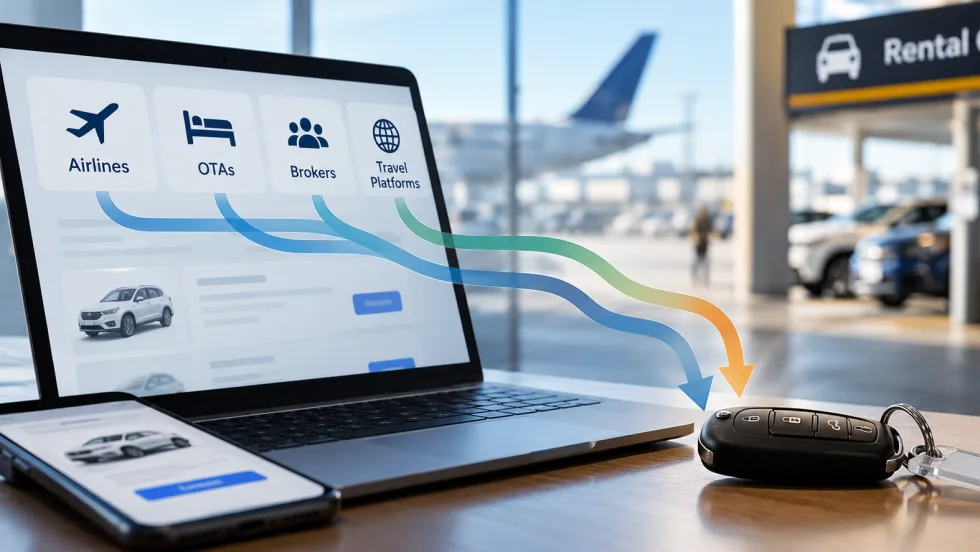
As travel retailers weigh direct supplier relationships against third-party distribution, rental operators need to understand how those decisions affect their business.
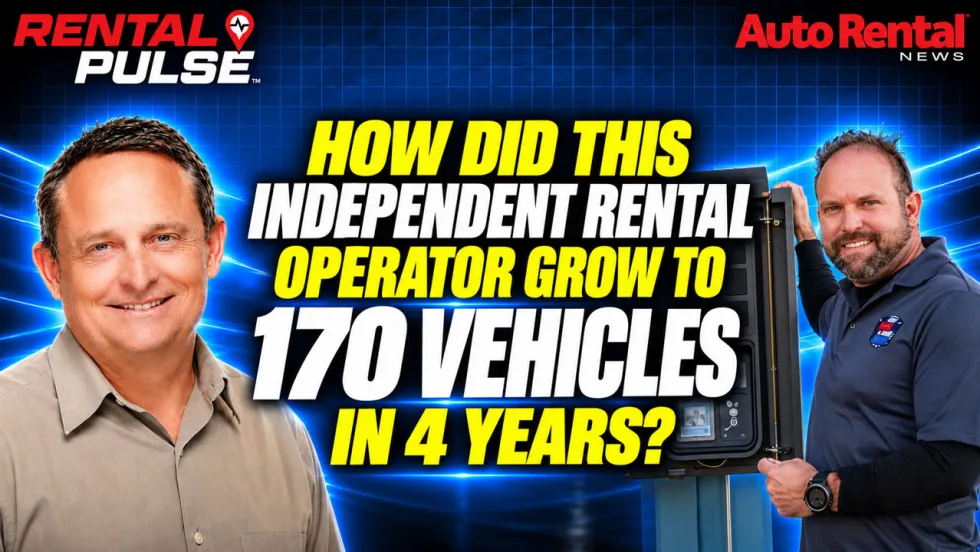
With 170 vehicles across three Kentucky locations, Joel Price relies on an overseas team to handle reservations, payments, and after-hours customer service. It's one part of an unconventional approach to growing an independent rental operation.
With Ana Laborde supporting broker development, NPR Auto Group is tailoring distribution strategies, rate packages, and partnerships to grow international reservations across its three brands.
While Enterprise and National retain the top spots in JD Power’s 2026 rankings, the latest customer satisfaction results suggest renters can find competitive service beyond the biggest car rental names.
Exotic rental agencies often rely on customers’ personal auto policies to protect six-figure vehicles. But policy language can dramatically change the coverage for vehicles over $100,000 MSRP.
For international renters, a confirmed reservation doesn’t always mean they’re eligible to drive. Earlier checks can help operators catch documentation and payment issues before the customer reaches the counter.
The International Car Rental Show seeks session proposals on the business, operational, and technology issues facing car rental operators. Submissions are due Jan. 15.
A test of rental searches under the old PBI and new DJT airport codes returned largely different sets of brands and vehicles, highlighting a potential distribution problem for rental operators.