



The Future of Internet Reservations for Car Rental
Mark Walker explains how direct connect technology, mobile phone reservations and alternatives to traditional travel portals are all driving change in the world of travel reservations.



The omnipresence of smart phones, sparring between the airlines and online travel agencies, the push to lower GDS costs and potential car rental company consolidations are all driving change in the world of travel reservations.
What lies on the horizon for car rental?
Auto Rental News interviewed Mark E. Walker to get his take on the changing online reservations landscape. A former co-owner of Advantage Rent-A-Car and a car rental industry veteran of more than 30 years, Walker recently co-founded NÜ Car Rentals, which operates an affiliate car rental network in more than 25 countries.
ARN: American Airlines (AA) no longer lists fares on Expedia and Orbitz. Is the balance of power shifting away from the travel portals to the airline, hotel and car rental suppliers?
MEW: In terms of the AA fare delisting, it's unlikely we'll see a similar shift in the car rental industry, for a few reasons: You need very unique content and/or a loyal customer base to walk away from the business that large travel portals control. Several hotel chains have tried, but most came back. Enterprise has not been on Orbitz for a number of years now, but Alamo and National still are. Dollar and Thrifty dropped their preferred status on Expedia in 2005 but changed position within a year. Big airlines have a more powerful position than even the largest car rental companies, and yet AA has received a lot of pushback for the move. Southwest Airlines is the best example of a travel company that has taken a truly hard stance and stuck with it.
I think with AA, it is more of a case of desperate times call for desperate measures, especially after the specter of airline bankruptcies. AA does not want to lose the exposure and bookings they get from the travel portals, its goal is to eliminate the associated GDS (Global Distribution System) costs by using direct connect technology.
ARN: So what is "direct connect?"
MEW: Direct connect is a term used to describe a "direct connection" of real-time information between the supplier's reservation system and the travel portal, in lieu of going through a GDS. Direct connect is not new, unproven proprietary technology. One of the mandates of the OpenTravel Alliance, formed in 1999, is to create standards to facilitate that connectivity as new interfaces are built.
ARN: Then what's the problem? Wouldn't a direct connection be preferable, at least for the travel portal and the supplier?
MEW: A lot of the fees that suppliers pay to the GDSes get rebated back to the originator of the reservations, either a travel agency or a travel portal. So the GDS's provide a lot of financial incentive to avoid using direct connections.
Additionally, these GDS connections are already established, while to establish and maintain direct connections with numerous suppliers takes a lot of investment dollars. GDS messaging is complex and expensive, but the bottom line is that it works and handles millions of rate quotes and reservations per day.
If you are a travel portal and have established connectivity and a nice revenue sharing agreement with a GDS, you probably are not in a big hurry to change this.
ARN: Is consolidation in car rental shifting this balance of power? Are the major RACs trying to push more customers to their own Web sites to make reservations?
MEW: Yes, consolidation definitely gives the major car rental companies more negotiating power, but it can also open doors for smaller companies. The consumer might see the top nine brands listed, but the travel portals are now negotiating with only four (and soon, possibly three) parent companies. One way to give some balance against a potential oligopoly is to expand access to smaller companies.
Pushing more customers to book directly has always been a goal, but the real goal is to reduce distribution costs. Presence on a travel portal can also act as a marketing venue to put the supplier's name in front of the consumer. The customer now may be interested in looking closer at that car rental firm by going to the rental company's own Web site. So whether through Google or other search engines, traditional advertising, or presence on a travel portal, there is still going to be a cost to bring the unmanaged traveler to the RAC's Web site for the first time.
ARN: But the consumer likes being able to compare rates in a matrix, so that won't go away, right? How might that matrix change?
MEW: A Google search may someday provide that information directly. In the meantime, there are meta-search engines like Kayak. They don't use a matrix per se, but the pricing comes directly from the supplier's Web site, allowing the consumer to compare rates from multiple Web sites at one time. Increasingly, though, a lot of the pricing on meta-search engines is being provided by various travel portals in addition to the suppliers themselves. The consumer gets the price comparison, but suppliers don't necessarily get the reservation directly and therefore the lower distribution cost.
The matrix displays may be good for price comparisons, but they don't do a great job of showing product differentiation. Air transactions show nonstop flights versus multiple stops, but there isn't any differentiation on baggage fees and priority boarding. The car rental matrix displays different car classes, but does not, for example, show if ancillary electives such as loss damage waivers or additional drivers are included in the rate, or if there is a discount for prepayment. These features may be incorporated into the matrix in the future.[PAGEBREAK]
ARN: What is the status of mobile reservations?
MEW: We actually won an award from the cellular industry for the best mobile travel application in 2000. We created a complete car rental reservation system that accessed a GDS for the content so it wasn't limited to one RAC. We learned how to keep a mobile application simple and also learned that the user adoption rate of "Web-enabled phones" was going to be much slower than we hoped. Now, with smart phones and the wide range of applications available for them as well as cheap data plans, mobile apps for RAC are much more viable. However, every RAC does not need a smart phone app. The resources you'll want to put toward this will depend on your customer base. Start by analyzing your current Web site and understanding how it works with a smart phone browser. What about your confirmation? Is it easily read by a smart phone user?
ARN: What are the other big initiatives of the major RAC brands these days when it comes to Internet reservations?
MEW: Despite the fact that Avis Budget has decided not to pursue the collection of no-show fees, the majors and the indies should continue to study the European model. European RACs have done a great job of making pre-pay and partial pay (deposits) the norm and not the exception.
At a minimum, the U.S. industry needs to be of the mindset that, if renters are not willing to give a conditionally refundable deposit to ensure that they have a minivan for the July 4th weekend or a 4x4 for their next ski trip, then rental operators might want to pass on that reservation.
Perhaps the terminology needs to change, as the term "no-show fee" sounds too negative. The term "refundable deposit" sounds more user friendly to me.
ARN: In regards to booking an airline reservation, I seem to remember a push to get the car rental option (i.e. a specific brand) further upstream in the process. Are you seeing this?
MEW: Yes, and there is logic to the initiative. Think of a travel portal as a store. A store may have Coca-Cola in a big display in the front of the store and Pepsi down on the drinks aisle. Perhaps Dr. Pepper is not carried at all. None of this is by happenstance. The same applies with the online travel store.
ARN: Will the price to connect to travel portals such as Expedia, and even the GDS's such as Sabre or Amadeus, ever come down to a reasonable level to allow an independent car rental operation to sign on?
MEW: First, let's separate the two. Using the store analogy, the GDS is the distributor that makes your products available to various stores. The GDS will generally sign you up as long as you have the connectivity software (available through service providers) and you agree to their terms on cost per transaction, minimum transactions per month, etc. But having GDS connectivity doesn't necessarily get you in front of renters.
Next is the more difficult part-getting the retail stores (e.g. Expedia and Orbitz) to carry your product. And even if you are not using a GDS but are trying to establish a direct connection with a travel portal, does the store need an additional supplier? This is not an impossible hurdle, but one that takes a lot of perseverance and investment. Most independent companies find that the math does not work for them.
ARN: Is there another option?
There are some car rental specialty sites and brokers who are willing to work with independents. If you want access to broader distribution, becoming a franchise of a major brand may be an alternative for you.
Another alternative for independents looking for more airport reservations is to become an "affiliate" of a brand. Becoming an affiliate gives the indie operator retail exposure through the distribution that the brand has established, while allowing the operator to retain much of the independent identity already established. We, as do several other firms, provide this service to independent car rental agencies.
Best Western Hotels is a good example of an affiliate model. There are no franchisees-just membership agreements that are renewed annually. Quality standards and signage requirements must be met, but the property may maintain its own identity.
Mark E. Walker is a co-founder of NÜ Car Rentals, which operates an affiliate car rental network in more than 25 countries. Mark has more than 30 years of experience in the car rental industry.
More Rental Operations

How Did This Independent Rental Operator Grow to 170 Vehicles in 4 Years?
With 170 vehicles across three Kentucky locations, Joel Price relies on an overseas team to handle reservations, payments, and after-hours customer service. It's one part of an unconventional approach to growing an independent rental operation.
Read More →
What Does It Take to Succeed in B2B Rentals?
The fundamentals may be familiar to daily car rental operators, but project-based truck rentals put different demands on the fleet and the business.
Read More →
NPR Builds on International Partnerships to Grow Rental Bookings
With Ana Laborde supporting broker development, NPR Auto Group is tailoring distribution strategies, rate packages, and partnerships to grow international reservations across its three brands.
Read More →
Advantage, Sixt Place Among Top Five in Annual Satisfaction Study
While Enterprise and National retain the top spots in JD Power’s 2026 rankings, the latest customer satisfaction results suggest renters can find competitive service beyond the biggest car rental names.
Read More →
The $100,000 Insurance Trap in Exotic Car Rentals
Exotic rental agencies often rely on customers’ personal auto policies to protect six-figure vehicles. But policy language can dramatically change the coverage for vehicles over $100,000 MSRP.
Read More →
The Booking Is Confirmed, But Is Your Customer Ready to Drive?
For international renters, a confirmed reservation doesn’t always mean they’re eligible to drive. Earlier checks can help operators catch documentation and payment issues before the customer reaches the counter.
Read More →
ICRS 2027 Opens Call for Papers
The International Car Rental Show seeks session proposals on the business, operational, and technology issues facing car rental operators. Submissions are due Jan. 15.
Read More →
Turo to Launch Vehicle Delivery Service
Turo Delivered will let travelers search for vehicles that hosts can deliver directly to hotels, homes, airports, train stations, and other locations.
Read More →
Palm Beach Airport Code Change Creates Car Rental Distribution Gap
A test of rental searches under the old PBI and new DJT airport codes returned largely different sets of brands and vehicles, highlighting a potential distribution problem for rental operators.
Read More →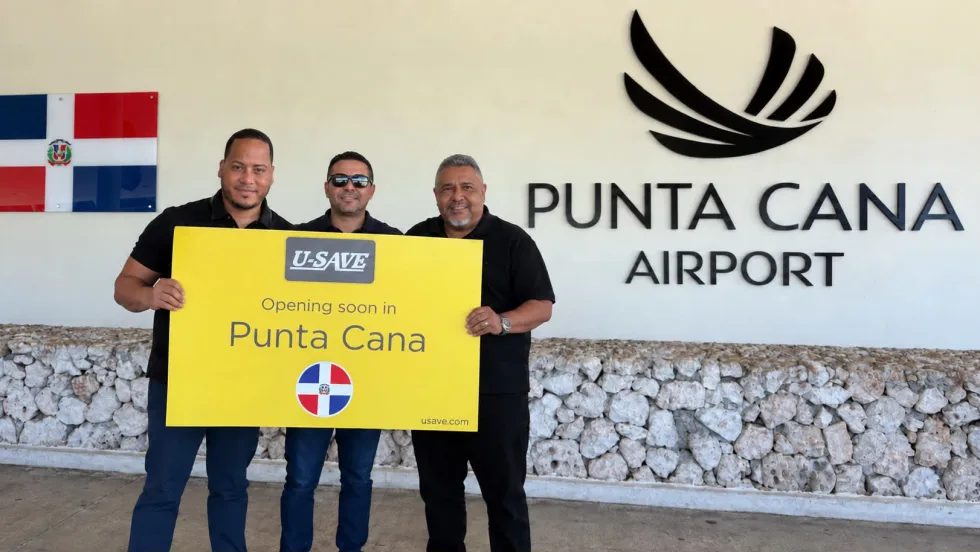
U-Save Continues Dominican Republic Expansion with Launch in Punta Cana
The new franchise location builds on U-Save’s existing Santo Domingo operation and will begin taking reservations for October 2026.
Read More →