




When Your Rental Car is Used in a Crime
If you find evidence of a possible crime in your vehicle, do you know your obligation to cooperate with authorities and how best to respond to a subpoena? Following these best practices will guide you.

It's important to understand different state's rules and exceptions for reporting crime evidence.
Photo via iStockPhoto.com/Aceshot
In August 2013, former New England Patriot Aaron Hernandez was indicted on first-degree murder and weapons charges stemming from the death of Odin Lloyd, a semi-pro football player for the Boston Bandits. Two critical pieces of evidence were discovered in Hernandez’s rental car: shell casings and blue Bubblicious chewing gum.
Hernandez allegedly purchased a pack of the chewing gum from a gas station the night of the murder while driving a rental car. A chewed piece was found in the car upon its return to the rental company, where Hernandez offered the rental agent a piece from the same gum packet. A chewed piece of the same gum was also found in a trash bin near the crime scene.
Hernandez’s returned rental car also contained a .44 caliber shell casing (the same caliber as the gun used to kill Lloyd), matching five casings found at the crime scene.
The Hernandez case illustrates a type of scenario often faced by car rental companies, which frequently leads to these questions: What is the obligation of a car rental company to report evidence of a possible crime? What are the scope and extent of a company’s duties to cooperate in police investigations, and how should the company respond to a subpoena?
Following these best practices will help a car rental company answer those questions and minimize risk while protecting the business.
Understand Your Duty to Report a Crime
If a car is returned with a gun or drugs in the trunk, or there is evidence of wrongdoing (such as blood stains on the seats), do you have to notify the authorities?
Generally speaking, there is no affirmative duty to report a crime. However, there are exceptions, which vary from state to state and municipality to municipality. Mandatory reporting statutes are rare but occur where it is specific to a certain legislated group.
The exceptions generally involve minors or vulnerable adults. For example, in Arizona, there is no general affirmative duty requiring a private citizen to report evidence of a crime, except when there is evidence of harm to a child.
California similarly requires reporting of harm to minors or the elderly, specifically under the California Child Abuse and Neglect Reporting Act (CANRA).
In Ohio, there is a codified, affirmative duty to report evidence of a crime. The Ohio statute includes specific language mandating that anyone who discovers a dead body or acquires “first knowledge” of the death of a person must report the death immediately to law enforcement.
The Ohio statute also lists penalties for failure to report — generally second- and fourth-degree misdemeanor offenses — and in particular circumstances it could lead to further criminal penalties.
Note that even in Ohio, a person can be found guilty of violating the reporting statute only where there is actual knowledge of the commission of the crime, coupled with a failure to report.
A federal statute, called “misprision of felony,” may be applicable for federal crimes. This statute echoes Ohio’s statute, stating that those with knowledge of the commission of a felony who do not report it as soon as possible will be subject to a fine or possible imprisonment.
Even Absent a Legal Duty, Companies Should Consider Developing Reporting Practices
Employees should be instructed on how and to whom to make a report when they observe suspicious activity or evidence. If you suspect that the vehicle itself could be evidence of a crime, the safest and smartest thing to do is to document the incident and inform law enforcement.
Before calling your police jurisdiction’s non-emergency line, determine the identity of all individuals who have or may have had contact with the vehicle.
Make sure you know which employee rented the vehicle, who discovered the evidence and anyone who would testify to the state of the vehicle. Collect the documents signed by the renter and ensure that the vehicle is in a safe place.
In order to protect the business and the employees, it is important to carefully note the exact condition and location where the car was found. If there is surveillance footage, back up the original and make a copy for law enforcement.
If law enforcement is interested in impounding the vehicle as evidence, ask for an inventory and photos of the vehicle for indemnity purposes and to make claims if the vehicle is further damaged in police custody. Do not remove items, however, even if there are items that belong to the company — such as a GPS unit or maps.
By providing law enforcement information up front to complete a report and investigation quickly, you may eliminate the need for disruptive employee interviews and follow-up meetings.
Cooperate With Law Enforcement
After an investigation has started, there is a duty to cooperate with authorities. Failure to cooperate can lead to obstruction charges. Or if an employee is not truthful during an investigation, certain charges may be pursued, such as false statement and false reporting charges.
If the business is complicit in renting to known criminals, it could face co-conspirator or aiding-and-abetting charges in rare instances. A co-conspirator may be charged even without a direct overt act, if it’s determined that an individual is working in furtherance of a crime.
In nearly all jurisdictions, false reporting is a criminal misdemeanor that can have monetary and jail consequences. As a business, it’s important to have the proper policies and procedures in place — along with good training — to deal with criminal contingencies.
Businesses that don’t engage in solid practices could be investigated by prosecutors for violations of consumer fraud or criminal statutes.
Know How to Respond to a Subpoena
There is a duty to cooperate in response to a subpoena, if the subpoena has been properly issued. Generally in order to be an enforceable criminal subpoena, the subpoena must have a correct underlying affidavit supported by facts, be signed by an impartial hearing officer, be reasonably limited in scope and be served at a reasonable hour.
First, review the subpoena to make sure it appears to be signed by a magistrate or judge. This is required for criminal cases but not civil.
Next, review the area to be searched. For instance, if a subpoena is for a vehicle, locate the vehicle and be present when the officers execute the search warrant. Take mental note of what they are doing and where they are searching and later put actual notes in a file.
The search warrant will limit the area law enforcement can search. For example, if the search warrant is for a vehicle, officers should not be able to seize a company computer or search employee lockers. If one is available, an attorney may be helpful. If an attorney is not present, remember to ask for a receipt or inventory of all items taken.
If the subpoena is for rental records, make sure that you review the specific request and determine whether or not it is a reasonably narrow search. Some of the information on the rental agreement will be private (such as credit card details).
You should ask if identifying customer information that is non-essential to an investigation can be redacted for public records purposes. An extension can be sought if the collection will take longer than the time provided for compliance.
If there are any concerns regarding the scope of the subpoena, or that responding to the subpoena may be difficult or burdensome, you should contact your attorney immediately. There are procedures to modify or limit a subpoena that may be lost if you do not act promptly.
Many companies have developed procedures and policies for responding to civil and criminal subpoenas. You should consider designating a particular person or department to handle responses. Such a plan will help to ensure responses are timely and consistent with company policy.
Manage Return of Seized Vehicles Through the Case Agent
Finally, criminal investigations and proceedings often take a long time. Having a seized vehicle out of your fleet for an extended period can be a hardship. Your first resort should be the case agent — the person in the best position to let you know the status of the investigation. Try to develop a working relationship and keep up to speed on the progress of the case. Evidence will not be released absent the approval of the case agent.
Additionally, in certain instances, an attorney may be able to file a motion for expedited release of the evidence based on undue hardship, and a judge can order the return of evidence.
For example, in the event the vehicle has been seized improperly by a federal agent or has been held for an extended period of time, you may contact an attorney to file a motion to return property. If it is seized improperly pursuant to a state court search or seizure, you can explore whether your jurisdiction will consider a similar motion.
About the Authors
Wesley D. Hurst is an attorney in the Los Angeles office of Polsinelli with substantial experience in rental car company litigation and representation. He can be reached at whurst@polsinelli.com.
Melissa Ho is an attorney in the Phoenix office of Polsinelli with substantial experience advising and representing companies in criminal and governmental actions. She can be reached at mho@posinelli.com.
More Rental Operations

What Does It Take to Succeed in B2B Rentals?
The fundamentals may be familiar to daily car rental operators, but project-based truck rentals put different demands on the fleet and the business.
Read More →
NPR Builds on International Partnerships to Grow Rental Bookings
With Ana Laborde supporting broker development, NPR Auto Group is tailoring distribution strategies, rate packages, and partnerships to grow international reservations across its three brands.
Read More →
Advantage, Sixt Place Among Top Five in Annual Satisfaction Study
While Enterprise and National retain the top spots in JD Power’s 2026 rankings, the latest customer satisfaction results suggest renters can find competitive service beyond the biggest car rental names.
Read More →
The $100,000 Insurance Trap in Exotic Car Rentals
Exotic rental agencies often rely on customers’ personal auto policies to protect six-figure vehicles. But policy language can dramatically change the coverage for vehicles over $100,000 MSRP.
Read More →
The Booking Is Confirmed, But Is Your Customer Ready to Drive?
For international renters, a confirmed reservation doesn’t always mean they’re eligible to drive. Earlier checks can help operators catch documentation and payment issues before the customer reaches the counter.
Read More →
ICRS 2027 Opens Call for Papers
The International Car Rental Show seeks session proposals on the business, operational, and technology issues facing car rental operators. Submissions are due Jan. 15.
Read More →
Turo to Launch Vehicle Delivery Service
Turo Delivered will let travelers search for vehicles that hosts can deliver directly to hotels, homes, airports, train stations, and other locations.
Read More →
Palm Beach Airport Code Change Creates Car Rental Distribution Gap
A test of rental searches under the old PBI and new DJT airport codes returned largely different sets of brands and vehicles, highlighting a potential distribution problem for rental operators.
Read More →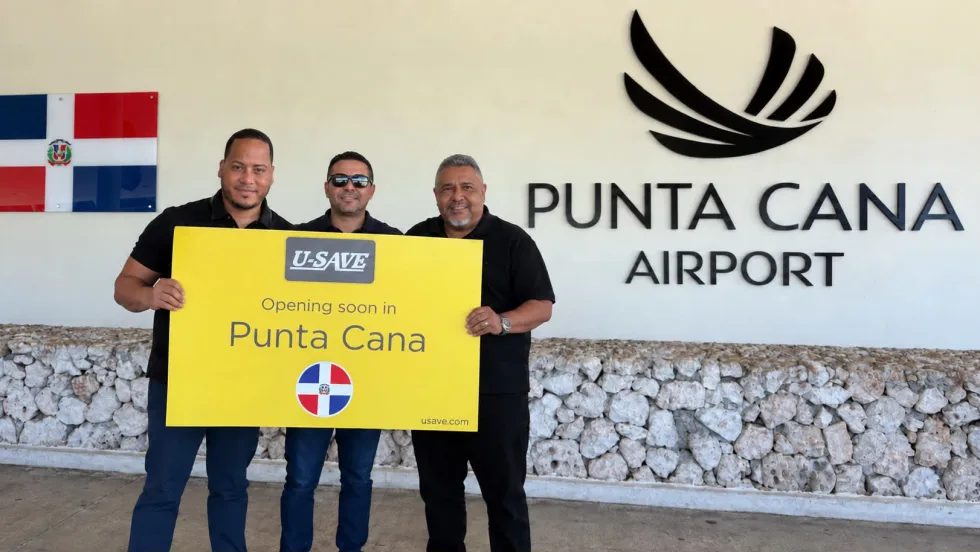
U-Save Continues Dominican Republic Expansion with Launch in Punta Cana
The new franchise location builds on U-Save’s existing Santo Domingo operation and will begin taking reservations for October 2026.
Read More →
When AI Books the Rental Car, Who Controls the Sale?
As AI moves from comparing rental rates to completing transactions, operators need to understand how travelers find, interpret, rank, and ultimately see their offers. (Part 2 of 2.)
Read More →