




This article originally appeared in our inaugural Auto Rental News International digital edition, covering the European rental market. To access our current International edition covering Latin America, click here.
Why a Standards Association?
The European Association of Car Rental Industry Systems Standards (ACRISS) was created to provide consumers with informed choices on car classifications and other key elements of renting a car.
by Diane Clancy
December 21, 2015
iStockPhoto.com/Tramino
3 min to read

iStockPhoto.com/Tramino
Car rental is probably one of the most maligned businesses within the travel industry due to the complexity of markets, government regulations, currency, insurance, competition and the high value of each moving asset.
Although many things have changed in 50 years, one fundamental principle has remained within the car rental sector — the desire to deliver great customer service while remaining profitable.
Given the wide ranging concepts of today’s technology, it is difficult to comprehend that in 1970 Pan Am and TWA began bringing many first-time American travelers to Europe in Boeing 747 “Jumbo Jets.”
All bookings came through the highly regarded professional travel agent. Using an airline computer reservation system (CRS), these agents were still handwriting airline tickets, and most bookings arrived to car rental companies via teletext.
All this was happening while the Berlin Wall was still standing, the euro was still to be invented, and it would be another 24 years before the Channel Tunnel opened.
In the early days of trans-Atlantic travel, car rental was sold as an auxiliary service via the airline prior to the emergence of Global Distribution Systems (GDS), which were originally formed through airline alliances.
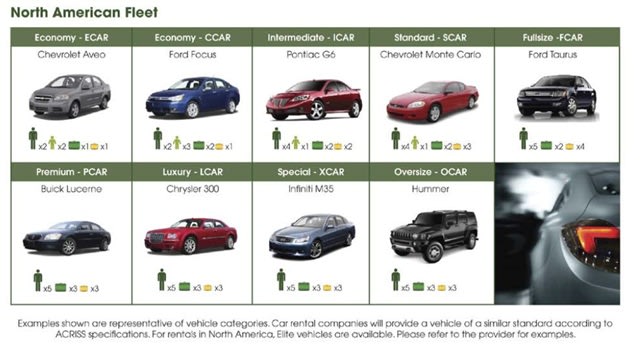
The car rental industry saw the potential for increased business in Europe, but it also saw the need to reflect on the issues caused by the lack of information being provided to the customer, the variances that made renting a car in Europe more complex than North America and consequently the potential risks of failing to achieve customer satisfaction.
Informing the Customer
Therefore, the car rental industry in Europe decided to respond positively to the opportunity and began to give more attention to informing its customers on terms and conditions, damage waivers and other key elements of renting a car. This became a major force to avoid damaging its reputation through business received via “bucket shops” (wholesalers) and unsolicited, enthusiastic “rate shopping.”
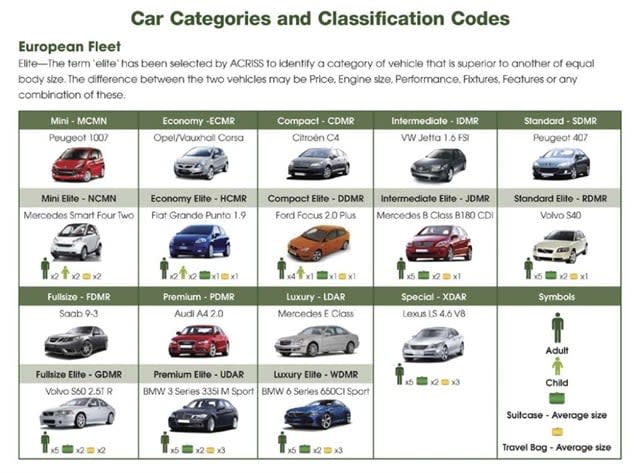
In the late 1980s, the major car rental companies sought approval from the soon-to-be European Union countries to form an association that was to deliver standards for the car rental industry in Europe for bookings made through automated distribution systems — essentially to avoid misleading information and provide the consumer with an informed choice.
Given that more business was emerging through GDS channels, it became crucial to the basic principles of delivering great service and maintaining a healthy and profitable business.
Hence the Association of Car Rental Industry Systems Standards (ACRISS) was created. More than 20 years later, its members work together with GDS associates and others to ensure that all members are compliant with the codes developed, which form the central core of the ACRISS Code of Conduct.
Consumers are now better informed as the opportunities for travel and competition grow. We no longer have to worry that a family of four doesn’t understand why their baggage does not fit into the trunk of that really great value Volkswagen Beetle!
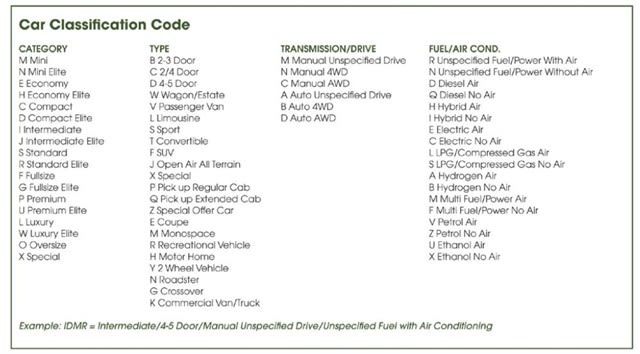
Work does not stop in ACRISS, even though members’ resources are stretched. Given the saturation of automated booking possibilities, the association is constantly seeking appropriate standards that help its members achieve great customer service — no matter what the source of the booking.
For further information, visit www.acriss.org or contact the secretariat via info@acriss.org or +44(0)1323 508093.
Subscribe to Our Newsletter
More Rental Operations

The $100,000 Insurance Trap in Exotic Car Rentals
Exotic rental agencies often rely on customers’ personal auto policies to protect six-figure vehicles. But policy language can dramatically change the coverage for vehicles over $100,000 MSRP.
Read More →
The Booking Is Confirmed, But Is Your Customer Ready to Drive?
For international renters, a confirmed reservation doesn’t always mean they’re eligible to drive. Earlier checks can help operators catch documentation and payment issues before the customer reaches the counter.
Read More →
ICRS 2027 Opens Call for Papers
The International Car Rental Show seeks session proposals on the business, operational, and technology issues facing car rental operators. Submissions are due Jan. 15.
Read More →
Turo to Launch Vehicle Delivery Service
Turo Delivered will let travelers search for vehicles that hosts can deliver directly to hotels, homes, airports, train stations, and other locations.
Read More →
Palm Beach Airport Code Change Creates Car Rental Distribution Gap
A test of rental searches under the old PBI and new DJT airport codes returned largely different sets of brands and vehicles, highlighting a potential distribution problem for rental operators.
Read More →
U-Save Continues Dominican Republic Expansion with Launch in Punta Cana
The new franchise location builds on U-Save’s existing Santo Domingo operation and will begin taking reservations for October 2026.
Read More →
When AI Books the Rental Car, Who Controls the Sale?
As AI moves from comparing rental rates to completing transactions, operators need to understand how travelers find, interpret, rank, and ultimately see their offers. (Part 2 of 2.)
Read More →
European Booked Car Rental Rates Fell 5%, Results Varied by Country
Ireland, Cyprus, and the United Kingdom saw steep declines, while booked rates rose in Poland and Hungary.
Read More →
Is It Time to Rethink Rental Categories?
As traditional economy and compact cars disappear from the market, longtime rental operator Mike DeLorenzo asks whether the industry’s familiar vehicle categories still make sense — and what operators need to rethink along with them.
Read More →
Who Owns the Rate? AI Is Creating a New Distribution Problem for Car Rental
Generative Engine Optimization asks whether AI can find a rental company, but operators also need to know whether the agent inspected enough of the market, compared equivalent offers, and presented a rate the traveler can actually book. (Part 1 of 2)
Read More →