


Access to Fuel Improving But Still an Issue in Northeast
The Department of Energy stated that Phillips 66 is estimating it could take two to three weeks before its refinery in Linden, N.J. can resume operations. As well, to help clean up and repair infrastructure in the Northeast, the Department of Transportation has released funding to several states.
By Greg Basich
Following super storm Sandy, fuel shortages have affected many communities in New York, New Jersey and elsewhere, due to a mix of distribution challenges and widespread power outages.
As of Nov. 5, the U.S. Department of Energy (DOE) had estimated that 24% of gas stations in the New York metropolitan area did not have gasoline available for sale. The DOE reported this is a drop from the 27% that it estimated did not have gasoline on Nov. 4.
AAA provided an update to its Friday, Nov. 2 estimate of the number of fuel stations currently with power and selling fuel, stating that as of Nov. 5, 55-60% of stations are operating in New Jersey, 60-65% are up and running in New York and on Long Island, 50-55% are selling fuel.
In addition, fuel prices have gone up in the northeast, according to AAA. Since Oct. 29, prices went up 3 cents in New York and close to 7 cents in New Jersey. As of Nov. 6, prices were to $3.974 for a gallon of regular retail gasoline in New York and $3.634 in New Jersey. A gallon of diesel was going for $4.354 in New York and $3.961 in New Jersey.
Fuel Distribution
With the fuel distribution system significantly disrupted across the northeast, it could take time for refineries, petroleum distribution terminals, and related infrastructure to be fully operational.
On Nov. 6, the DOE provided an update on the number of refineries and terminals currently operating. DOE stated that three out of six refineries in the area are fully operational, that out of 57 terminals in Sandy’s path, 48 are fully operational, and that the Colonial Pipeline reported that power to its Linden, N.J. facility has been restored and all its delivery lines are operational.
The DOE stated that Phillips 66 is estimating it could take two to three weeks before its Bayway refinery in Linden can resume operations. The company needs to replace electrical equipment damaged by saltwater, according to the DOE.
WEX Inc. (formerly Wright Express) posted an update on Friday, Nov. 2, that stated the company had identified 1,000 zip codes classified by FEMA as the primary storm-impacted areas. WEX said it would be monitoring those areas to assist with any hardships.
The company also stated it would be suppressing late fees for upcoming billing cycles, and will have triage in place to refund late fees that may have been assessed for customers in storm-impacted areas. The company has a fuel site locator here.
On Nov. 4, New Jersey's Governor Chris Christie provided an update to the media on the status of the fuel supply issues in the state. Christie had already issued orders to ration fuel on Saturday, Nov. 3, for counties with limited access to fuel, including Bergen, Essex, Hudson, Hunterdon, Middlesex, Morris, Monmouth, Passaic, Somerset, Sussex, Union, and Warren.
The rationing requires fuel retailers to only sell fuel to vehicle owners where the last number on a given license plate was an even number on even numbered days of the month and to owners of vehicles with odd numbers on odd-numbered days of the month.
"When power went out to the refineries, and when power went out to the pipelines, they couldn't move the gas," New Jersey's Governor Chris Christie said in a media briefing. "Now all the power is on for the pipelines and refineries. The president ordered that 22 million gallons of gasoline (Ed. Note: the president ordered 12 million gallons of gasoline and 10 million gallons of diesel fuel) be move here and New York, split between the two of us. This morning, in Bergen County, Essex County, Passaic County, Monmouth County, all across those counties, there are national guard tankers moving to gas stations that have power but no fuel. I'll be giving updates later today on stations on the specific gas stations have been fueled so that you can go to those that have fuel and they'll have shorter lines and that will help move things along."
The federal and state governments were also working to address the fuel shortage in storm-hit areas. On Friday, the Federal Emergency Management Agency (FEMA, you can visit the agency's blog here) announced it plans to buy up to 12 million gallons of gasoline and up to 10 million gallons of diesel to distribute in areas impacted by Sandy. FEMA plans to transport the fuel via tanker trucks throughout New York, New Jersey, and other storm-hit communities.
To help alleviate some of the distribution challenges in the state of New York, the state’s Governor Andrew Cuomo signed an executive order that temporarily allows fuel distributors and transporters to bring gasoline, diesel, and kerosene into the state without having to meet usual registration requirements (transporters and distributors must be registered with the New York State Department of Taxation and Finance under normal circumstances).
In another effort to help improve fuel availability, the U.S. Secretary of Homeland Security Janet Napolitano issued a temporary waiver of the Jones Act through Nov. 13. This waiver allows foreign oil tankers coming from the Gulf of Mexico to enter ports in the northeast and provide fuel.
Infastructure
U.S. Transportation Secretary Ray LaHood announced he quick release emergency relief funds to help repair infastructure damage caused by Hurricane Sandy.
The funds include: $10 million for New Jersey, $2 million for Connecticut, $10 million for New York, $3 million for Rhode Island and $4 million for North Carolina.
"President Obama made it clear that we need to do all we can to help communities get their transportation systems up and running and we are doing that," said Secretary LaHood. "These emergency relief funds represent only the start of our commitment to the region's recovery."
Quick release emergency funds provided by the U.S. Department of Transportation's Federal Highway Administration are used for a variety of repairs to roads, bridges and tunnels that are immediately necessary.
FHWA's emergency relief program provides funds for the repair or reconstruction of federal-aid roads and bridges damaged by natural disasters or catastrophic events. Restoring critical infrastructure is essential to enabling first responders and relief workers to access impacted communities and to quickly restoring services to impacted residents.
In addition, the Federal Motor Carrier Safety Admininstration (FMCSA) has issued an emergency declaration that lifts hour-of-service rules and other regulations. The declaration is in an effort to allow motor carrier drivers and operators to help in providing emergency relief.
Originally posted on Work Truck Online
More Rental Operations
How Rental Operators Can Navigate Personalized Pricing Rules
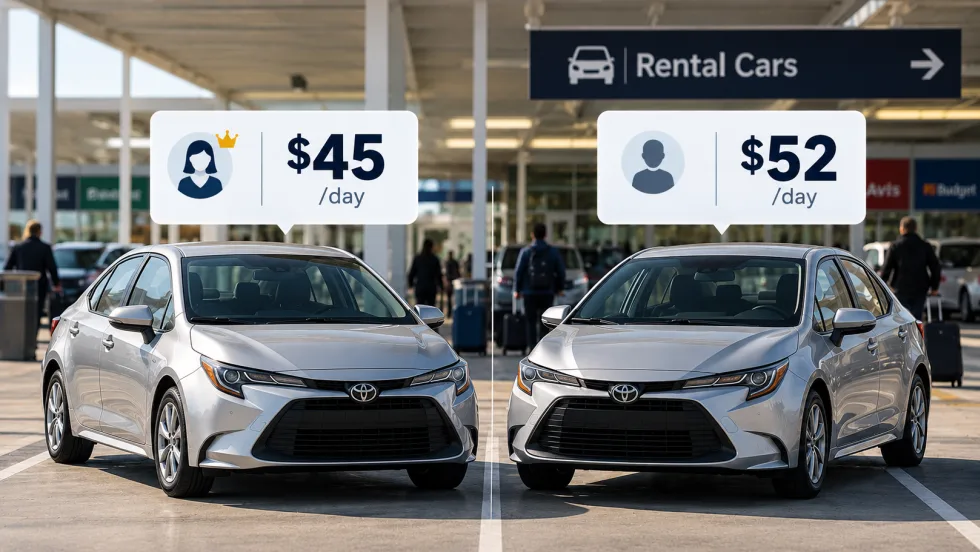
As regulators scrutinize the use of customer data in pricing, rental operators need to know whether they can explain why one renter pays more than another.
Read More →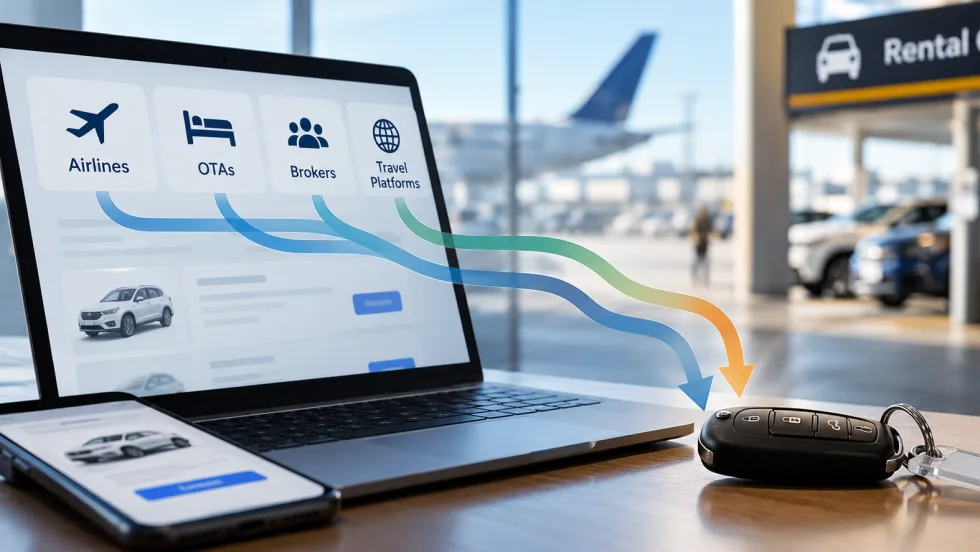
Direct, Broker or Hybrid? How Travel Retailers Source Rental Cars
As travel retailers weigh direct supplier relationships against third-party distribution, rental operators need to understand how those decisions affect their business.
Read More →
How Did This Independent Rental Operator Grow to 170 Vehicles in 4 Years?
With 170 vehicles across three Kentucky locations, Joel Price relies on an overseas team to handle reservations, payments, and after-hours customer service. It's one part of an unconventional approach to growing an independent rental operation.
Read More →
What Does It Take to Succeed in B2B Rentals?
The fundamentals may be familiar to daily car rental operators, but project-based truck rentals put different demands on the fleet and the business.
Read More →
NPR Builds on International Partnerships to Grow Rental Bookings
With Ana Laborde supporting broker development, NPR Auto Group is tailoring distribution strategies, rate packages, and partnerships to grow international reservations across its three brands.
Read More →
Advantage, Sixt Place Among Top Five in Annual Satisfaction Study
While Enterprise and National retain the top spots in JD Power’s 2026 rankings, the latest customer satisfaction results suggest renters can find competitive service beyond the biggest car rental names.
Read More →
The $100,000 Insurance Trap in Exotic Car Rentals
Exotic rental agencies often rely on customers’ personal auto policies to protect six-figure vehicles. But policy language can dramatically change the coverage for vehicles over $100,000 MSRP.
Read More →
The Booking Is Confirmed, But Is Your Customer Ready to Drive?
For international renters, a confirmed reservation doesn’t always mean they’re eligible to drive. Earlier checks can help operators catch documentation and payment issues before the customer reaches the counter.
Read More →
ICRS 2027 Opens Call for Papers
The International Car Rental Show seeks session proposals on the business, operational, and technology issues facing car rental operators. Submissions are due Jan. 15.
Read More →
Turo to Launch Vehicle Delivery Service
Turo Delivered will let travelers search for vehicles that hosts can deliver directly to hotels, homes, airports, train stations, and other locations.
Read More →