



Top Automotive Brands With 2020 Loyalty Focus
Numbers in parentheses indicate YOY increases of in-market brand loyalty.
Hyundai (automobiles +21%)
Avis (car rental +20%)
Lyft (rideshare +18%)
USAA (car insurance +7%)
Costco (gasoline)
 MENU
MENU SEARCH
Avis, Lyft, and Hyundai were all ranked highest in their categories.

This year, Brand Keys examined 85 categories and 833 brands.
Photo via Depositphotos.
Avis, Lyft, and Hyundai have topped the Brand Keys 25th annual Customer Loyalty list, conducted by the New York-based brand engagement and customer loyalty research consultancy.
On average, customer brand loyalty has increased 20% from 2019 to 2020 across 85 leading B2C, B2B, and D2C categories, which encompass 16 industry sectors and 833 brands.
“Analysts, consulting firms, and research practices that declared brand loyalty dead are talking about a consumer loyalty model that expired in 1990,“ Robert Passikoff, president of Brand Keys, said in a statement. “Back then loyalty was a black-and-white issue for consumers. But loyalty didn’t die. Rather, it has evolved in a more complex marketplace with more sophisticated drivers and passengers.”
Eighty percent of the path-to-purchase category loyalty drivers in the automotive category have new, consumer-generated configurations. Attribute, benefit, and value components that form the components of those drivers have grown more complex, more connected, and more emotional in 82% of the automotive sectors tracked in the annual survey.
“Two decades into the 21st century the world has more complex brand and mediascapes," said Passikoff. "It’s more data-rich and technologically-intensive. Consumers are more complex, connected, and complicated. They connect with each other before even considering connecting to a brand and assess loyalty relative to how they envision an ‘ideal’ brand."
The order of importance of drivers represents a value continuum that consumers navigate, largely unconsciously, in their purchase and loyalty journeys. Consumers hold specific expectations for each category loyalty driver and use their expectations for the category Ideal as a “yardstick” against which they measure brand performance. Brands that best meet consumer expectations always have the most-loyal customers and, not-so-coincidently, the strongest sales and highest profits.
For example, below is the order of the path-to-purchase loyalty drivers for the automotive category in 2019. The numbers in parentheses below the drivers indicate the percent-contribution the individual driver makes to brand loyalty. Changes of 5% are significant at the 95% confidence level.
For the automotive category in 2020, not only has the order of the loyalty drivers changed (and how consumers assess these brands), but the attribute, benefit, and value components that make up the drivers have become more complex, representing a genuine consumer perspective because the output of the model obviates the fact that consumers don't think how they feel, they don't say what they think, and don't do what they say they will.
For the 2020 CLEI survey, 62,474 consumers, 16 to 65 years of age from the nine US Census Regions, self-selected the categories in which they are consumers and the brands for which they are customers.
This year, Brand Keys examined 85 categories and 833 brands.
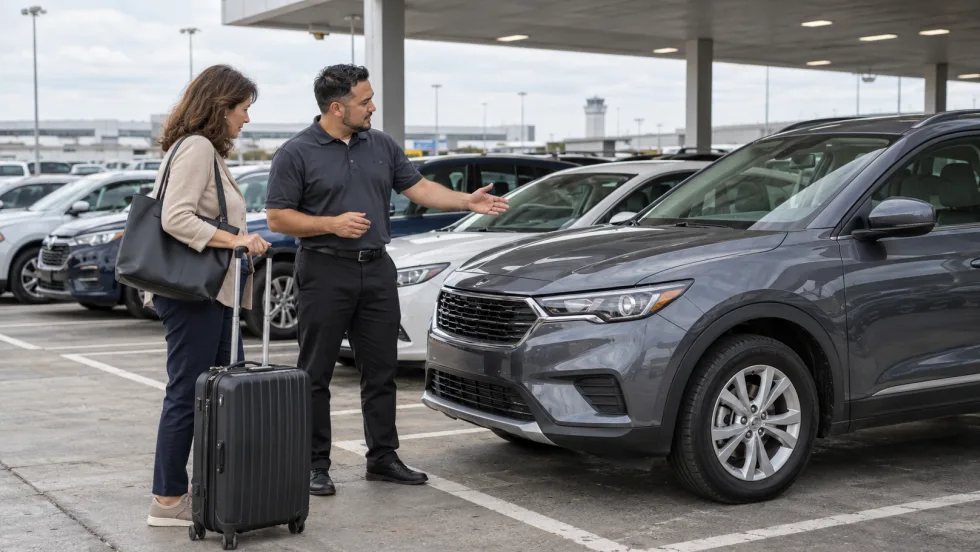
While Enterprise and National retain the top spots in JD Power’s 2026 rankings, the latest customer satisfaction results suggest renters can find competitive service beyond the biggest car rental names.
Read More →
Exotic rental agencies often rely on customers’ personal auto policies to protect six-figure vehicles. But policy language can dramatically change the coverage for vehicles over $100,000 MSRP.
Read More →
For international renters, a confirmed reservation doesn’t always mean they’re eligible to drive. Earlier checks can help operators catch documentation and payment issues before the customer reaches the counter.
Read More →
The International Car Rental Show seeks session proposals on the business, operational, and technology issues facing car rental operators. Submissions are due Jan. 15.
Read More →
Turo Delivered will let travelers search for vehicles that hosts can deliver directly to hotels, homes, airports, train stations, and other locations.
Read More →
A test of rental searches under the old PBI and new DJT airport codes returned largely different sets of brands and vehicles, highlighting a potential distribution problem for rental operators.
Read More →
The new franchise location builds on U-Save’s existing Santo Domingo operation and will begin taking reservations for October 2026.
Read More →
As AI moves from comparing rental rates to completing transactions, operators need to understand how travelers find, interpret, rank, and ultimately see their offers. (Part 2 of 2.)
Read More →
Ireland, Cyprus, and the United Kingdom saw steep declines, while booked rates rose in Poland and Hungary.
Read More →
As traditional economy and compact cars disappear from the market, longtime rental operator Mike DeLorenzo asks whether the industry’s familiar vehicle categories still make sense — and what operators need to rethink along with them.
Read More →