



Business Travel Added $491B to U.S. Economy
The Global Business Travel Association (GBTA) Foundation’s “The United States Business Travel Industry: Road Warriors Impact on Jobs and the Economy” study found that business travel was responsible for about 3% of U.S. GDP in 2012 or $491 billion.
The Global Business Travel Association (GBTA) Foundation’s “The United States Business Travel Industry: Road Warriors Impact on Jobs and the Economy” study highlights the positive economic impact that road warriors have on the U.S. economy.
According to the study, business travel was responsible for about 3% of U.S. GDP in 2012 ($491 billion). And for every 1% increase in business travel spending, the U.S. economy gains an additional 71,000 jobs, nearly $5 billion in GDP, $3 billion in wages and $1.2 billion in tax collections.
The study also shows that the U.S. business travel industry supports 7.1 million jobs and generated $118 billion in federal, state and local taxes.
“Business travel matters,” said Mike Fegley, vice president of America sales for Intercontinental Hotels Group, the corporate sponsor of this study. “Business travel is a driver of the economy and these numbers solidify its importance. The study shows we can really move the needle of the economy by getting out on the road for face-to-face meetings conducting business and generating jobs.”
Other highlights from the study include:
In 2012, U.S. domestic business travelers spent an average of $540 per trip, including $147 on lodging, $230 on transportation, $100 on food and beverage, $28 on shopping and $22 on entertainment. These averages consider all trips — day and overnight — and all methods of transportation – air, rail, personal auto and rental car.
Of the $491 billion total from business travel, $208 billion accrued directly to businesses that served travelers or meeting attendees. The supply chain for these businesses received an additional indirect contribution of $120.5 billion.
The average business trip lasts 1.75 days and covers 268 miles. The typical U.S. business traveler takes about four daytrips and two overnight trips per month.
U.S. business travelers are most likely to be mid-career (age 35-55) and be employed in a managerial or professional position. Business travelers have an average annual household income of $102,329 and almost three-quarters of business travelers are married.
“Electronic communication is important to our economy, but it cannot completely replace the personal connection formed by meeting face to face,” said Rep. Sam Farr (D-Calif.) and co-chair of the Congressional Travel and Tourism Caucus. “Business travelers play an important role in building our economy beyond just the deals they strike with a hand shake. Their time on the road supports the entire travel industry; injecting needed dollars into local businesses and creating jobs in every community across the United States.”
The GBTA Foundation, the education and research foundation for the Global Business Travelers Association, conducted this study. Rockport Analytics provided the estimates on economic impacts.
For more information, visit www.gbta.org.
More Rental Operations

What Does It Take to Succeed in B2B Rentals?
The fundamentals may be familiar to daily car rental operators, but project-based truck rentals put different demands on the fleet and the business.
Read More →
NPR Builds on International Partnerships to Grow Rental Bookings
With Ana Laborde supporting broker development, NPR Auto Group is tailoring distribution strategies, rate packages, and partnerships to grow international reservations across its three brands.
Read More →
Advantage, Sixt Place Among Top Five in Annual Satisfaction Study
While Enterprise and National retain the top spots in JD Power’s 2026 rankings, the latest customer satisfaction results suggest renters can find competitive service beyond the biggest car rental names.
Read More →
The $100,000 Insurance Trap in Exotic Car Rentals
Exotic rental agencies often rely on customers’ personal auto policies to protect six-figure vehicles. But policy language can dramatically change the coverage for vehicles over $100,000 MSRP.
Read More →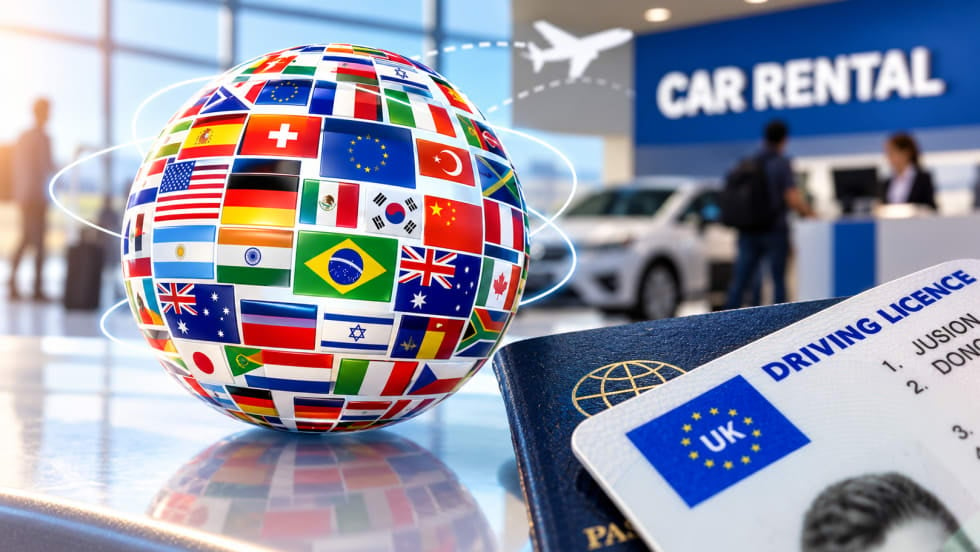
The Booking Is Confirmed, But Is Your Customer Ready to Drive?
For international renters, a confirmed reservation doesn’t always mean they’re eligible to drive. Earlier checks can help operators catch documentation and payment issues before the customer reaches the counter.
Read More →
ICRS 2027 Opens Call for Papers
The International Car Rental Show seeks session proposals on the business, operational, and technology issues facing car rental operators. Submissions are due Jan. 15.
Read More →
Turo to Launch Vehicle Delivery Service
Turo Delivered will let travelers search for vehicles that hosts can deliver directly to hotels, homes, airports, train stations, and other locations.
Read More →
Palm Beach Airport Code Change Creates Car Rental Distribution Gap
A test of rental searches under the old PBI and new DJT airport codes returned largely different sets of brands and vehicles, highlighting a potential distribution problem for rental operators.
Read More →
U-Save Continues Dominican Republic Expansion with Launch in Punta Cana
The new franchise location builds on U-Save’s existing Santo Domingo operation and will begin taking reservations for October 2026.
Read More →
When AI Books the Rental Car, Who Controls the Sale?
As AI moves from comparing rental rates to completing transactions, operators need to understand how travelers find, interpret, rank, and ultimately see their offers. (Part 2 of 2.)
Read More →