



Ford Invests $1B Toward 2021 Autonomous Vehicle
Ford will invest $1 billion in Pittsburgh-based Argo AI, a startup focusing on artificial intelligence, to develop a software platform for a fully autonomous vehicle it plans to make available for ride hailing in 2021.

(from l. to r.) Peter Rander, Mark Fields, Bryan Salesky, and Raj Nair

(from l. to r.) Peter Rander, Mark Fields, Bryan Salesky, and Raj Nair
Ford will invest $1 billion in Pittsburgh-based Argo AI, a startup focusing on artificial intelligence, to develop a software platform for a fully autonomous vehicle it plans to make available for ride hailing in 2021, the company has announced.
Argo AI was founded last year by Bryan Salesky and Peter Rander, who left Google and Uber respectively. Salesky, Argo AI's CEO, and Rander, the company's COO, are both alumni of the Carnegie Mellon National Robotics Engineering Center.
As part of the investment, Mark Fields, Ford's president and CEO, and Raj Nair, Ford's executive vice president of product development and chief technical officer, will join Argo AI's board, which will also include Salesky, Rander, and an independent director.
"The next decade will be defined by the automation of the automobile, and autonomous vehicles will have as significant an impact on society as Ford’s moving assembly line did 100 years ago," Fields said.
The autonomous vehicle technology developed through the partnership could be licensed to other automakers, Fields said.
Associates now developing Ford’s virtual driver system — the machine-learning software that acts as the brain of autonomous vehicles — will be combined with the robotics talent and expertise of Argo AI to deliver the virtual driver system for Ford's SAE level 4 self-driving vehicles.
Ford will develop the autonomous vehicle hardware and take the lead on systems integration, manufacturing, exterior and interior design, and regulatory policy management, according to Ford.
"We are at an inflection point in using artificial intelligence in a wide range of applications, and the successful deployment of self-driving cars will fundamentally change how people and goods move," Salesky said. "We are energized by Ford’s commitment and vision for the future of mobility, and we believe this partnership will enable self-driving cars to be commercialized and deployed at scale to extend affordable mobility to all."
Originally posted on Automotive Fleet
More Rental Operations

The Booking Is Confirmed, But Is Your Customer Ready to Drive?
For international renters, a confirmed reservation doesn’t always mean they’re eligible to drive. Earlier checks can help operators catch documentation and payment issues before the customer reaches the counter.
Read More →
ICRS 2027 Opens Call for Papers
The International Car Rental Show seeks session proposals on the business, operational, and technology issues facing car rental operators. Submissions are due Jan. 15.
Read More →
Turo to Launch Vehicle Delivery Service
Turo Delivered will let travelers search for vehicles that hosts can deliver directly to hotels, homes, airports, train stations, and other locations.
Read More →
Palm Beach Airport Code Change Creates Car Rental Distribution Gap
A test of rental searches under the old PBI and new DJT airport codes returned largely different sets of brands and vehicles, highlighting a potential distribution problem for rental operators.
Read More →
U-Save Continues Dominican Republic Expansion with Launch in Punta Cana
The new franchise location builds on U-Save’s existing Santo Domingo operation and will begin taking reservations for October 2026.
Read More →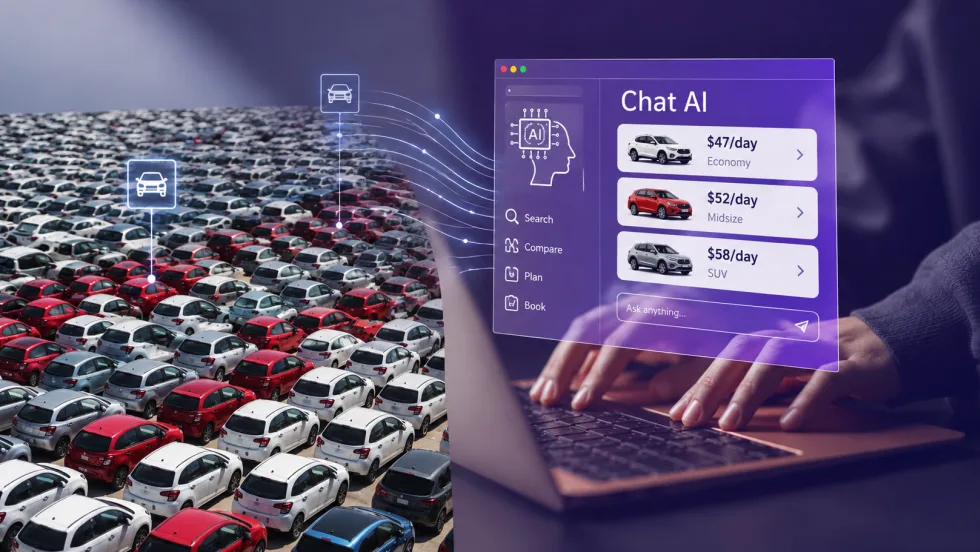
When AI Books the Rental Car, Who Controls the Sale?
As AI moves from comparing rental rates to completing transactions, operators need to understand how travelers find, interpret, rank, and ultimately see their offers. (Part 2 of 2.)
Read More →
European Booked Car Rental Rates Fell 5%, Results Varied by Country
Ireland, Cyprus, and the United Kingdom saw steep declines, while booked rates rose in Poland and Hungary.
Read More →
Is It Time to Rethink Rental Categories?
As traditional economy and compact cars disappear from the market, longtime rental operator Mike DeLorenzo asks whether the industry’s familiar vehicle categories still make sense — and what operators need to rethink along with them.
Read More →
Who Owns the Rate? AI Is Creating a New Distribution Problem for Car Rental
Generative Engine Optimization asks whether AI can find a rental company, but operators also need to know whether the agent inspected enough of the market, compared equivalent offers, and presented a rate the traveler can actually book. (Part 1 of 2)
Read More →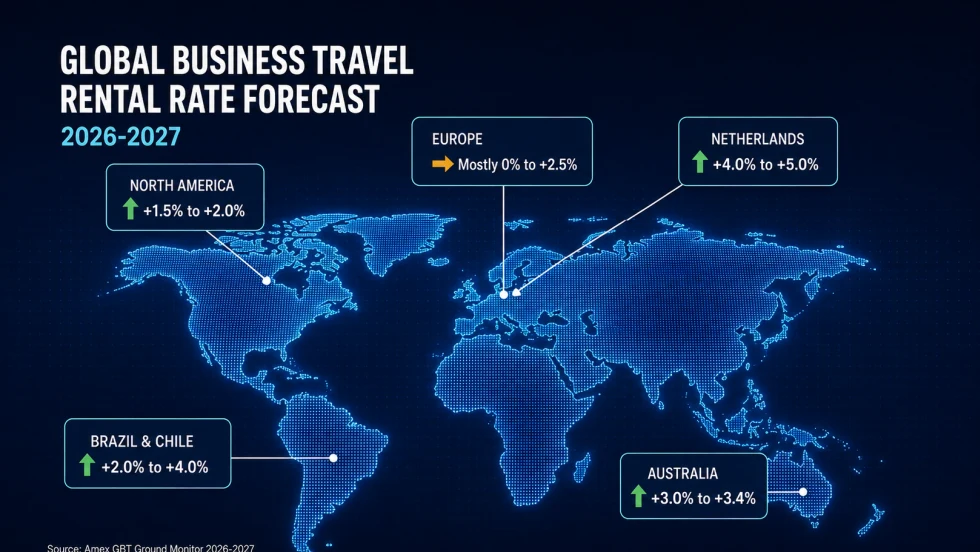
U.S. Business Travel Car Rental Rates Forecast to Rise Up to 2%
Improved fleet supply should limit pricing gains in 2026-27, while insurance, repair costs, and softer residual values continue to pressure rental operations, according to Amex GBT.
Read More →