




Gear Up for Mobile Transactions: Visa OKs Smartphones for Use as Payment Device
The transactions — certified by Visa Inc. and Visa Europe — will use Visa’s ‘payWave,’ so car rental companies that offer this type of Visa transaction should be prepared when customers begin pulling out their cell phones instead of credit cards at the point of sale.
Visa Inc. and Visa Europe announced Jan. 10 that several near field communication (NFC)-enabled smartphones have been certified as a payment device that can be used with Visa’s payWave.
Samsung Galaxy SII, LG Optimus NET NFC, BlackBerry BoldTM 9900, BlackBerry Bold 9790, BlackBerry CurveTM 9360 and BlackBerry Curve 9380 have been added to the list of Visa compliant payment products available for commercial deployment by financial institutions. These additions mean that financial institutions will begin allowing customers to use their smartphones to make a payment transaction at the point-of-sale.
According to Visa, the certification of these smartphones paves the way for mobile device manufacturers, mobile operators and retailers to partner with financial institutions to offer Visa mobile payment functionality to consumers globally. (To read a feature on payment processing changes in the U.S. and how it affects the car rental industry, click here.)
"This is an important step for Visa, its financial institution partners and the mobile industry," said Bill Gajda, global head of mobile product for Visa. "In addition to issuing plastic magnetic stripe or chip-enabled payment cards, financial institutions can now consider offering their accountholders a way to transform their smartphones into fully functional mobile payment devices."
All the new devices certified by Visa host the Visa payWave application on a secure SIM card and feature NFC technology, the short range communications standard that enables mobile phones to securely transmit payment information to a contactless payment terminal.
Visa's Certification Process
Visa has played a leadership role in establishing global standards for mobile payments, making sure that they are aligned with existing technology and security standards for chip payment cards and can easily be integrated into the existing payments ecosystem. For example: Visa payWave on mobile devices is compatible with existing contactless (NFC) payment terminals already installed at retail outlets worldwide, enabling Visa accountholders to simply wave their enabled phone in front of a payment terminal in order to pay.
Visa has a compliance testing process for both mobile devices and the secure elements that host the Visa payWave mobile application. The process includes extensive technical and usability testing with respect to the Visa mobile payment functionality. This helps to ensure reliable and secure Visa transactions which are compatible with the global standard for chip-enabled payments, and establishes a required signal range for all mobile (NFC-enabled) Visa payment devices.
Visa's compliance testing process helps to ensure the combination of the phone; secure chip and Visa's mobile payment application will provide the level of security and user experience Visa accountholders have come to expect from Visa.
"Today's announcement is another example of the momentum we are seeing behind NFC as an industry standard for mobile payments," said Nick Holland, senior analyst Yankee Group. "Yankee Group predicts that the value of NFC-based transactions will grow significantly, from $27 million in 2010 to $40 billion in 2014."
More Rental Operations
Palm Beach Airport Code Change Creates Car Rental Distribution Gap
A test of rental searches under the old PBI and new DJT airport codes returned largely different sets of brands and vehicles, highlighting a potential distribution problem for rental operators.
Read More →
U-Save Continues Dominican Republic Expansion with Launch in Punta Cana
The new franchise location builds on U-Save’s existing Santo Domingo operation and will begin taking reservations for October 2026.
Read More →
When AI Books the Rental Car, Who Controls the Sale?
As AI moves from comparing rental rates to completing transactions, operators need to understand how travelers find, interpret, rank, and ultimately see their offers. (Part 2 of 2.)
Read More →
European Booked Car Rental Rates Fell 5%, Results Varied by Country
Ireland, Cyprus, and the United Kingdom saw steep declines, while booked rates rose in Poland and Hungary.
Read More →
Is It Time to Rethink Rental Categories?
As traditional economy and compact cars disappear from the market, longtime rental operator Mike DeLorenzo asks whether the industry’s familiar vehicle categories still make sense — and what operators need to rethink along with them.
Read More →
Who Owns the Rate? AI Is Creating a New Distribution Problem for Car Rental
Generative Engine Optimization asks whether AI can find a rental company, but operators also need to know whether the agent inspected enough of the market, compared equivalent offers, and presented a rate the traveler can actually book. (Part 1 of 2)
Read More →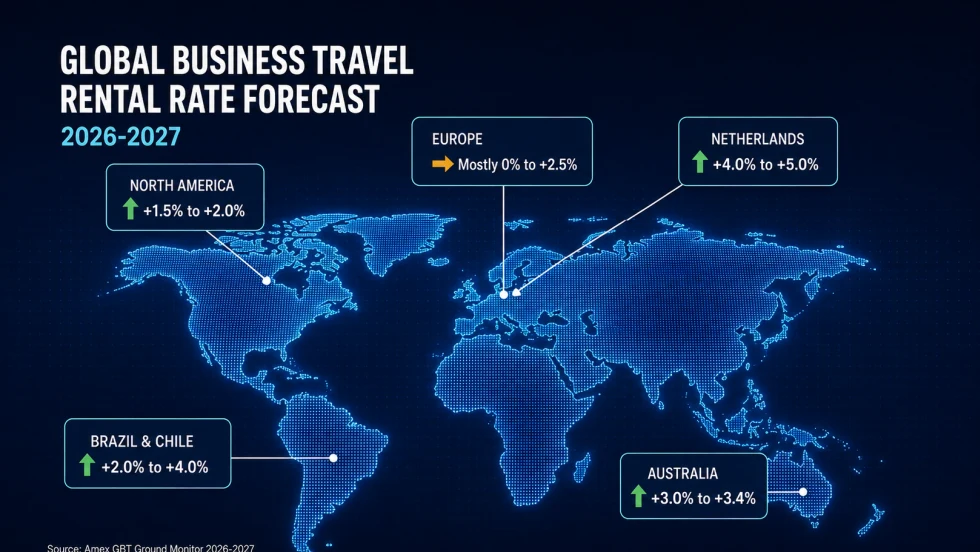
U.S. Business Travel Car Rental Rates Forecast to Rise Up to 2%
Improved fleet supply should limit pricing gains in 2026-27, while insurance, repair costs, and softer residual values continue to pressure rental operations, according to Amex GBT.
Read More →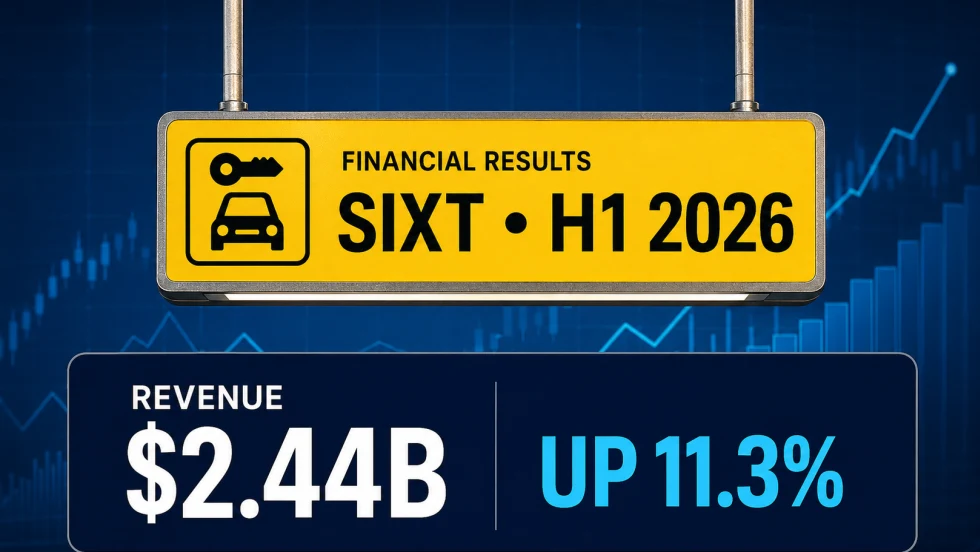
Sixt Revenue Tops $2.4 Billion in First Half of 2026
Sixt’s first-half revenue surpassed $2.4 billion for the first time as demand outpaced fleet growth, lifting utilization and earnings despite weaker consumer sentiment in North America.
Read More →
In Memoriam: Bobby Klyce, Avis Licensee Legend
The longtime Birmingham Avis operator and 2018 Auto Rental News Impact Award recipient was remembered as an advocate for independent licensees and the broader car rental industry.
Read More →
How to Build Custom Fleet Tools With AI and Vibe Coding [Webinar]
A new Automotive Fleet webinar explores how fleet managers are using AI and vibe coding to automate routine work and create simple operational tools without traditional programming skills.
Read More →