





Related: Hertz Settlement Calls for Disposal of 182,521 Vehicles
Hertz Reports $832M Revenue for Q2 2020
The company also reported a net loss of $847 million.
August 12, 2020
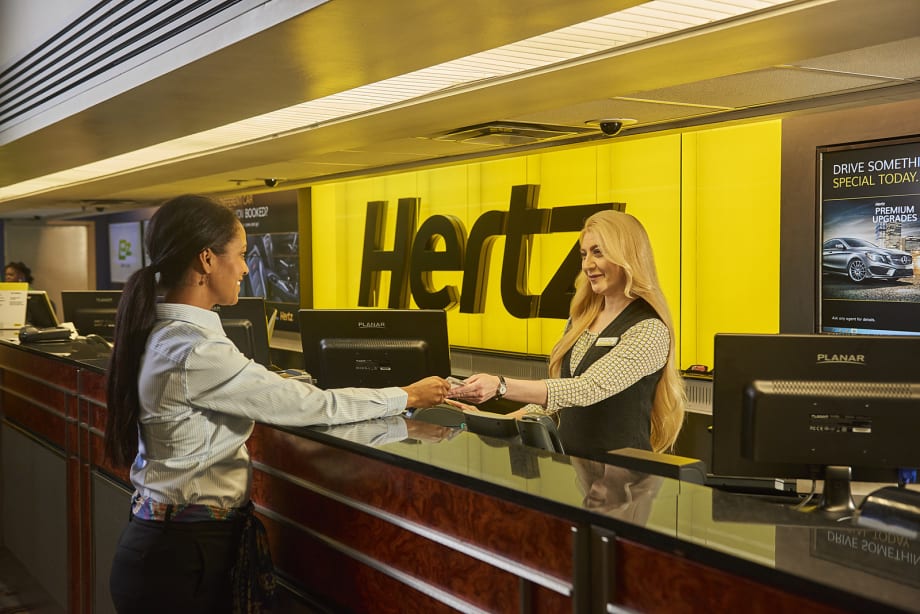
Liquidity at the end of the second quarter was $1.4 billion.
Photo courtesy of Hertz.
3 min to read
Hertz Global Holdings announced a revenue of $832 million for the second quarter of 2020. It reported a net loss of $847 million and adjusted corporate EBITDA of negative $587 million.
Liquidity at the end of the second quarter was $1.4 billion.
"In the second quarter, like so many companies whose revenues have sharply declined due to the pandemic's significant impact on global travel, we had to make difficult but necessary decisions to strengthen and position the company for growth for many years to come," Paul Stone, president and CEO of Hertz Global, said in a statement. "The toughest decisions have been those that impact the livelihood of our dedicated workforce and our voluntarily reorganizing under Chapter 11 in North America. We are moving through our reorganization process and remain focused on emerging an even stronger global rental car leader better positioned to serve our customers around the world."
In the second quarter, global revenue declined 67%. While air travel around the world experienced a significant slowdown, and the U.S. car sales market was extremely limited until May, Hertz worked to align labor with rental demand, cancel new-fleet orders, return program vehicles, cut all non-essential spending and capital expenses, and consolidate off-airport rental locations for efficiency. As a result, Hertz reduced global direct operating and SG&A expenses by 47% year-over-year in the second quarter.
Global revenue in April, May, and June, while down versus prior year, showed sequential monthly improvement as states and countries began to re-open.
During the quarter, Hertz Global capitalized on positive trends in its new driver and delivery service offering and saw an increase in cargo trucks and van rentals off airport. Insurance replacement rentals also experienced a restart as more cars returned to the highways. Leisure air travel began to pick up heading into the domestic July 4 holiday in the U.S. However, a rise in COVID-19 infections in the south and west since then caused the positive leisure trend to slow again.
The U.S. used-car market experienced a strong rebound in May and June. At the end of the second quarter, the number of vehicles in the global fleet was 29% lower year over year.
"We continue to make disciplined adjustments to our cost structure based on revenue fluctuations and expect to generate about $2.5 billion in annualized savings," Stone said. "Our priority is fleet management. The continued strong used-car market allows us to continue to sell cars aggressively as we right-size the fleet to align with market realities. Across the business, our team is laser-focused on capturing revenue, driving efficiency and advancing critical technology. In the U.S., we continue to capitalize on rental opportunities off airport, while ensuring customer service levels remain best-in-class. Internationally, our fleet is trending toward demand levels. Finally, continuing to keep our teams and our customers safe in this unpredictable environment is of utmost importance to everyone at Hertz."
In addition to following social distancing best practices and daily employee health assessments at Hertz, Dollar, and Thrifty locations, the Hertz raised its standards for safety and cleanliness.
Every vehicle is being sealed and certified "Hertz Gold Standard Clean" after undergoing a 15-point cleaning and sanitization process that follows global health agency guidelines and uses EPA-approved products. Hertz also has directed that masks be worn by all employees in its field and corporate locations across the U.S. Similarly, masks are now required for U.S. customers.
More Rental Operations

What Does It Take to Succeed in B2B Rentals?
The fundamentals may be familiar to daily car rental operators, but project-based truck rentals put different demands on the fleet and the business.
Read More →
NPR Builds on International Partnerships to Grow Rental Bookings
With Ana Laborde supporting broker development, NPR Auto Group is tailoring distribution strategies, rate packages, and partnerships to grow international reservations across its three brands.
Read More →
Advantage, Sixt Place Among Top Five in Annual Satisfaction Study
While Enterprise and National retain the top spots in JD Power’s 2026 rankings, the latest customer satisfaction results suggest renters can find competitive service beyond the biggest car rental names.
Read More →
The $100,000 Insurance Trap in Exotic Car Rentals
Exotic rental agencies often rely on customers’ personal auto policies to protect six-figure vehicles. But policy language can dramatically change the coverage for vehicles over $100,000 MSRP.
Read More →
The Booking Is Confirmed, But Is Your Customer Ready to Drive?
For international renters, a confirmed reservation doesn’t always mean they’re eligible to drive. Earlier checks can help operators catch documentation and payment issues before the customer reaches the counter.
Read More →
ICRS 2027 Opens Call for Papers
The International Car Rental Show seeks session proposals on the business, operational, and technology issues facing car rental operators. Submissions are due Jan. 15.
Read More →
Turo to Launch Vehicle Delivery Service
Turo Delivered will let travelers search for vehicles that hosts can deliver directly to hotels, homes, airports, train stations, and other locations.
Read More →
Palm Beach Airport Code Change Creates Car Rental Distribution Gap
A test of rental searches under the old PBI and new DJT airport codes returned largely different sets of brands and vehicles, highlighting a potential distribution problem for rental operators.
Read More →
U-Save Continues Dominican Republic Expansion with Launch in Punta Cana
The new franchise location builds on U-Save’s existing Santo Domingo operation and will begin taking reservations for October 2026.
Read More →
When AI Books the Rental Car, Who Controls the Sale?
As AI moves from comparing rental rates to completing transactions, operators need to understand how travelers find, interpret, rank, and ultimately see their offers. (Part 2 of 2.)
Read More →