




NHTSA Seeks Accountability, Transparency on ADAS-Related Crashes
A new order mandates major manufacturers, Tier 1 suppliers, and operators of autonomous vehicles to report crashes of vehicles equipped with emerging in-vehicle technologies.


An August 2020 report from AAA found that over the course of 4,000 miles of real-world driving, vehicles equipped with active driving assistance systems experienced a system anomaly every eight miles, on average.
Photo courtesy of AAA.
Entities as diverse as General Motors, Tesla, Lyft, Navistar, BorgWarner, Denso, First Transit, and Nuro will soon begin reporting crashes of their vehicles equipped with advanced driver assistance systems.
On June 29, the National Highway Traffic Safety Administration issued an order requiring major vehicle and equipment manufacturers and operators of vehicles equipped with SAE Level 2 advanced driver assistance systems (ADAS) or SAE Levels 3-5 automated driving systems (ADS) to report crashes during which those systems were engaged.
The action is designed to enable NHTSA to collect and analyze crash data to identify safety issues that could emerge in these automated systems, the agency said in a statement.
NHTSA’s order requires those entities, including software manufacturers, to report crashes that occur on public roads in the U.S. The order does not cover individual fleet operators. It mandates reporting within one day of learning of a crash that involves a hospital-treated injury, fatality, vehicle tow-away, airbag deployment, or a “vulnerable road user” such as a pedestrian or bicyclist.
Every month, those entities must report all other crashes involving an ADAS-equipped vehicle that involve an injury or property damage. Those reports must be updated monthly with new or additional information. The reports must be submitted to NHTSA electronically through a form that NHTSA will use to collate the information and identify crashes for follow up.
Failure to respond could result in civil penalties of up to $22,992 per violation per day, up to a maximum penalty of more than $114 million.
Initially, the vast majority of reporting will come from major automakers with vehicles equipped with Level 2 ADAS, which includes commonly available driver-assist functions such as lane centering assistance and adaptive cruise control.
The order also includes autonomous technology providers that operate ADS-equipped vehicles at Level 4 autonomy — such as Nuro, Gatik AI, Kodiak Robotics, Cruise, and Poni.AI — though those vehicles are not currently sold to consumers and are in limited testing presently.
NHTSA’s order follows mounting reports of problems with ADAS-equipped vehicles as well as crashes.
An August 2020 report from AAA found that over the course of 4,000 miles of real-world driving, vehicles equipped with active driving assistance systems experienced a system anomaly every 8 miles, on average. Problems included trouble with the systems keeping the test vehicles in their lane, coming too close to other vehicles or guardrails, and active driving assistance systems disengaging with little notice.
Tesla has experienced an ongoing string of incidents with crashes involving its AutoPilot system. At least three Tesla drivers have died while Autopilot was engaged. Problems with Tesla’s AutoPilot system may not be increasing, however. Tesla released crash data regarding AutoPilot crashes in the first half of last year, which showed an overall improving per-mile trend in incidences.
Originally posted on Automotive Fleet
More Rental Operations
Advantage, Sixt Place Among Top Five in Annual Satisfaction Study
While Enterprise and National retain the top spots in JD Power’s 2026 rankings, the latest customer satisfaction results suggest renters can find competitive service beyond the biggest car rental names.
Read More →
The $100,000 Insurance Trap in Exotic Car Rentals
Exotic rental agencies often rely on customers’ personal auto policies to protect six-figure vehicles. But policy language can dramatically change the coverage for vehicles over $100,000 MSRP.
Read More →
The Booking Is Confirmed, But Is Your Customer Ready to Drive?
For international renters, a confirmed reservation doesn’t always mean they’re eligible to drive. Earlier checks can help operators catch documentation and payment issues before the customer reaches the counter.
Read More →
ICRS 2027 Opens Call for Papers
The International Car Rental Show seeks session proposals on the business, operational, and technology issues facing car rental operators. Submissions are due Jan. 15.
Read More →
Turo to Launch Vehicle Delivery Service
Turo Delivered will let travelers search for vehicles that hosts can deliver directly to hotels, homes, airports, train stations, and other locations.
Read More →
Palm Beach Airport Code Change Creates Car Rental Distribution Gap
A test of rental searches under the old PBI and new DJT airport codes returned largely different sets of brands and vehicles, highlighting a potential distribution problem for rental operators.
Read More →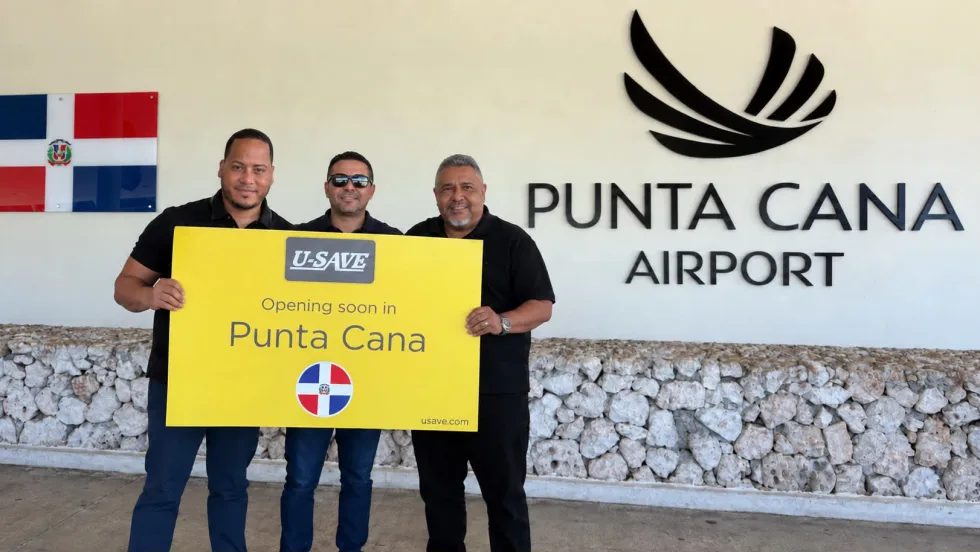
U-Save Continues Dominican Republic Expansion with Launch in Punta Cana
The new franchise location builds on U-Save’s existing Santo Domingo operation and will begin taking reservations for October 2026.
Read More →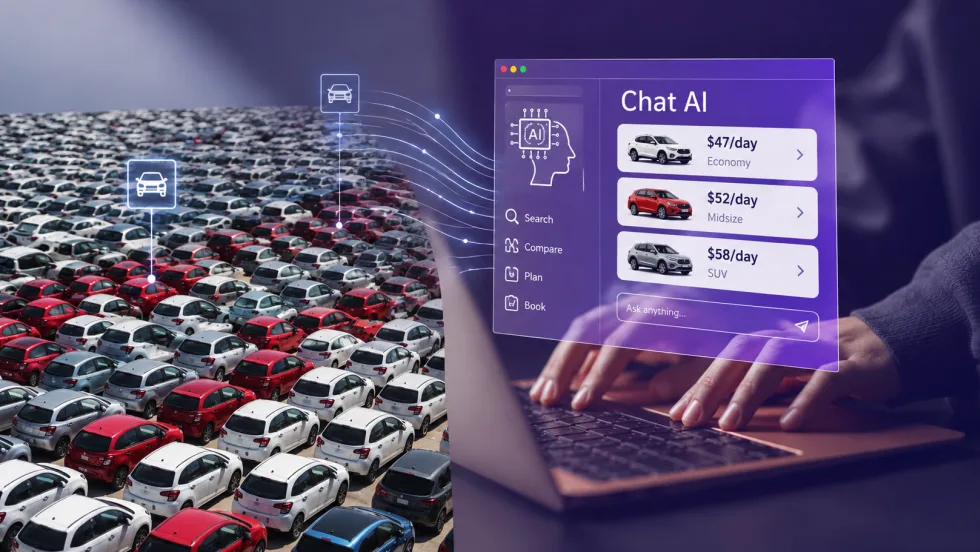
When AI Books the Rental Car, Who Controls the Sale?
As AI moves from comparing rental rates to completing transactions, operators need to understand how travelers find, interpret, rank, and ultimately see their offers. (Part 2 of 2.)
Read More →
European Booked Car Rental Rates Fell 5%, Results Varied by Country
Ireland, Cyprus, and the United Kingdom saw steep declines, while booked rates rose in Poland and Hungary.
Read More →
Is It Time to Rethink Rental Categories?
As traditional economy and compact cars disappear from the market, longtime rental operator Mike DeLorenzo asks whether the industry’s familiar vehicle categories still make sense — and what operators need to rethink along with them.
Read More →