




Toyota Launches Plan to Fix Accelerator Pedals on Recalled Vehicles
The automaker says parts used to reinforce the sticking pedals are being shipped to dealers to complete customer repairs.
Toyota Motor Sales (TMS) U.S.A. Inc. announced Monday that it will begin fixing accelerator pedals in recalled Toyota Division vehicles this week.
Toyota’s engineers have developed and rigorously tested a solution that involves reinforcing the pedal assembly in a manner that eliminates the excess friction that has caused the pedals to stick in rare instances. In addition, Toyota has developed an effective solution for vehicles in production. Parts to reinforce the pedals are already being shipped for use by dealers, and dealer training is under way.
Many Toyota dealers will work extended hours to complete the recall campaign as quickly and conveniently as possible, some even staying open 24 hours a day.
The company has also taken the unprecedented action of stopping production of affected vehicles for the week of February 1. “Nothing is more important to us than the safety and reliability of the vehicles our customers drive,” said Jim Lentz, president and chief operating officer of TMS. “We deeply regret the concern that our recalls have caused for our customers and we are doing everything we can – as fast as we can – to make things right. Stopping production is never an easy decision, but we are 100 percent confident it was the right decision. We know what’s causing the sticking accelerator pedals, and we know what we have to do to fix it. We also know it is most important to fix this problem in the cars on the road.”
Lentz added: “We are focused on making this recall as simple and trouble-free as possible, and will work day and night with our dealers to fix recalled vehicles quickly. We want to demonstrate that our commitment to safety is as high as ever and that our commitment to our customers is unwavering.”
On Jan. 21, Toyota announced its intention to recall approximately 2.3 million select Toyota Division vehicles equipped with a specific pedal assembly and suspended sales of the eight models involved in the recall on Jan. 26. Toyota vehicles affected by the recall include:
• Certain 2009-2010 RAV4
• Certain 2009-2010 Corolla
• 2009-2010 Matrix
• 2005-2010 Avalon
• Certain 2007-2010 Camry
• Certain 2010 Highlander
• 2007-2010 Tundra
• 2008-2010 Sequoia
No Lexus Division or Scion vehicles are affected by these actions. Also not affected are Toyota Prius, Tacoma, Sienna, Venza, Solara, Yaris, 4Runner, FJ Cruiser, Land Cruiser, Highlander hybrids and certain Camry models, including Camry hybrids, all of which remain for sale. Further, Camry, RAV4, Corolla and Highlander vehicles with Vehicle Identification Numbers (VIN) that begin with "J" are not affected by the accelerator pedal recall.
In the event that a driver experiences an accelerator pedal that sticks in a partial open throttle position or returns slowly to idle position, the vehicle can be controlled with firm and steady application of the brakes. The brakes should not be pumped repeatedly because it could deplete vacuum assist, requiring stronger brake pedal pressure. The vehicle should be driven to the nearest safe location, the engine shut off and a Toyota dealer contacted for assistance.
Detailed information and answers to questions about issues related to this recall are available to customers at www.toyota.com/recall and at the Toyota Customer Experience Center at 1-800-331-4331.
More Rental Operations

Palm Beach Airport Code Change Creates Car Rental Distribution Gap
A test of rental searches under the old PBI and new DJT airport codes returned largely different sets of brands and vehicles, highlighting a potential distribution problem for rental operators.
Read More →
U-Save Continues Dominican Republic Expansion with Launch in Punta Cana
The new franchise location builds on U-Save’s existing Santo Domingo operation and will begin taking reservations for October 2026.
Read More →
When AI Books the Rental Car, Who Controls the Sale?
As AI moves from comparing rental rates to completing transactions, operators need to understand how travelers find, interpret, rank, and ultimately see their offers. (Part 2 of 2.)
Read More →
European Booked Car Rental Rates Fell 5%, Results Varied by Country
Ireland, Cyprus, and the United Kingdom saw steep declines, while booked rates rose in Poland and Hungary.
Read More →
Is It Time to Rethink Rental Categories?
As traditional economy and compact cars disappear from the market, longtime rental operator Mike DeLorenzo asks whether the industry’s familiar vehicle categories still make sense — and what operators need to rethink along with them.
Read More →
Who Owns the Rate? AI Is Creating a New Distribution Problem for Car Rental
Generative Engine Optimization asks whether AI can find a rental company, but operators also need to know whether the agent inspected enough of the market, compared equivalent offers, and presented a rate the traveler can actually book. (Part 1 of 2)
Read More →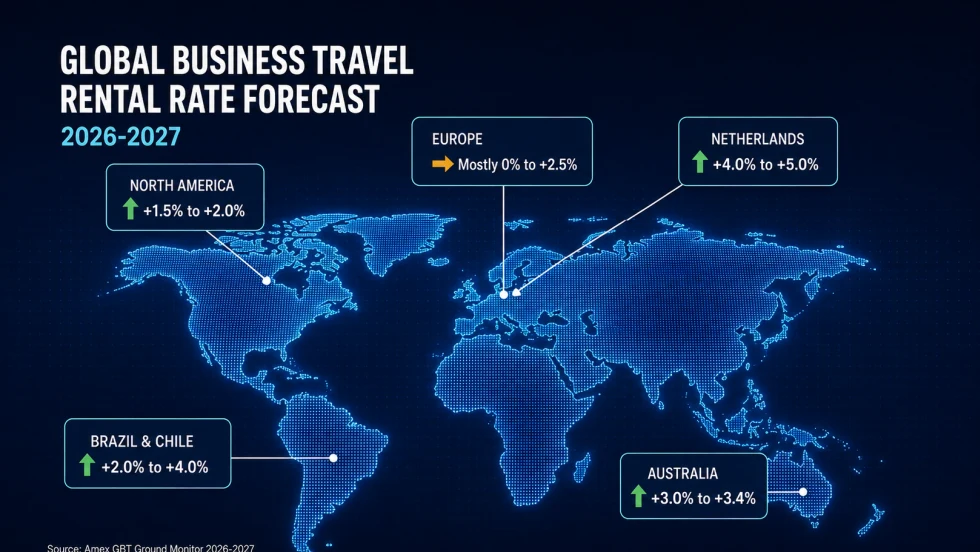
U.S. Business Travel Car Rental Rates Forecast to Rise Up to 2%
Improved fleet supply should limit pricing gains in 2026-27, while insurance, repair costs, and softer residual values continue to pressure rental operations, according to Amex GBT.
Read More →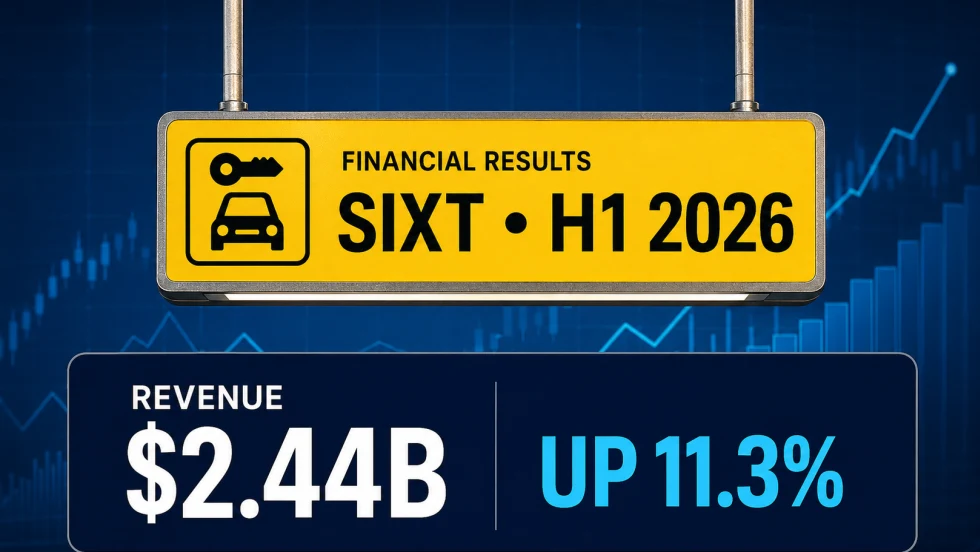
Sixt Revenue Tops $2.4 Billion in First Half of 2026
Sixt’s first-half revenue surpassed $2.4 billion for the first time as demand outpaced fleet growth, lifting utilization and earnings despite weaker consumer sentiment in North America.
Read More →
In Memoriam: Bobby Klyce, Avis Licensee Legend
The longtime Birmingham Avis operator and 2018 Auto Rental News Impact Award recipient was remembered as an advocate for independent licensees and the broader car rental industry.
Read More →
How to Build Custom Fleet Tools With AI and Vibe Coding [Webinar]
A new Automotive Fleet webinar explores how fleet managers are using AI and vibe coding to automate routine work and create simple operational tools without traditional programming skills.
Read More →