




About the Author: An entrepreneur, motorist, and car enthusiast, Ivan Agapchev turned his lifelong hobby into several successful businesses. Starting from a detailing salon, he created TECHIIA Motorsports, a car-sharing service, and Fleetsy, a fleet management software company. He also owns Calibri Motorsport, a car body and parts store in Los Angeles.
5 Challenges Facing the Carsharing Industry Today
In five years, the capitalization of the carsharing market in the U.S. is estimated to grow to $187 billion. As the industry develops even more rapidly, it will have to figure out several big challenges.
by By Ivan Agapchev, TECHIIA Motorsports and Fleetsy
April 1, 2022
The microchip shortage is expected to last at least through the end of 2022, and with demand still outweighing supply, we must adapt. Carsharing and other mobility options are key to a varied future of the car industry.
Photo: TECHIIA Holding Limited
5 min to read
Nearly two years after the start of a pandemic, I'm still watching the carsharing industry recover from it. Many companies went bankrupt or left the market. But there are also those who not only survived the crisis, but made a profit for the first time in several years.
Optimism is added by the Car-as-a-Service Market report from Technavio, according to which in five years the capitalization of the carsharing market in the U.S. will grow to $187 billion. I hope the worst is over and, having overcome the crisis, the industry will begin to develop even more rapidly. But for this, it will have to cope with several big challenges.
High Demand and Low Supply
The first months of the pandemic were disastrous. Hertz (which also owns Thrifty and Dollar) talked about an almost three-time drop in demand. To survive, companies were looking for any way to reduce costs. We started with the sale of a quite large part of our fleets, then quit renting offices, sites, and other real estate, and also left only a few staff members.
Referring to a Jefferies Group report, the Washington Post cites a figure of 770,000 vehicles that car rental companies sold off between 2020 and 2021. Such a dramatic step helped many to stay in business but made the subsequent recovery from the crisis more protracted. After all, after the return of demand to the previous level, companies had to look for cars somewhere in order to restock their fleets.
In 2021, many took measures unprecedented for the American market and started buying used cars from auctions, which they sold eight to 10 months ago. And if earlier companies tried to “get rid of” a car before the odometer exceeded 40,000 miles, now such vehicles were returned to the fleet.
New Business Models
I started my own car-sharing business by working on the Turo platform, a peer-to-peer service through which car owners can rent out their cars. Skipping all the details, the system is almost perfect: you rent out your “unneeded” car and get paid for it, while the other person rents it simply with a couple of clicks.
For me, joining the platform turned out to be the best option to start for several reasons. With a budget of $20,000, the only thing I could afford was to buy one car or lease a dozen. I chose the second option, then other people's cars were added to it.
Turo allows me to rent cars owned by other people for a percentage or a flat rate. This eliminates the maintenance costs, and if you repair a car, as in my case, at your own service, this opens up new money-making opportunities.
Despite the imperfections of the platform, the numbers speak for themselves: In 2020, while other players were trying to get at least some help from the state, Turo earned $153 million - a record for the 10-year history of the company. In the first nine months of 2021, the company earned even more — $330 million.
Survive the Global Auto Industry Crisis
Until the end of 2020, there were no problems with the supply. Customers received cars from overcrowded warehouses. But then everyone started having problems. After the start of the pandemic, China's largest ports closed, and a bunch of factories stopped at the same time — first in China, and then around the world. It was the start of the semiconductor crisis, due to which the American market lost 1,248,000 cars.
Will things get back to normal and when? It's hard for me to say. Intel CEO Pat Gelsinger predicts that the global market will experience a shortage of electronic components until the end of 2022. Hundreds of American companies are still waiting for the opportunity to restock their fleets with new cars, but manufacturers do not rush to satisfy their demand. What is the point of selling a car at a reduced price if dealerships are ready to offer several thousand more for each car?
Make a Plan B in Case of a New Crisis
It seems that now no one is sure things will not go as bad as in 2020. Having a plan B was the key to business survival in the early months of the pandemic.
The Thrifty service is for sure in my top of the great reactions to the 2020 crisis. While competitors were thinking about how to reduce costs, the service found a new source of income. The company noticed that in the midst of the lockdown, food delivery services could not cope with orders. Thrifty offered couriers to use their cars at a discount, which helped them quickly find a new source of income.
Allocate Funds to Invest in Micromobility and Self-Driving Vehicles
Worldometer predicts that by 2050, 91.5% of the US population will live in major cities. The most obvious way to ensure their mobility is to develop unmanned vehicles and micromobility (bicycles, scooters, unicycles, microcars, etc.).
According to Market Research, in six years the micromobility market will grow to $255 billion and continue to grow at an average of 17% per year, and by 2030, 400 million people will use self-driving vehicles annually.
I am sure that the car-sharing market has a bright future. Owning a car in big cities is no longer a necessity. Municipalities are developing urban transport, and people are increasingly opting for taxis, short-term rentals, public, and micro transport.
Affordable carsharing services have excellent chances to become an alternative to a personal car. This is an important step that will make us more mobile, our cities more comfortable, and also our impact on the environment.
This article was authored and edited according to ARN editorial standards and style. Opinions expressed may not necessarily reflect that of ARN.
Subscribe to Our Newsletter
More Rental Operations
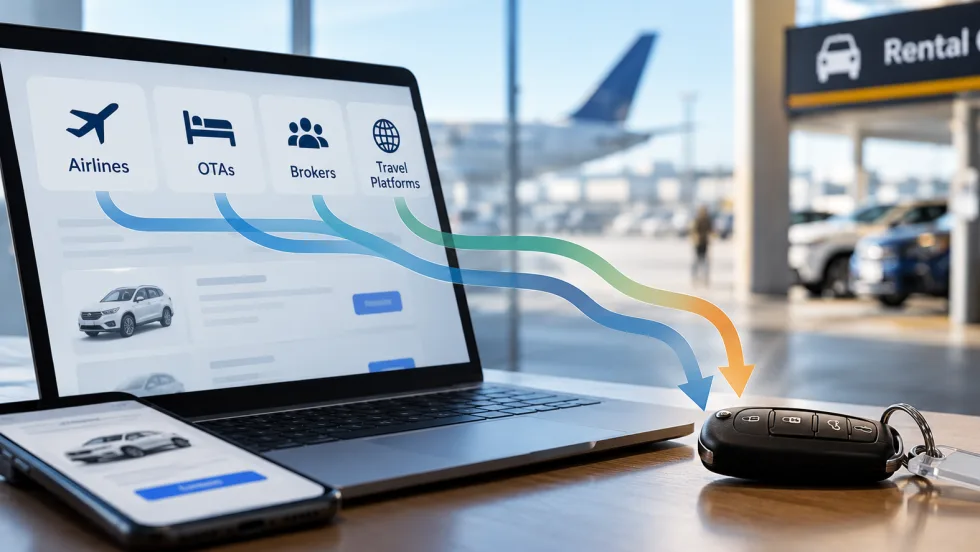
Direct, Broker or Hybrid? How Travel Retailers Source Rental Cars
As travel retailers weigh direct supplier relationships against third-party distribution, rental operators need to understand how those decisions affect their business.
Read More →
How Did This Independent Rental Operator Grow to 170 Vehicles in 4 Years?
With 170 vehicles across three Kentucky locations, Joel Price relies on an overseas team to handle reservations, payments, and after-hours customer service. It's one part of an unconventional approach to growing an independent rental operation.
Read More →
What Does It Take to Succeed in B2B Rentals?
The fundamentals may be familiar to daily car rental operators, but project-based truck rentals put different demands on the fleet and the business.
Read More →
NPR Builds on International Partnerships to Grow Rental Bookings
With Ana Laborde supporting broker development, NPR Auto Group is tailoring distribution strategies, rate packages, and partnerships to grow international reservations across its three brands.
Read More →
Advantage, Sixt Place Among Top Five in Annual Satisfaction Study
While Enterprise and National retain the top spots in JD Power’s 2026 rankings, the latest customer satisfaction results suggest renters can find competitive service beyond the biggest car rental names.
Read More →
The $100,000 Insurance Trap in Exotic Car Rentals
Exotic rental agencies often rely on customers’ personal auto policies to protect six-figure vehicles. But policy language can dramatically change the coverage for vehicles over $100,000 MSRP.
Read More →
The Booking Is Confirmed, But Is Your Customer Ready to Drive?
For international renters, a confirmed reservation doesn’t always mean they’re eligible to drive. Earlier checks can help operators catch documentation and payment issues before the customer reaches the counter.
Read More →
ICRS 2027 Opens Call for Papers
The International Car Rental Show seeks session proposals on the business, operational, and technology issues facing car rental operators. Submissions are due Jan. 15.
Read More →
Turo to Launch Vehicle Delivery Service
Turo Delivered will let travelers search for vehicles that hosts can deliver directly to hotels, homes, airports, train stations, and other locations.
Read More →
Palm Beach Airport Code Change Creates Car Rental Distribution Gap
A test of rental searches under the old PBI and new DJT airport codes returned largely different sets of brands and vehicles, highlighting a potential distribution problem for rental operators.
Read More →