




Finding and Challenging Staff Committed to Your RAC’s Success
Tap your brightest employees to get referrals, and take steps to ensure new employees are intellectually engaged and see long-term career potential.
In the September/October issue of Auto Rental News, I shared my thoughts on company culture and how it forms the foundation of successful firms. I also described how an improperly constructed cultural foundation could lead to a company’s failure.
The next phase in the construction of a healthy and thriving business comes from the people involved. Those serving the public, and those who make up the administrative or maintenance backbone of your company, determine everything your company does — poorly or well. You might wonder, “Why should I worry so much about the people in my business? Nobody seemed to care about me when I was starting out!” The answer to that question can be broken down into a number of important pieces.
Finding Them
A good start is to have high standards as you consider where you’ll find employees. If the culture of your company is such that you want clerks and nothing more, then look for them where these employees can be found — convenience stores and the prep department of an auto dealership, for example.
But if you want prospects with higher education and expectations, you need to go where they hang out: college campuses, mid- to higher-level retail stores and the like. Or you can find them through online services such as Monster.com or your local newspaper’s online help-wanted Web site.
Also, it’s key to use the very best of your current employees as a source for employee referrals. Use your sharpest employees to help recruit top prospects.
Hiring Them
Having high standards is especially important during the hiring process. Are you serious about having only folks with good driving records, good educational transcripts and an aggressive attitude? Well, if you are, only hire new employees with those characteristics. The first time you allow substandard employees through your screening process, a significant “watering down” process occurs.
Ever notice how one good employee has a hard time propping up a bunch of so-so employees, yet one bad employee can poison a whole branch? You get what you let in the door. Is this hiring process difficult? You bet. [PAGEBREAK]
Orienting Them
Here’s how employee orientation typically goes: The new people start by filling out forms and all sorts of other paperwork. Then, they are assigned to a branch somewhere. Since the trainer’s goal is to make the new people productive employees as soon as possible, they’re taught to work the computer, check in cars, run to the gas station, and do all the things needed in a busy branch.
Maybe, somewhere along the way, somebody tells them a bit about the exciting industry they’re in. Maybe someone shares with them the dreams and aspirations of the company, or tells them about career enhancement. But most likely, that doesn’t happen.
This keeping-them-in-the-dark treatment is a leading cause of turnover. We recommend a different orientation process, as noted in the diagram above.
Training Them
I’m not suggesting that learning day-to-day processes quickly isn’t important. But use this opportunity to give new employees a glimpse into their future.
First and foremost, demand that their heads accompany their backs. By this I mean that employees who aren’t intellectually engaged in their job will not perform as well as those who are. And, they learn from their leaders, so watch how you conduct yourself in your day-to-day work life.
If you’re stressed and frazzled, your staff will be too. If you handle each stressful situation in a way that can be turned into a learning experience, then that’s how employees will learn to deal with whatever comes their way.
Secondly, recognize differences in learning styles. There are a number of subgroups, but three basic types of learners come your way: auditory, visual and kinesthetic learners.
The auditory learner just listens and gets it. All of us know people who can play music by ear — these are auditory learners. Second, there are the visual learners, or readers, who have a knack for reading about something and then just being able to do it. Many computer programmers learn this way, and I’m convinced that’s why software and computer users’ manuals are so thick. Third, there is the kinesthetic, or tactile, learner. This type of employee learns by doing. A lot of automobile mechanics and people who like to tinker learn this way.
You might think understanding learning styles is not relevant to your day-to-day job. But if training people to do their job — or improve their performance — is part of your job, you’d better listen up. If you don’t appreciate the differences in how people learn, you’ll be a “one size fits all” type of instructor. The net result is that some trainees will learn from you, and some won’t. Your business will suffer from your unwillingness to understand and deal with this fact.
Third, treat your employees like adults. Challenge them to do the math when you’re talking about daily dollar averages. Challenge them to understand the relationship between selling damage waiver and what happens to the company when damage waiver hits turn into large repair bills and maybe losses. Challenge them to preview and debrief sales calls before and after visits. Challenge them to come up with better ways to raise fleet utility, trim overtime hours or deliver cars.
Challenge them to understand the profit-and-loss statements of your company, and to grasp how everything they do has a clear and immediate impact on your company’s ability to grow and prosper. If you keep your people in the dark, you’ll be the only one doing all the thinking in your company. That’s great if you’re the smartest person in the world, but there is only one smartest person — and the rest of us will have to make due with others helping us. [PAGEBREAK]
Molding Them
Remember, the culture of your company is pliable. It can and does change over time. Either take an active role in creating the cultural essence of your company, or be prepared for the day when you ask, “How did we get to this state?”
Definition, repetition and drilling are important as you mold your company. If you’re a parent, this concept should be familiar. Remember when your three-year-old came down the stairs one day and you decided to get her to brush her own teeth? That evening was the only time you told her to do it, right? And after that, she brushed her own teeth, without any prodding, just like clockwork for the rest of her life, right? Of course not.
Any parent knows that kids don’t behave that way. The first time you tell your child that brushing her teeth is mandatory, you know that you’ll face this task one, two or three times per day — for maybe the next 10 years. And, by then, maybe the kid will do it, or maybe not.
If you get frustrated that you need to keep asking your team to do basic things over and over, remember that repetition is the cornerstone of learned behavior. You have to work at it over and over. You must define what you want, repeat it time and again, and continually drill it into your employees.
Keeping Them
Hugs work. Attaboys work. Constructive criticism works. Pay-for-performance compensation plans work. Ongoing training works. Allowing, encouraging and instilling a sense of belonging — and a sense of control over the workday — works.
We’ve all heard these phrases before, but how many of us actually make them part of the fabric of our workplace? If you’ve managed to get through all the steps I’ve described in this article, wouldn’t it be a shame if a solid employee walked out the door because you didn’t dedicate enough time to nourishing his or her work life and career? Dialogues work much better than monologues when dealing with employees.
Pay is important to your employees, but our compensation work with clients reveals that pay is often subordinate to employees’ sense of accomplishment and fulfillment at work. Also high on the list is a sense of control over their own destiny, along with a feeling of progress. This is just another way of saying that people like to learn and grow in their position.
Pay can’t be ignored. Everyone works to gain a sense of fulfillment, but at the same time they have to pay their bills. Pay plans need to be simple, thoughtful and understandable to all those affected. This includes significant others, too. Don’t think the subject of pay doesn’t come up at home. Think of the trouble you’d be in at home if you were either stagnant at your pay level, or, even worse, couldn’t explain it. Aligning your interests as owner or manager with those of your employees is key. As a result, all members of the team can move in the same direction.
Firing Them
If they don’t perform to your company requirements, substandard employees have to go. But, to be fair to everybody involved, you’d better define those standards and communicate them well. Documenting the highs and lows of performance is a useful exercise. While this takes time and wisdom, it’s a critical ingredient in your employee plan.
Managers often avoid confronting employees about poor job performance. They hold in their frustration and then unload at the exit interview. But this approach represents a failure of management.
Further, avoid “papering” someone and making up excuses for termination once you’ve made that decision. The employee being terminated deserves better. Don’t think that your other employees don’t see right through this ploy. And, above all, don’t describe an employee’s termination as a move to “pursue other opportunities.” This kind of spin is transparent to all your other people, and can be an indictment of your failure to communicate.
Mike Kane is the president of VRCG Inc., a consulting firm based in Southfield, Mich. His company’s motto, if it had one, would be: “Be pretty good at all parts of your business, and you’ll do just fine.” Kane has agreed to be an ongoing contributor to Auto Rental News.
More Rental Operations

Clean on Paper: Red Flags in Exotic Car Rental Verification
A suspicious $45,000 Lamborghini booking reveals the strengths and limitations of renter verification, from forged insurance documents to coverage gaps and unauthorized drivers. (Part 2 of 3)
Read More →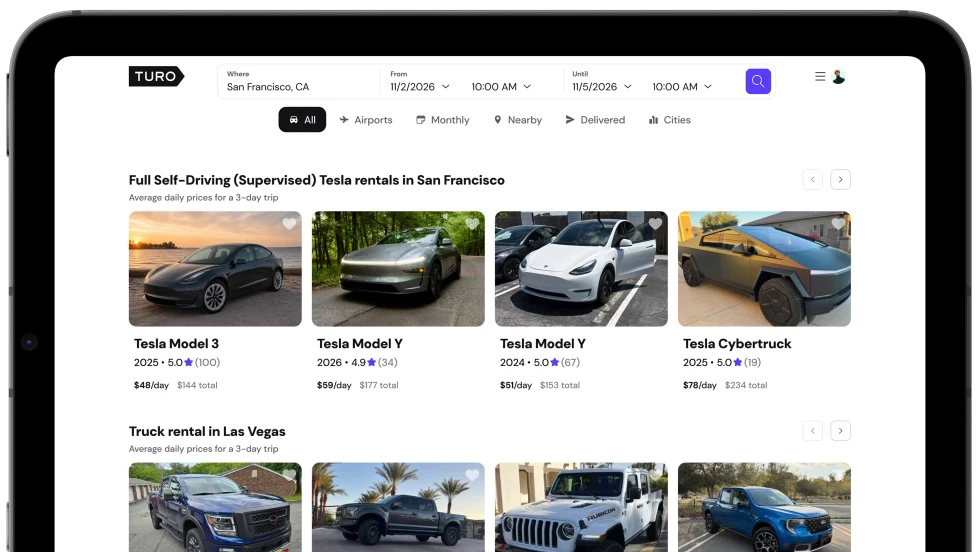
Turo and Tesla Take the Next Step Toward Autonomous Car Rentals
The partnership brings Tesla's Full Self-Driving (Supervised) technology into the rental experience, offering a glimpse of how increasingly automated vehicles could change car rental.
Read More →
How Rental Operators Can Navigate Personalized Pricing Rules
As regulators scrutinize the use of customer data in pricing, rental operators need to know whether they can explain why one renter pays more than another.
Read More →
Direct, Broker or Hybrid? How Travel Retailers Source Rental Cars
As travel retailers weigh direct supplier relationships against third-party distribution, rental operators need to understand how those decisions affect their business.
Read More →
How Did This Independent Rental Operator Grow to 170 Vehicles in 4 Years?
With 170 vehicles across three Kentucky locations, Joel Price relies on an overseas team to handle reservations, payments, and after-hours customer service. It's one part of an unconventional approach to growing an independent rental operation.
Read More →
What Does It Take to Succeed in B2B Rentals?
The fundamentals may be familiar to daily car rental operators, but project-based truck rentals put different demands on the fleet and the business.
Read More →
NPR Builds on International Partnerships to Grow Rental Bookings
With Ana Laborde supporting broker development, NPR Auto Group is tailoring distribution strategies, rate packages, and partnerships to grow international reservations across its three brands.
Read More →
Advantage, Sixt Place Among Top Five in Annual Satisfaction Study
While Enterprise and National retain the top spots in JD Power’s 2026 rankings, the latest customer satisfaction results suggest renters can find competitive service beyond the biggest car rental names.
Read More →
The $100,000 Insurance Trap in Exotic Car Rentals
Exotic rental agencies often rely on customers’ personal auto policies to protect six-figure vehicles. But policy language can dramatically change the coverage for vehicles over $100,000 MSRP.
Read More →
The Booking Is Confirmed, But Is Your Customer Ready to Drive?
For international renters, a confirmed reservation doesn’t always mean they’re eligible to drive. Earlier checks can help operators catch documentation and payment issues before the customer reaches the counter.
Read More →