





Viewpoint: Using AI To Create Clarity, Not Conflict, In Rental Car Damage
ICRS 2026 Countered The AI Drama, Thanks To These Panelists
One of my favorite sessions laid out the AI techno-optimism available to rental car operators ready to adapt their services for the decades ahead.
June 5, 2026

My all-star "Zero Friction" panel (L to R): Jade Kang, Philipp Gauss, and Julian Gritsch detailed a hopeful technology future for the rental car industry.
Credit:
Auto Rental News
7 min to read
- A notable session focused on the advantages of AI for rental car companies willing to evolve their operations.
- Experts highlighted a forward-thinking approach, emphasizing AI's role in shaping the future of the rental car industry.
- Rental car operators should adopt a techno-optimistic mindset, viewing AI as a valuable tool to innovate and improve their services.
*Summarized by AI
The scare stories about AI seem to grow more elaborate, the more skeptics find novel reasons to oppose it.
Lost jobs, wasted energy, collapsing finances, and robotic takeovers.
We saw and heard a similar reaction with the separate advents of the Internet (1990s), computers (late 1970s), and television (1940s). They’ll steal jobs, corrupt minds, destroy wealth, and render society passive with sensory comas, the media mavens and experts predicted.
The world survived and even thrived because of those advances. So, thank goodness a recent panel I moderated can set the world straight on AI, or at least the car rental part of it.
One of the most insightful conference sessions I’ve moderated (and attended) over my 18 years on the trade show circuit happened May 14, titled, “Zero Friction: Rethinking Car Rental for the No-Wait Generation and Creating New AI Experiences.”
My ideal panel included Jade Kang, chief product officer at Orcar, an AI-native car rental company based in South Korea; Philipp Gauss, vice president of sales and marketing at Bosch, a global supplier of mobility and transportation technology; and Julian Gritsch, founder and CEO of JG Corp., a Brazilian tech company that has created agentic AI for car rental.
These international business leaders and innovators together described how AI can at the very least upgrade and at most transform car rental operations from all sides, including customer service improvements, backend efficiencies, and emerging agentic AI technologies.
Here’s what I and the audience learned about the "3-D" rental car operation of the future:
Dimension 1: Renting A Car In Your Hand
Orcar is one example: a fully automated, counter-free car rental platform for international travelers visiting Seoul, Busan, and Jeju in South Korea. It uses AI throughout the rental journey, from booking to vehicle return. Since AI powers every function, it operates like a larger company but only has a five-person team.
Orcar partners with existing fleet providers rather than owning vehicles directly. Its business model resembles Uber, except for car rental operations. By integrating Orcar’s automated systems into traditional rental businesses, partners reduce operating costs by about 20% to 30% while attracting more international reservations.
Rental operators everywhere should heed the newer travelers, especially younger Millennials, all of Gen Z, and about-to-emerge Gen Alphas, who expect seamless digital experiences because they are already accustomed to contactless services such as Uber, Grab, car-sharing platforms, and peer-to-peer vehicle rentals. These generations will redefine travel as they do not expect paperwork, waiting in line, or speaking to someone at a rental counter.
Such an AI- and tech-driven operation will need to rely heavily on rapid online verification systems. Orcar uses one called Trinity Verification to validate passports, driver’s licenses, and international driving permits. Orcar also created its own reservation engine, pricing engine, pickup and drop-off workflows, and an AI customer service agent called Mobi.
Many customers from Singapore, Taiwan, Japan, and North America book about 30 days before arrival, while others reserve vehicles only a few days in advance. Earlier bookings give travelers enough time to obtain the correct international driving permits.
Orcar’s booking process displays pricing and insurance information clearly for international travelers. Customers upload their documentation before payment or arrival in Korea, allowing Orcar’s system to approve or reject eligibility before travel. The company learned how to recognize valid and fraudulent documents by manually reviewing about 2,000 reservations during the company’s early months.
The verification system combines OCR (optical character recognition) technology, large language models, vision AI, and automation logic. OCR scans and extracts document data, large language models structure and interpret the information, and vision AI assesses document quality. Orcar’s internal policy engine then determines whether a traveler is eligible to drive in Korea.
When customers are not eligible to rent a vehicle, Orcar’s AI system explains the reason and may recommend alternatives such as limousine or chauffeur services. Kang provided the example of Indonesian travelers, who are not allowed to drive in Korea and often discover this only after arriving at a traditional rental counter.
To assist car renters, Mobi handles their inquiries, changes or cancels reservations, reports accidents, and fields support requests in multiple languages across messaging channels such as WhatsApp and Line. Mobi originally handled only 20% to 30% of customer service requests but now resolves about 80%.
Mobi is more than a chatbot because it interacts with Orcar’s systems, databases, and online resources to complete tasks. AI can search for nearby gas stations, process reservation modifications, and support travelers throughout their rental experience.
Customers can book online, upload documents, receive pickup instructions, and complete rentals without waiting in line or visiting a counter.
Dimension 2: In and Out Of The Cockpit
Now let’s take a look at how the rental car integrates with and complements the customer systems:
Bosch supplies technology used in vehicles worldwide and focuses on applying them to rental fleet operations, Gauss said. AI helps automate repetitive tasks, improve operational transparency, and provide faster access to accurate information. This allows data-driven insights to make operational decisions instead of assumptions.

We're glad we opted for a less formal shot off stage, for this dynamic panel.
Credit:
Julian Gritsch
Bosch’s AI demo cockpit, an onboard hardware system designed to support AI-powered mobility experiences, processes data and functions inside the vehicle, allowing AI tools to operate even when internet connectivity is limited.
Because the cockpit combines cameras, radar systems, steering systems, and other vehicle technologies, it can interact with the vehicle rather than simply answer questions.
- For example, future AI-assisted driving experiences could identify sleeping children in the back seat and recommend drive-through dining instead of restaurant reservations. AI systems could also assist with parking by automatically controlling the vehicle when requested by the driver.
- Bosch’s RideCare technology, which uses AI and machine learning to detect cigarette smoke, vape smoke, and vehicle damage, can analyze a lot of sensor data to distinguish between smoking events and other airborne particles such as heavy perfume sprays.
- The technology also can use AI to investigate vehicle damage by analyzing accelerometer data, geolocation information, weather conditions, road conditions, and other contextual information.
- Meanwhile, AI agents gather additional data to reconstruct incidents more accurately and support insurance or claims investigations.
- Predictive maintenance technologies analyze telematics and vehicle sensor data to identify potential failures before warning lights appear. This allows operators to repair vehicles before problems arise and streamline maintenance timing based on actual vehicle health instead of mileage schedules.
- AI technologies can uncover unusual vehicle behavior patterns, such as abnormal sensor readings that help identify tire theft and other suspicious vehicle activity.
Dimension 3: The Customer Service Agent
I first learned about Jul-IA when I interviewed Gritsch last year for this blog post, just as Jul-IA was debuting on the car rental customer scene.
Gritsch, a 30-year veteran of the car rental industry in Brazil, developed a rental software platform in Brazil that laid the groundwork for AI tools.
Jul-IA was designed for the rental car industry rather than as a generic chatbot. It supports customer communication, manages workflows, and handles operations, while integrating its API with rental software systems.
Jul-IA works nights, weekends, and holidays. The system communicates through WhatsApp and other channels while automating repetitive tasks such as manual data entry.
The key difference between a traditional chatbot and agentic AI is flexibility. Traditional chatbots typically require customers to follow predefined menu structures, while AI agents can interpret requests naturally and respond dynamically.
Customers can request reservations, repairs, or reservation changes without navigating rigid menus.
The Jul-IA team reviews customer conversations to improve its responses and redirect conversations back toward relevant rental topics when users attempt to derail the interaction.
Start With AI Tools
If I could sum up the collective expertise from my panel, the AI tools are out there and ready, and with more input will only improve with time.
Fear of AI is optional, for now. But as AI assumes more tasks and thinks more broadly, rental car companies as well as other industries and businesses will have to embrace it to remain competitive and profitable.
AI very likely will expand and create new roles within organizations, designed to complement AI functions with irreplaceable human oversight and judgments.
The incremental, experimental approach works best amid the uncertainty of technology in its wild west phases. For example, an AI agent can work with customers from younger generations while humans are still available for car renters who prefer a counter agent.
Uber has long retained its all-app-web advantage, or available transportation in your pocket. Car rental operations can now catch up with a percentage of operations dedicated to the seamless no-friction customer experience.
Subscribe to Our Newsletter
More Blog Posts

What Happens During a “Day on the Hill?”
Walking into a congressional office to discuss legislation certainly is outside the normal workday for most of us. But it’s a worthy, fun, and meaningful experience.
Read More →
What New Tariff Uncertainty Means for Rental Fleet Planning
Automakers won’t relocate production overnight, but uncertainty over Canadian tariffs could affect vehicle pricing, sourcing, and allocation well before the proposed Jan. 1 deadline.
Read More →
I'm Back
Life moves forward, as it inevitably does, but it sometimes seems to move in circles too. You end up in a different place, but you never close a door. Because you may walk back through it again.
Read More →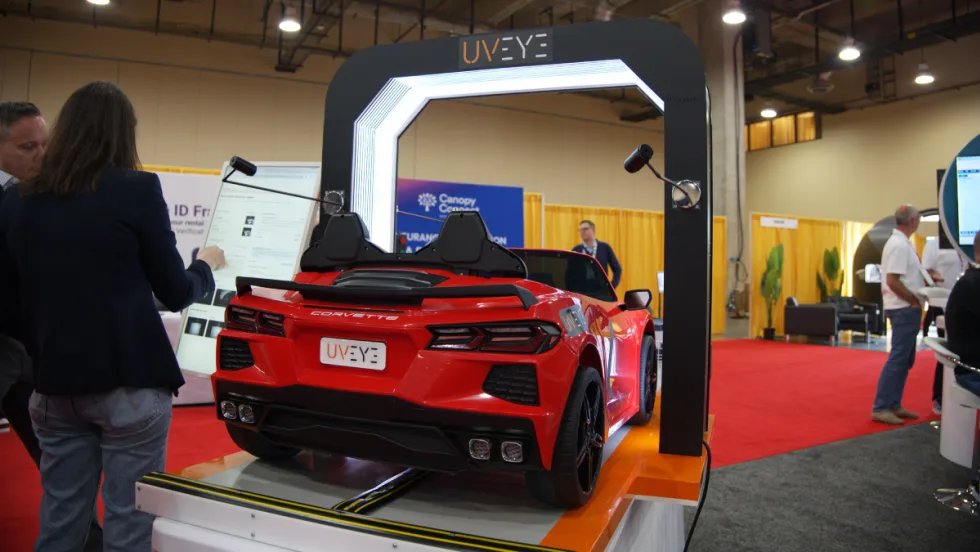
AI Can Supply The Damage Data, But Operators Must Apply The Judgments
The rental car industry held its first open discussion about the most controversial issue of the past year. Here are some key lessons, takeaways, and viewpoints.
Read More →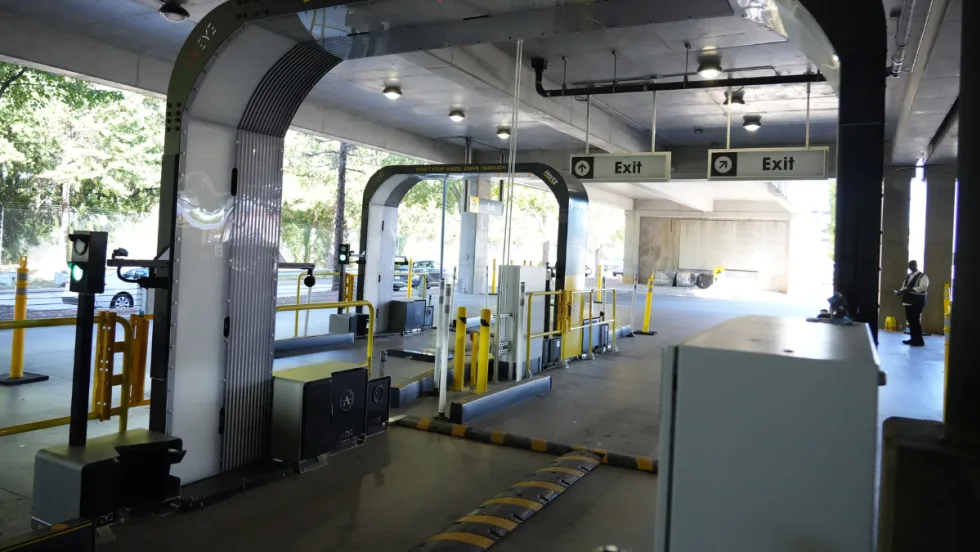
Why Is JFK’s Grandson Interested In Your Rental Fleets?
Car rental operations should follow consistent practices when applying AI to vehicle damage assessments.
Read More →
‘Zero Friction’ Is The New Buzz Phrase for ICRS
This year’s International Car Rental Show hits the hot buttons on industry change and challenges.
Read More →
Rental EV Adoption Requires Local, Targeted Approach
The EV frenzy of the last few years has disillusioned the motoring public about going all-electric. Now it’s time to meet the market where it’s at.
Read More →
Why Car Rental Operations Must Use AI To Gain More Renters
A race has started between generations embracing AI and companies willing to adapt it to their operations.
Read More →
Speed Overtakes Car Rental Industry Practices
Technology, data, and digital advances are combining to create a business climate full of information, impatience, and instant results.
Read More →
As Another Year Fades, A Future Industry Vision Crystallizes
Despite the battering of economic forces, the U.S. car rental industry appears fortified against even faster upheaval ahead.
Read More →