





Related: Flight Capacity Rebounds, but Full Recovery not Expected until 2023
Flight Search Trends: Domestic Destinations Replace Foreign
According to data from Kayak, Las Vegas saw the biggest spike in searches following the reopening of casinos, while U.S. searches to Europe are down 65% year over year.
June 23, 2020
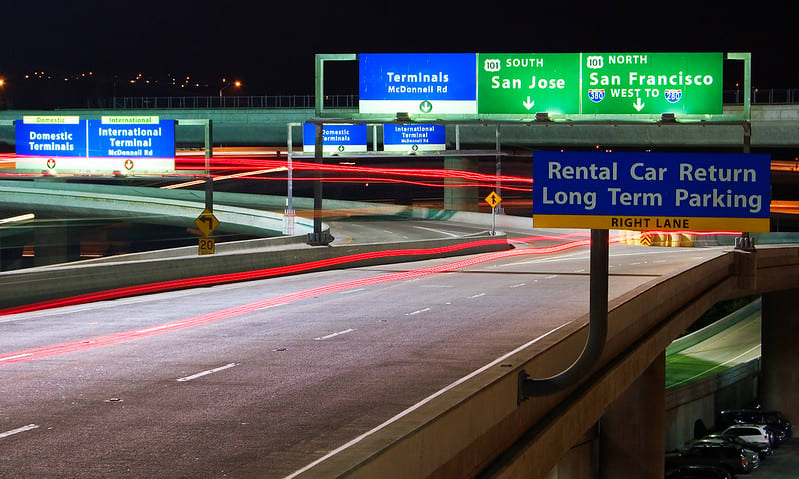
Domestic travel searches in the U.S., Europe, and Asia Pacific are growing at a faster rate than international searches.
Photo via Flickr/Waymond C.
2 min to read
Kayak has launched a data center that reveals patterns in air travel as a result of the coronavirus pandemic.
The data center offers information on global flight search trends relative to the same day last year, domestic versus international search trends, and search trends by destination city. According to Kayak, the data will be updated daily through at least the end of the year.
Kayak search data reveals:
Flight searches in the United States, France, United Kingdom, and Germany reached their lowest point between April 6-8. Flight searches started trending upwards in May. In Latin America, flight searches are continuing to trend downward.
In the U.S., international cities like London, Tokyo, and Paris are being replaced with searches for Anchorage, Miami, and San Juan. In Europe, cities like Milan, Venice, Nice and Ibiza are seeing the biggest drops, replaced by searches for towns in Portugal and Greece.
Domestic travel searches in the U.S., Europe, and Asia Pacific are growing at a faster rate than international searches. Australia, Spain, the United States, and France are seeing the biggest shifts to domestic.
Across the globe, cities with eased travel restrictions are gaining momentum the fastest. In the U.S., Las Vegas saw the biggest spike in searches following the reopening of casinos. Southern cities are a close second. In Europe, it's Italy, France, and Portugal. In Asia Pacific, searches in South Korea, Taiwan, Australia, and Japan are returning to 2019 levels for some major domestic destinations.
U.S. searches to Europe are down 65% YoY.
Kayak also developed an interactive Travel Restrictions Map detailing entry restrictions by state and country.
More Rental Operations
Direct, Broker or Hybrid? How Travel Retailers Source Rental Cars
As travel retailers weigh direct supplier relationships against third-party distribution, rental operators need to understand how those decisions affect their business.
Read More →
How Did This Independent Rental Operator Grow to 170 Vehicles in 4 Years?
With 170 vehicles across three Kentucky locations, Joel Price relies on an overseas team to handle reservations, payments, and after-hours customer service. It's one part of an unconventional approach to growing an independent rental operation.
Read More →
What Does It Take to Succeed in B2B Rentals?
The fundamentals may be familiar to daily car rental operators, but project-based truck rentals put different demands on the fleet and the business.
Read More →
NPR Builds on International Partnerships to Grow Rental Bookings
With Ana Laborde supporting broker development, NPR Auto Group is tailoring distribution strategies, rate packages, and partnerships to grow international reservations across its three brands.
Read More →
Advantage, Sixt Place Among Top Five in Annual Satisfaction Study
While Enterprise and National retain the top spots in JD Power’s 2026 rankings, the latest customer satisfaction results suggest renters can find competitive service beyond the biggest car rental names.
Read More →
The $100,000 Insurance Trap in Exotic Car Rentals
Exotic rental agencies often rely on customers’ personal auto policies to protect six-figure vehicles. But policy language can dramatically change the coverage for vehicles over $100,000 MSRP.
Read More →
The Booking Is Confirmed, But Is Your Customer Ready to Drive?
For international renters, a confirmed reservation doesn’t always mean they’re eligible to drive. Earlier checks can help operators catch documentation and payment issues before the customer reaches the counter.
Read More →
ICRS 2027 Opens Call for Papers
The International Car Rental Show seeks session proposals on the business, operational, and technology issues facing car rental operators. Submissions are due Jan. 15.
Read More →
Turo to Launch Vehicle Delivery Service
Turo Delivered will let travelers search for vehicles that hosts can deliver directly to hotels, homes, airports, train stations, and other locations.
Read More →
Palm Beach Airport Code Change Creates Car Rental Distribution Gap
A test of rental searches under the old PBI and new DJT airport codes returned largely different sets of brands and vehicles, highlighting a potential distribution problem for rental operators.
Read More →