





Related: Hertz Wins Irish Fraud Case
Hertz Reports $2.4B Q2 Revenue
For the second quarter 2018, total revenues were $2.4 billion, a 7% increase versus the second quarter 2017.
August 6, 2018

Hertz reported adjusted net loss for the second quarter 2018 of $16 million, or $0.19 per adjusted diluted loss per share, compared with adjusted net loss of $52 million, or $0.63 adjusted diluted loss per share, for the same period last year.
Photo via Atomic Taco/Flickr.
3 min to read
Hertz Global Holdings today reported results for the second quarter of 2018, which saw total revenue increase by 7% and a net loss improvement of 60%.
"In the second quarter, we generated growth across every business segment with higher year-over-year revenue and Adjusted Corporate Earnings Before Interest, Taxes, Depreciation and Amortization (EBITDA),” Kathryn V. Marinello, president and chief executive officer of Hertz, said in a statement.
Second quarter 2018 compared to second quarter 2017:
Total revenue increased 7%
Net loss improved by 60%
Adjusted Corporate EBITDA improved by $58 million
Highest Q2 U.S. RAC segment revenues since 2014
Improved trend in U.S. RAC per unit fleet costs continue
For the second quarter 2018, total revenues were $2.4 billion, a 7% increase versus the second quarter 2017. Loss before income taxes for the second quarter 2018 was $86 million versus a loss of $245 million in the same period last year. Second quarter 2018 net loss was $63 million, or $0.75 loss per diluted share compared with a net loss of $158 million during the second quarter 2017, or $1.90 loss per diluted share.
Hertz reported adjusted net loss for the second quarter 2018 of $16 million, or $0.19 per adjusted diluted loss per share, compared with adjusted net loss of $52 million, or $0.63 adjusted diluted loss per share, for the same period last year. Adjusted Corporate EBITDA for the second quarter 2018 was $93 million, compared to $35 million in the same period last year.
Total U.S. RAC revenues increased 7% versus the prior year quarter as a result of increased volume both on and off airport. Excluding rentals to transportation network companies (TNC), volume increased 5%. Total RPD was flat but time and mileage pricing, which excludes revenue from value-added services, increased 3%.
Vehicle utilization improved by 100 basis points to 81% due to efficient fleet management. Vehicle capacity increased 3%, excluding fleet specifically dedicated to TNC rentals. Monthly net per unit vehicle depreciation expense decreased 19% to $285 driven by favorable residual values and strategic fleet management.
Direct vehicle operating (DOE) and selling, general, and administrative expenses as a percentage of total revenues for U.S. RAC was 70% for the second quarter of 2018 compared to 67% for the second quarter of 2017. Increases in DOE expense primarily reflect the impact of higher rental volume and incremental investments related to the Company's transformation initiatives.
Revenue growth coupled with a decrease in monthly depreciation per unit expenses supported an improvement in Adjusted Corporate EBITDA for the segment in the second quarter, despite higher expenses associated with the company's operating turnaround initiatives, and increased vehicle interest expense due to rising interest rates.
The company's International RAC segment revenues increased 8%, and increased 2% when excluding the impact of foreign currency. Total Revenue Per Transaction Day (RPD) increased 2% on volume that was consistent with prior year. Excluding the impact of the company's operations in Brazil, which was sold in August 2017, Total RPD was flat and transaction days increased 4% due to strength in commercial and multi-month volume.
Monthly net per unit vehicle depreciation expense increased 4%, or 1% excluding Brazil.
DOE and selling, general and administrative expenses as a percentage of total revenues for International RAC was 65% for the second quarter of 2018 compared to 69% for the second quarter of 2017. DOE was flat year over year, but excluding the impact of foreign currency decreased $21 million primarily due to a decrease in insurance liability expenses.
Adjusted Corporate EBITDA for International RAC improved 29% compared with a year ago.
“In the U.S., our turnaround initiatives are bearing fruit as a result of effective strategies, experienced leaders, and critical investments in fleet, marketing, and our retail operations," Marinello continued. "At the same time, we're developing and testing new technology platforms with the future in mind. The successful launch of those systems in the second half of 2019 will further support our strategy to sustainably grow revenue, improve productivity and drive innovation over the long term."
More Rental Operations
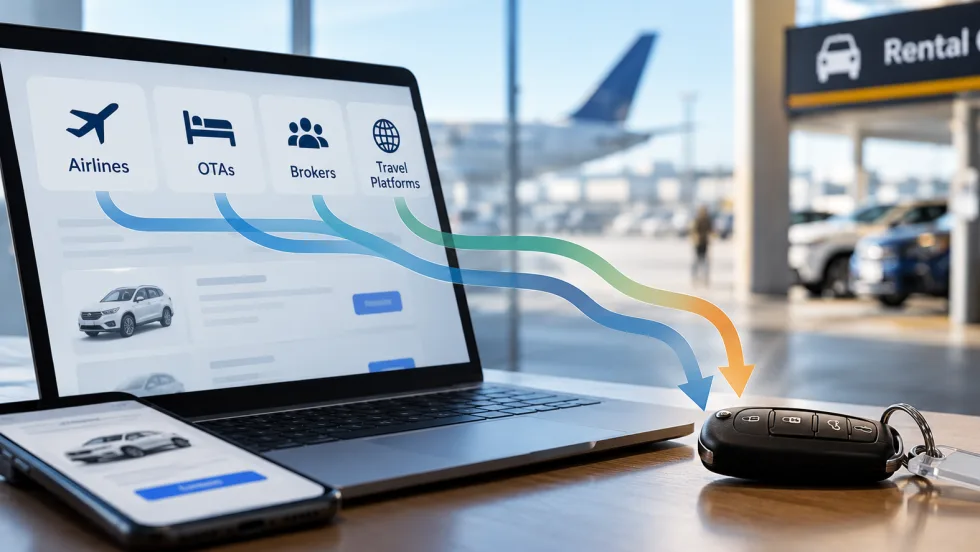
Direct, Broker or Hybrid? How Travel Retailers Source Rental Cars
As travel retailers weigh direct supplier relationships against third-party distribution, rental operators need to understand how those decisions affect their business.
Read More →
How Did This Independent Rental Operator Grow to 170 Vehicles in 4 Years?
With 170 vehicles across three Kentucky locations, Joel Price relies on an overseas team to handle reservations, payments, and after-hours customer service. It's one part of an unconventional approach to growing an independent rental operation.
Read More →
What Does It Take to Succeed in B2B Rentals?
The fundamentals may be familiar to daily car rental operators, but project-based truck rentals put different demands on the fleet and the business.
Read More →
NPR Builds on International Partnerships to Grow Rental Bookings
With Ana Laborde supporting broker development, NPR Auto Group is tailoring distribution strategies, rate packages, and partnerships to grow international reservations across its three brands.
Read More →
Advantage, Sixt Place Among Top Five in Annual Satisfaction Study
While Enterprise and National retain the top spots in JD Power’s 2026 rankings, the latest customer satisfaction results suggest renters can find competitive service beyond the biggest car rental names.
Read More →
The $100,000 Insurance Trap in Exotic Car Rentals
Exotic rental agencies often rely on customers’ personal auto policies to protect six-figure vehicles. But policy language can dramatically change the coverage for vehicles over $100,000 MSRP.
Read More →
The Booking Is Confirmed, But Is Your Customer Ready to Drive?
For international renters, a confirmed reservation doesn’t always mean they’re eligible to drive. Earlier checks can help operators catch documentation and payment issues before the customer reaches the counter.
Read More →
ICRS 2027 Opens Call for Papers
The International Car Rental Show seeks session proposals on the business, operational, and technology issues facing car rental operators. Submissions are due Jan. 15.
Read More →
Turo to Launch Vehicle Delivery Service
Turo Delivered will let travelers search for vehicles that hosts can deliver directly to hotels, homes, airports, train stations, and other locations.
Read More →
Palm Beach Airport Code Change Creates Car Rental Distribution Gap
A test of rental searches under the old PBI and new DJT airport codes returned largely different sets of brands and vehicles, highlighting a potential distribution problem for rental operators.
Read More →