




More Customers Satisfied with Airline, Auto Rental Travels
A recent travel study shows Alaska Airlines and National Car Rental ranking highest on travel industry index scores.

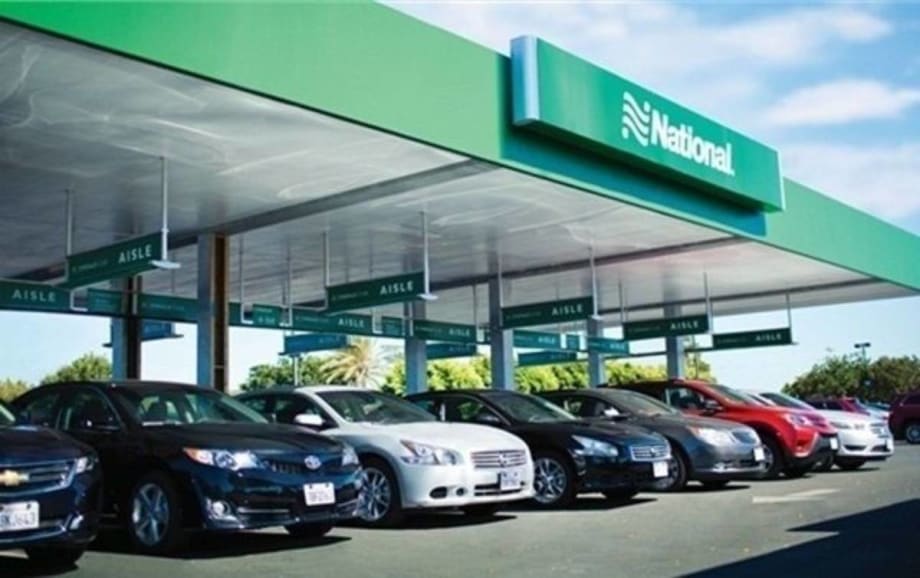
Customer satisfaction with car rentals, up 1% to 77, continues to rise from a low point in 2022 as demand stabilizes and companies upgrade their IT infrastructures to better manage fleets and provide more frictionless experiences for customers.
Photo: National Car Rental
If last year’s industrywide customer satisfaction improvement pointed to the travel industry returning to normal, then this year’s marks confirm it: Travel is back.
Satisfaction across airlines, car rentals, lodging, and online travel agencies climbs again, returning to pre-pandemic levels, according to the American Customer Satisfaction Index (ACSI) Travel Study 2023-2024.
The airline industry stands out, hitting an all-time customer satisfaction high of 77 after a second straight 1% year-over year improvement.
“Airline customer satisfaction has climbed to new heights, reaching scores not seen even before the pandemic disrupted travel,” says Forrest Morgeson, associate professor of marketing at Michigan State University and director of research emeritus at the ACSI, in a news release. “Carriers have bounced back strongly, showing that innovations and service improvements implemented during the last two years have resonated with customers.”
Alaska Airlines Leads the Way
Alaska leads the way for the second consecutive year, increasing 1% to an ACSI score of 82. American is second, up 1% to 79.
Low-cost carriers Allegiant (up 4% to 78), Frontier (up 3% to 69), and Spirit (up 5% to 67) make the biggest ACSI gains as they crank up their value propositions, but only Allegiant avoids sitting at the low end of the industry, finishing in third place.
United is the only carrier to lose ground, slipping 3% to an ACSI score of 75.
Industry scores generally appear to have been buoyed by large increases in airline staffing levels since their pandemic lows. This is reflected in score improvements industrywide for staff-driven aspects of the customer experience such as check-in (83) and boarding (81), cabin cleanliness (82), and staff courtesy (81). These are particularly notable for budget carriers, who see large increases in scores for staff-related benchmarks.
National Ranks as New Standard Among Car Rentals
Customer satisfaction with car rentals, up 1% to 77, continues to rise from a low point in 2022 as demand stabilizes and companies upgrade their IT infrastructures to better manage fleets and provide more frictionless experiences for customers.
National Car Rental races to the top of the industry — and into the top 10 of all companies measured — after surging 8% to an ACSI score of 84. The company substantially improves its mobile app quality and reliability and leads the field for complaint resolution.
Last year’s leader Alamo tumbles 6% into a second-place tie with Avis (down 3%) and Hertz (up 3%) at 78, while Enterprise drops 3% to the industry average score of 77.
At the lower end, Dollar is stable at 75, the smaller rental companies climb 4% to 74, and last-place Budget stumbles 4% to an ACSI score of 73.
For the industry overall, staff courtesy improves for both pick-up (81) and drop-off (82), although budget brands trail the industry leaders in this area.
Rideshare Industry Makes Strong Debut
New to ACSI measurement in 2024, the rideshare industry debuts with two major competitors, Lyft and Uber, deadlocked with customer satisfaction scores of 76. Both exhibit strong scores for app use and ride quality.
However, lagging customer perceptions of value are putting downward pressure on satisfaction. This is likely related to price increases as rideshare companies shift from market-share acquisition strategies to generating profits.
More Rental Operations

Advantage, Sixt Place Among Top Five in Annual Satisfaction Study
While Enterprise and National retain the top spots in JD Power’s 2026 rankings, the latest customer satisfaction results suggest renters can find competitive service beyond the biggest car rental names.
Read More →
The $100,000 Insurance Trap in Exotic Car Rentals
Exotic rental agencies often rely on customers’ personal auto policies to protect six-figure vehicles. But policy language can dramatically change the coverage for vehicles over $100,000 MSRP.
Read More →
The Booking Is Confirmed, But Is Your Customer Ready to Drive?
For international renters, a confirmed reservation doesn’t always mean they’re eligible to drive. Earlier checks can help operators catch documentation and payment issues before the customer reaches the counter.
Read More →
ICRS 2027 Opens Call for Papers
The International Car Rental Show seeks session proposals on the business, operational, and technology issues facing car rental operators. Submissions are due Jan. 15.
Read More →
Turo to Launch Vehicle Delivery Service
Turo Delivered will let travelers search for vehicles that hosts can deliver directly to hotels, homes, airports, train stations, and other locations.
Read More →
Palm Beach Airport Code Change Creates Car Rental Distribution Gap
A test of rental searches under the old PBI and new DJT airport codes returned largely different sets of brands and vehicles, highlighting a potential distribution problem for rental operators.
Read More →
U-Save Continues Dominican Republic Expansion with Launch in Punta Cana
The new franchise location builds on U-Save’s existing Santo Domingo operation and will begin taking reservations for October 2026.
Read More →
When AI Books the Rental Car, Who Controls the Sale?
As AI moves from comparing rental rates to completing transactions, operators need to understand how travelers find, interpret, rank, and ultimately see their offers. (Part 2 of 2.)
Read More →
European Booked Car Rental Rates Fell 5%, Results Varied by Country
Ireland, Cyprus, and the United Kingdom saw steep declines, while booked rates rose in Poland and Hungary.
Read More →
Is It Time to Rethink Rental Categories?
As traditional economy and compact cars disappear from the market, longtime rental operator Mike DeLorenzo asks whether the industry’s familiar vehicle categories still make sense — and what operators need to rethink along with them.
Read More →