



Related: Via Provides First-, Last-Mile Mobility for LA Metro
Via Develops Van Sharing for Indonesian City
Tron is a new mobile app that allows users to request a 15 person shared van in real-time.
April 16, 2019
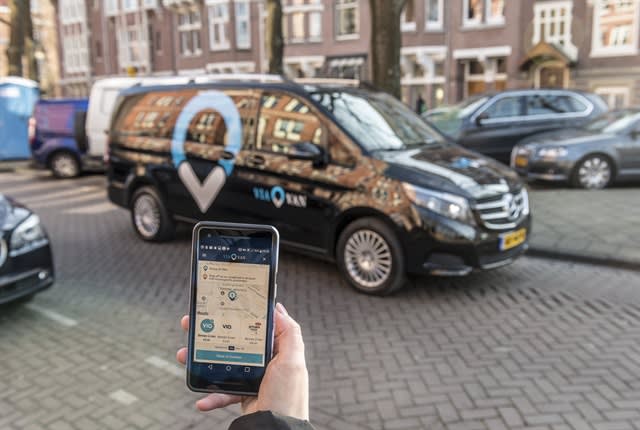
The new service will begin with 150 vehicles, giving riders a fully dynamic new way to travel around Bekasi.
Photo via Via.
2 min to read
Residents of Bekasi, Indonesia, are now being served by Tron, a new form of on-demand public transportation launched April 10 and developed in partnership with Via.
Tron is a new mobile app that allows users to request a 15 person shared van in real-time, similar to those used for Angkot. After registration, riders request their travel and are directed to a nearby virtual pickup point indicated in the app. The new service will begin with 150 vehicles, giving riders a fully dynamic new way to travel around Bekasi.
The vehicles hailed by the Tron mobile app will run in two zones — one along the former K-11 route that was divided into three routes and another along the former K-12 route. The K-11 service will run from 5 a.m. to 10 p.m., while the K-12 will operate from 5 a.m. to 9 p.m.
Via’s algorithms enables multiple riders to seamlessly share a vehicle. The technology directs passengers to a nearby corner — a virtual bus stop — for pick up and drop off, and dynamically routes the vehicle in real-time, allowing for quick and efficient shared trips without lengthy detours, or inconvenient fixed routes and schedules.
Via has been tapped by cities and transportation players around the world to help re-engineer public transit from a regulated system of rigid routes and schedules to a fully dynamic, on-demand network. Via now has more than 60 launched and pending deployments in more than 15 countries.
More Rental Operations

Advantage, Sixt Place Among Top Five in Annual Satisfaction Study
While Enterprise and National retain the top spots in JD Power’s 2026 rankings, the latest customer satisfaction results suggest renters can find competitive service beyond the biggest car rental names.
Read More →
The $100,000 Insurance Trap in Exotic Car Rentals
Exotic rental agencies often rely on customers’ personal auto policies to protect six-figure vehicles. But policy language can dramatically change the coverage for vehicles over $100,000 MSRP.
Read More →
The Booking Is Confirmed, But Is Your Customer Ready to Drive?
For international renters, a confirmed reservation doesn’t always mean they’re eligible to drive. Earlier checks can help operators catch documentation and payment issues before the customer reaches the counter.
Read More →
ICRS 2027 Opens Call for Papers
The International Car Rental Show seeks session proposals on the business, operational, and technology issues facing car rental operators. Submissions are due Jan. 15.
Read More →
Turo to Launch Vehicle Delivery Service
Turo Delivered will let travelers search for vehicles that hosts can deliver directly to hotels, homes, airports, train stations, and other locations.
Read More →
Palm Beach Airport Code Change Creates Car Rental Distribution Gap
A test of rental searches under the old PBI and new DJT airport codes returned largely different sets of brands and vehicles, highlighting a potential distribution problem for rental operators.
Read More →
U-Save Continues Dominican Republic Expansion with Launch in Punta Cana
The new franchise location builds on U-Save’s existing Santo Domingo operation and will begin taking reservations for October 2026.
Read More →
When AI Books the Rental Car, Who Controls the Sale?
As AI moves from comparing rental rates to completing transactions, operators need to understand how travelers find, interpret, rank, and ultimately see their offers. (Part 2 of 2.)
Read More →
European Booked Car Rental Rates Fell 5%, Results Varied by Country
Ireland, Cyprus, and the United Kingdom saw steep declines, while booked rates rose in Poland and Hungary.
Read More →
Is It Time to Rethink Rental Categories?
As traditional economy and compact cars disappear from the market, longtime rental operator Mike DeLorenzo asks whether the industry’s familiar vehicle categories still make sense — and what operators need to rethink along with them.
Read More →